Devin Stone, a licensed attorney and legal commentator, does something rare in pop culture analysis: he treats a Disney animated classic not as a fairy tale, but as a case study in contract law failure. While most viewers remember the singing and the sea witch, Stone zeroes in on the specific legal mechanisms that would render Ariel's deal void, arguing that the entire plot hinges on a contract that is legally unenforceable from the moment it is signed.
The Anatomy of a Bad Deal
Stone begins by dissecting the formation of the agreement between Ariel and Ursula. He notes that while the eels acting as agents for Ursula establishes a valid principal-agent relationship, the terms of the deal are riddled with fatal flaws. "Ursula offers to make Ariel a human for three days in exchange for Ariel giving Ursula her voice," Stone writes, highlighting the basic exchange. However, he quickly pivots to the concept of "meeting of the minds," arguing that the contract fails because the terms are too vague to be enforced in a court of law. The central condition—that Ariel must receive a "kiss of True Love"—is described by Stone as an "amorphous ill-defined term" that no judge could reasonably interpret without resorting to magic.
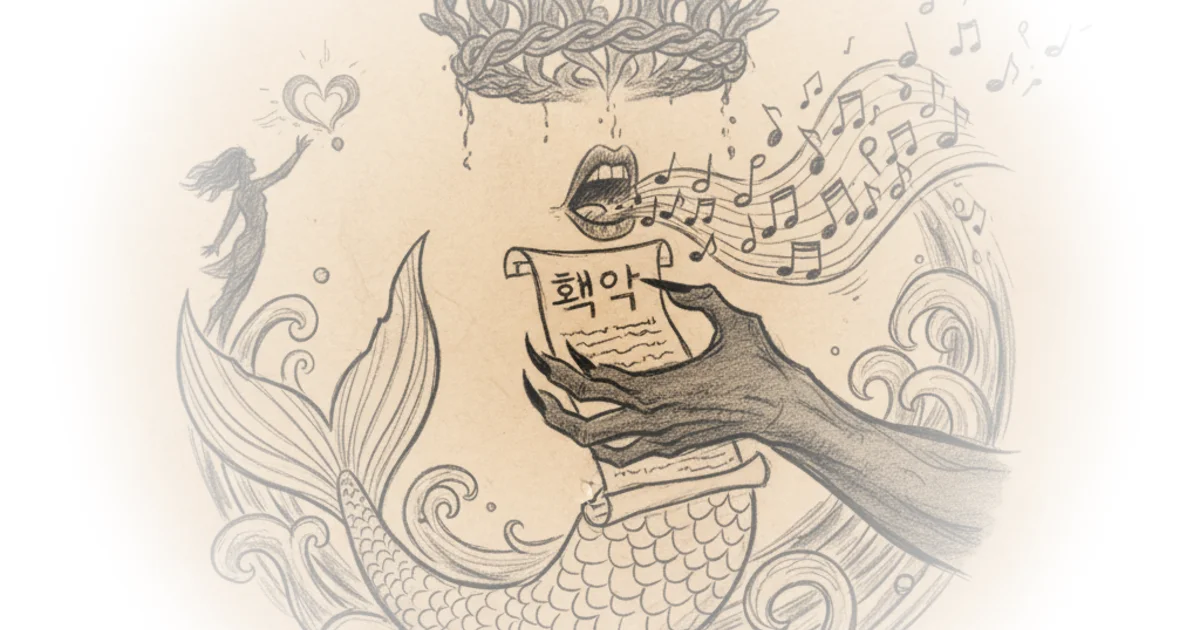
The commentary effectively uses the absurdity of the clause to illustrate a real legal principle: ambiguity in contracts is typically resolved against the party that drafted them. Stone points out that without a clear definition of what constitutes "true love" versus "teenage infatuation," the contract lacks the certainty required for enforcement. "In most jurisdictions ambiguities are typically resolved against the party that drafted the contract," he explains, suggesting that a real court would likely side with Ariel simply because the language was too fuzzy to bind her.
"Lawyers are more powerful than a magic sea witch."
Capacity and the Minor's Right to Walk Away
Perhaps the most compelling part of Stone's analysis is his focus on "capacity." He reminds the audience that Ariel is a minor, a fact that fundamentally changes the legal landscape. "Contracts signed by minors are voidable," Stone states, explaining that a 16-year-old has the right to disaffirm a contract until they reach the age of majority. This means that even if the terms were clear, Ariel could have simply walked away from the deal the moment she turned 18, or potentially even before, without penalty.
Stone uses this point to critique the narrative choice where King Triton intervenes. Instead of allowing Ariel to exercise her legal right to cancel the contract, Triton attempts a "novation," substituting himself into the agreement. Stone argues this is legally invalid because Ariel never consented to the substitution. "The new party will then be bound by the contract while the replaced contracting party will be relieved of all further obligations," he notes, but emphasizes that both original parties must agree to the swap. Since Ariel is clearly distressed and unwilling, the substitution fails, leaving Ursula with no legal claim over the father.
Critics might argue that in a fantasy setting, the rules of human law should not apply to sea witches, but Stone's point is precisely that the story uses legal tropes to create tension, and those tropes fail when held up to actual scrutiny. The narrative relies on the audience ignoring the legal reality that a minor cannot be enslaved by a contract they have the statutory right to void.
Unconscionability and the Limits of Bargaining Power
The final layer of Stone's argument addresses the sheer harshness of the penalty. Even if the contract were valid and Ariel were of age, the terms would likely be struck down under the doctrine of "unconscionability." Stone defines this as a situation where terms are "unreasonably favorable to the more powerful party" and "so one-sided as to shock the conscience." He points out that Ursula holds all the cards: she is sophisticated in magic and law, while Ariel is vulnerable, impressionable, and desperate.
"The terms for non-performance transforming her into a polyp to live in Ursula's underwater Garden for hell for the rest of her life," Stone writes, noting that no court would enforce a clause that amounts to involuntary servitude. He further highlights the procedural unconscionability, noting that Ursula pressures Ariel into signing within a four-minute song without giving her time to consult counsel or read the fine print, which Stone describes as "complete gibberish" and written in an unintelligible language.
"It's illegal to own another person."
Stone's analysis exposes the absurdity of the "bad bargain" defense. While courts generally do not save people from their own poor decisions, they will not enforce contracts that involve the ownership of human beings. The fact that the contract explicitly threatens to turn Ariel into property makes it void ab initio, regardless of the signature.
Bottom Line
Devin Stone's commentary succeeds by stripping away the Disney magic to reveal a contract that is legally bankrupt on multiple fronts: ambiguity, lack of capacity, and unconscionability. The strongest part of his argument is the demonstration that Ariel never actually needed a miracle to escape; she had a statutory right to cancel the deal as a minor. The biggest vulnerability in the film's logic is the assumption that a court of law would ever enforce a contract for eternal servitude based on a vague definition of love, a flaw Stone exposes with surgical precision.