Matt Yglesias delivers a striking correction to a common American assumption: we aren't failing at transit because we refuse to spend money, but because we are spectacularly inefficient with every dollar we do spend. This piece matters now because the gap between our ambition and our delivery has turned into a chasm that threatens to make large-scale infrastructure impossible, even as global competitors surge ahead.
The Cost of Doing Nothing
Yglesias opens by dismantling the myth of fiscal restraint as the primary barrier. "I used to think that American cities were under-provided with transit because the country was too unwilling to spend money," he admits, before pivoting to a harder truth: "The United States actually spends a lot on transit construction — it just doesn't build a lot of transit per dollar spent." This reframing is crucial. It shifts the debate from a political argument about budget caps to an engineering and administrative argument about waste.
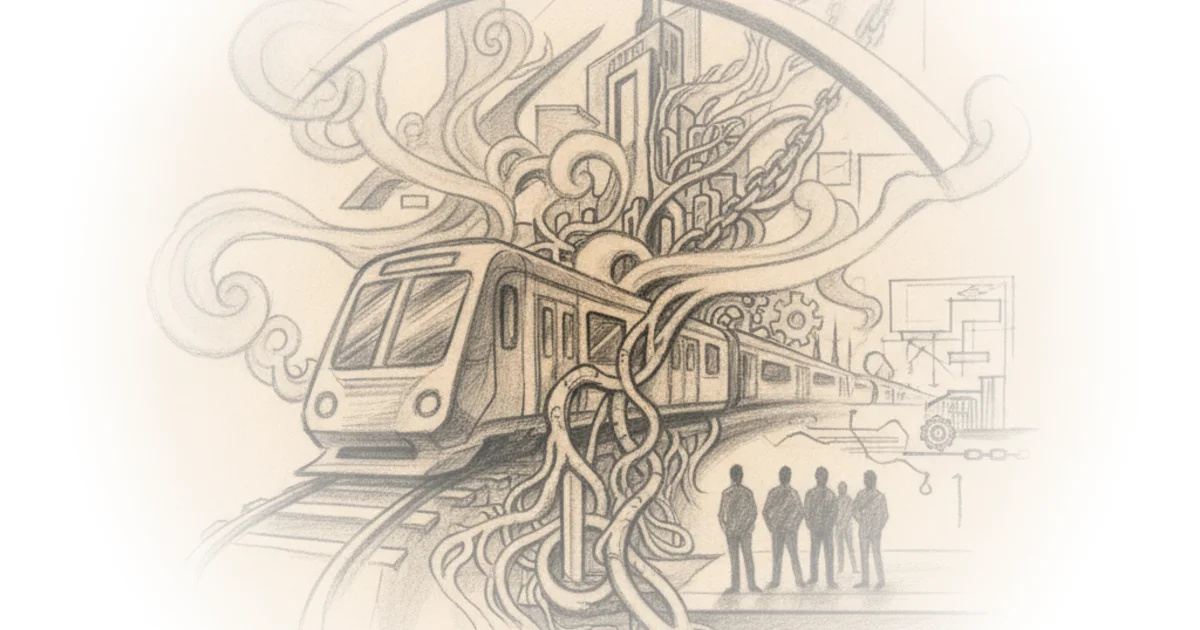
The evidence he marshals is stark. He contrasts Boston's 1897 subway, built in four years for roughly $200 million in today's dollars, with New York City's East Side Access project, which took 24 years and cost $11.2 billion per mile. "Had we kept costs steady since, we would be nearly on par with other developed countries," Yglesias notes. Instead, the U.S. has become a global outlier in price without gaining any advantage in speed or scale.
We spend billions on transit projects but deliver far less per dollar than our global peers.
This isn't just about trains; it's about opportunity cost. The commentary highlights how "dysfunctional processes kill light rail routes that would unlock suburban growth" and bus corridors that could slash commute times. The argument lands hard because it connects bureaucratic inertia to tangible human losses—jobs missed, neighborhoods isolated, and pollution unchecked.
A Menu for Reform
Yglesias doesn't just diagnose the problem; he presents a "Transit Abundance Playbook" developed with the Institute for Progress that offers concrete, non-partisan fixes. He identifies five core drivers of high costs: overdesign, poor planning, too many veto points, burdensome permitting, and weak state capacity.
One of the most compelling proposals addresses procurement. Current rules often force agencies to pick the lowest bidder, which Yglesias argues leads to "worse, costlier outcomes over the long term." He advocates for a shift to "best-value selection," where competence is weighed alongside price. This approach mirrors successful models in Europe and could prevent the bid inflation that currently plagues American projects.
Another critical area is standardization. Yglesias points out that U.S. buses cost twice as much as those in peer countries due to excessive customization by local agencies. "Capping federal cost-sharing at a benchmark price and encouraging standardization... could bring costs down while unlocking manufacturing economies of scale," he writes. This is a pragmatic move that appeals to fiscal conservatives who want value for money and transit advocates who need more vehicles on the road.
Critics might note that some of these solutions, like exempting voter-approved projects from environmental reviews, could face legal challenges or public backlash if perceived as cutting corners on safety. However, Yglesias counters that "requiring environmental review for voter-approved transit projects generates costly and redundant documentation" without adding real value.
The Human Cost of Bureaucracy
The piece also tackles the invisible barriers that slow progress. For instance, the Federal Transit Administration's current rules bar agencies from buying land until after permitting is complete, a constraint that "incentivizes agencies to compromise project design." Yglesias argues for allowing early works to reduce costs and improve delivery.
He also highlights the danger of knowledge loss. "Fear of reputational damage and litigation suppresses honest post-mortems on transit projects," he observes. By proposing confidential channels for sharing lessons learned, the playbook aims to break the cycle where every new project repeats the mistakes of the last.
Feats of infrastructure and governance once showed us what was possible, but our policy choices have throttled our ambitions.
This sentiment resonates deeply in an era where "America cannot do big things anymore" is a common refrain. Yglesias suggests that this belief is self-fulfilling, driven by a system designed to fail rather than succeed.
Bottom Line
Yglesias's strongest argument is his ability to translate complex administrative failures into a clear call for efficiency that transcends political ideology. His biggest vulnerability lies in the political will required to dismantle entrenched veto points and change long-standing procurement rules. The reader should watch how federal agencies respond to these specific proposals, particularly regarding environmental review reforms and best-value contracting.