In an era where digital noise often drowns out creative signal, Sub Club offers a rare, high-signal curation of the literary landscape, transforming a daunting list of 130 submission calls into a strategic map for writers. The piece does not merely list deadlines; it interrogates the very ecosystem of literary publishing, highlighting a stark divide between well-funded, established journals and the precarious, mission-driven micro-publications keeping the avant-garde alive.
The Architecture of Opportunity
Sub Club reports that the current landscape is defined by a "feast or famine" dynamic, where acceptance rates can swing from a generous 81.58% at Wishbone Words to a near-impossible 1% at venues like The Spectacle or Split Lip Magazine. The editors note that while some outlets like ad infinitum lit are looking for work about "youth who dream of lost lovers, dead planets, and burnt constellations," others like OTHERSIDE are explicitly seeking "queer voices matter, now more than ever." This juxtaposition reveals a publishing world that is simultaneously niche and expansive, catering to specific identities while maintaining a broad appetite for speculative and experimental forms.
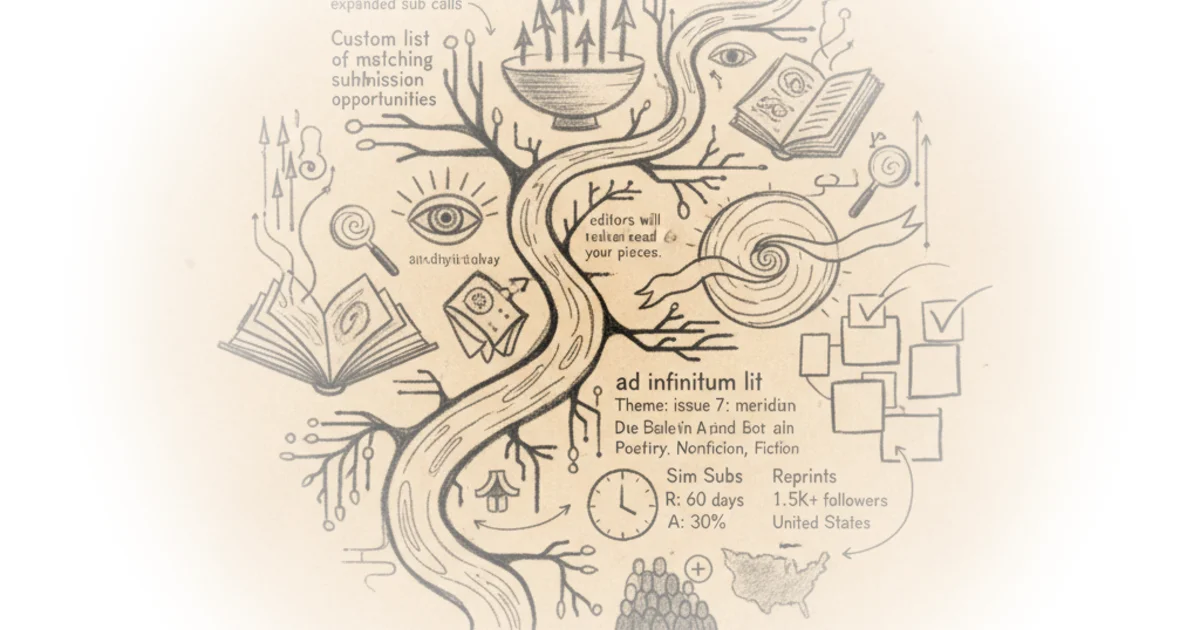
The coverage effectively argues that the "fee" structure is a critical, often overlooked metric of a journal's sustainability and inclusivity. Sub Club highlights that while major players like New Delta Review (founded in 1984) and Hippocampus Magazine (founded in 2011) charge submission fees, others like Pearl Press and transitive rag operate on a no-fee model, with the latter offering a flat rate of AU$20 for Australian creators. This financial transparency is vital for busy writers who must weigh the cost of entry against the potential for publication. The piece suggests that the "pay" structure is equally telling, with Strange Pilgrims offering "$50-$200/piece" while The Bowery Review offers no payment at all, asking only for "funny short stories, poems, cartoons, gags, and jokes!"
"We aim for content that reminds us that our lenses matter—they focus, distort, clarify, conceal."
This quote from THE SPECTACLE encapsulates the editorial philosophy driving many of these calls: the act of submission is not just about distribution, but about the curation of perspective. The editors point out that journals like L'Esprit Literary Review are seeking writing in the "revolutionary spirit of High Modernism," while Okay Donkey wants the "odd, the off-kilter, and the just plain weird." This diversity of aesthetic demand suggests that the "best" work is not a monolith but a spectrum of voices, each finding a home in a specific niche.
The Historical Echo and the Modern Micro-Mag
The piece subtly weaves in historical context, noting that Poet Lore has been publishing since 1889, making it "America's oldest poetry magazine," while The Fiddlehead celebrated "75 years of literary foraging" in 2020. These institutional giants stand in contrast to the explosion of micro-publications like -ette review, which declares, "Let's get small. -ette loves fiction, micros, and prose poetry under 1,000 words." This shift toward the micro-magazine mirrors the historical trajectory of the "little magazine" movement, where small, independent presses often serve as the incubators for new literary forms before they are absorbed by the mainstream.
Sub Club also draws attention to the global nature of this ecosystem, listing opportunities in Australia (transitive rag), Austria (Tint Journal), Canada (Contemporary Verse 2), and the UK (Wishbone Words). The inclusion of Tint Journal, which focuses on "Poetry by non-native English writers (ESL)," underscores a growing recognition that English is a global, not just Anglophone, language. The editors argue that this internationalization is not just a trend but a necessity for a truly diverse literary canon.
Critics might note that the sheer volume of calls—130 in a single week—can be overwhelming, potentially leading to a "spray and pray" approach where writers submit indiscriminately. However, the piece counters this by emphasizing the importance of reading the "mission" statements. For instance, Susurrus is described as "An online literary arts magazine for artists from the American South," while Haven Speculative is looking for "stories with a sense of adventure, stories that teach us, that touch us, that leave us wanting more." The argument is that targeted submissions, informed by a deep understanding of a journal's ethos, are far more effective than mass submissions.
"We believe that poetry is rooted in community. We know that sharing your work can be difficult, so we aim to provide a space where you can be proud of your words and revel in the words of others."
This sentiment from Last Leaves Magazine highlights the human element behind the data. The piece argues that the submission process is not merely a transaction but a form of community building. Journals like Wishbone Words, which publishes "disabled, chronically ill, and neurodiverse creatives," and transitive rag, which champions "the best and trashiest trans creativity," are actively creating spaces for marginalized voices that might otherwise be excluded from traditional publishing channels.
The Bottom Line
Sub Club's compilation is a masterclass in navigating the modern literary marketplace, offering not just a list of deadlines but a nuanced analysis of the values, economics, and aesthetics that drive contemporary publishing. Its strongest asset is the transparency it brings to acceptance rates and payment structures, empowering writers to make informed decisions. The biggest vulnerability, however, lies in the sheer pace of the industry; with deadlines ranging from 2 days (The Bowery Review) to 270 days (Seneca Review), the pressure to perform is relentless. For the busy, smart reader, the takeaway is clear: success in this landscape requires not just talent, but strategic alignment with the specific communities and missions that define the literary world today.