Tom van der Linden argues that the most profound political statement in modern gaming isn't found in a protest scene, but in the tedious act of walking. In "Unraveling death stranding's existentialist themes," he posits that the game's core mechanic—physically struggling to traverse a broken landscape—is a deliberate metaphor for the difficulty of rebuilding social trust in an isolated world. This isn't just a review of a video game; it is a sophisticated analysis of how digital spaces can model the ethics of connection without the toxicity of direct confrontation.
The Physics of Connection
Van der Linden begins by dissecting the game's apocalyptic premise, where a cataclysmic event called the "death stranding" has left the world fractured and filled with "beached things"—souls stranded between life and death. He notes that the event introduced "chiralium," a substance that does not experience time, causing a "timefall" that ages everything it touches. But the true innovation, according to the author, is how the game turns abstract social concepts into physical laws. "The void outs triggered by dead bodies remind us that when we die we destroy more than just ourselves," van der Linden writes, highlighting how the game forces players to confront the tangible weight of loss.
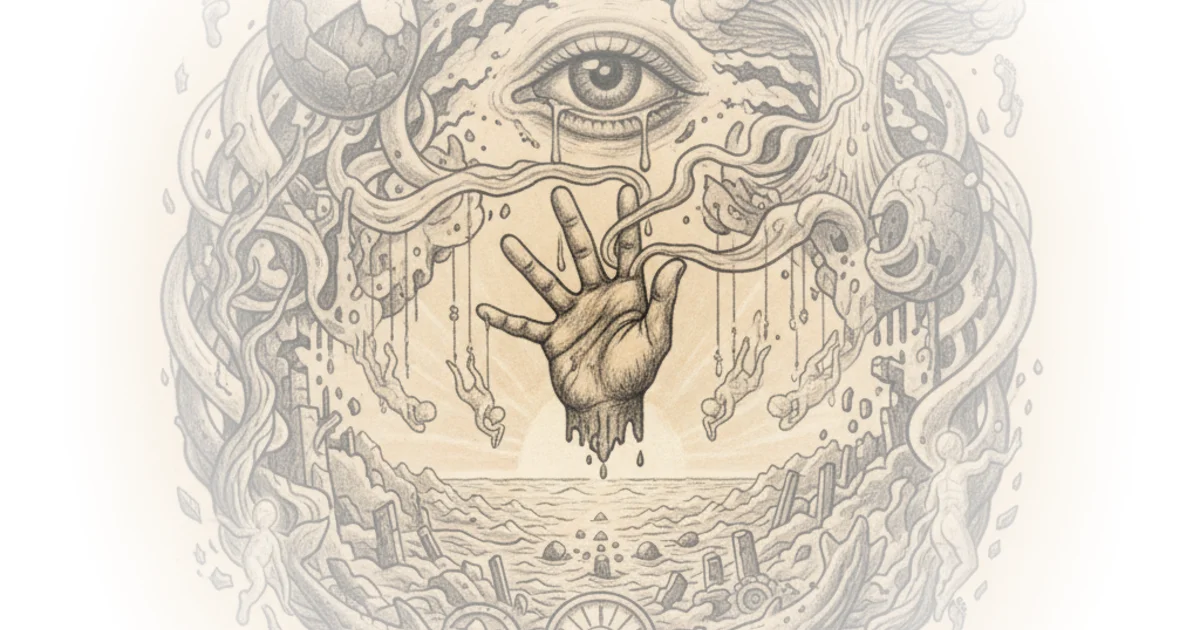
The author suggests that the game's central technology, the "chiral network," serves as a literalization of the internet's potential to link people. Unlike the chaotic, often hostile nature of current social media, this network is built on the premise of rebuilding a divided nation. "It is essentially a promise, a chance to rebuild the isolated cities back into a united nation and save humanity from extinction," he observes. This framing is effective because it shifts the focus from the game's narrative plot to its structural philosophy: connection is not a given; it is a physical burden that must be carried.
Critics might argue that reducing complex geopolitical unification to a delivery simulation oversimplifies the challenges of real-world diplomacy. However, van der Linden's point is not about policy mechanics but about the feeling of effort required to maintain bonds in a fractured society.
The chiral Network makes explicit the intangible social dimension created by the internet and shows us that the implications of its existence are about more than wires and wavelengths.
The Ethics of the Struggle
The commentary then pivots to the gameplay itself, which van der Linden describes as intentionally frustrating. Players act as a courier, Sam, who must deliver supplies across treacherous terrain while managing balance, weight, and weather. The author contrasts this with typical open-world games where travel is a seamless transition between action sequences. "In other open world games where you can carry along huge inventories without it affecting your mobility every movement is often as simple as pointing yourself in the right direction and pressing forward," he notes. By stripping away these conveniences, the game forces a different kind of engagement.
Van der Linden draws a parallel to filmmaker Werner Herzog's idea that "the world reveals itself to those who travel on foot." He argues that the game captures the "brief yet fearful sensation of markedly losing your balance" and the "accelerating effect you feel while you run down a slope." This design choice transforms the journey from a means to an end into the primary experience. "Every contract, every delivery requires your full attention," he asserts, suggesting that the tedium is the point. It demands critical thinking about resources and terrain, mirroring the careful planning required to sustain relationships in a hostile environment.
This approach challenges the industry standard that fun must be derived from constant stimulation. Instead, it proposes that the struggle itself creates a deeper sense of place and purpose.
The Asynchronous Community
Perhaps the most compelling part of van der Linden's analysis is his examination of the "Strand system," an asynchronous multiplayer feature. Players never see each other directly; they only see the structures, signs, and tools left behind by others. "You won't actually encounter any of them but they leave a mark on your world," van der Linden explains. This system allows a player to find a ladder or a bridge built by a stranger, creating a sense of shared burden without the risk of direct conflict or harassment.
The author argues that this design imposes a "moral component" on the experience. Because you can only communicate by leaving helpful items or "likes," the online space becomes inherently supportive. "As such the online experience always feel supportive it connects people to the best parts of themselves and by only being as visible as you are helpful to others it takes the ego out of the equation," he writes. This is a radical departure from the algorithmic outrage that drives most modern social platforms. It creates a space where the only way to be seen is to be useful.
It sanctifies online interactions... When you perceive others as essentially friendly and cooperative it fills you with a subtle yet meaningful sense of hope.
A counterargument worth considering is whether this sanitized version of community is realistic, or if it merely simulates a utopia that cannot exist in the messy reality of human interaction. Yet, as a model for how digital tools could function to foster empathy rather than division, the argument holds significant weight.
Bottom Line
Tom van der Linden's analysis succeeds by treating a video game not as a product to be consumed, but as a philosophical text to be read. The strongest part of his argument is the connection between the physical struggle of gameplay and the emotional labor of maintaining social cohesion. The biggest vulnerability lies in the idealization of this digital community, which may overlook the complexities of human nature that persist even in constrained environments. Readers should watch for how these design principles might influence future digital platforms seeking to rebuild trust in an increasingly polarized world.