In a landscape saturated with casualty counts and geopolitical maneuvering, Tim Mak's reporting from The Counteroffensive offers a jarring, necessary pivot: the war in Ukraine is not just a battle for territory, but a systematic assault on the very concept of childhood. While the world fixates on frontlines, Mak documents a quiet, desperate struggle to preserve "winter magic" for 61,000 children orphaned by the conflict, revealing how the administration's pressure for a negotiated settlement often ignores the human reality that these children are already paying the ultimate price.
The Cost of Institutionalization
Mak anchors his narrative in a stark statistic that reframes the humanitarian crisis: "As of the end of 2025, about 61,000 children were left orphaned due to the Russian war." This is not merely a number; it represents a generation forced to "grow up early amid the cruelty of war," facing air-raid sirens and the trauma of parents lost to shelling or captivity. The author's choice to focus on the psychological toll rather than just the physical destruction is effective, grounding the abstract concept of "war children" in the visceral reality of a child waiting for a phone call that may never come.
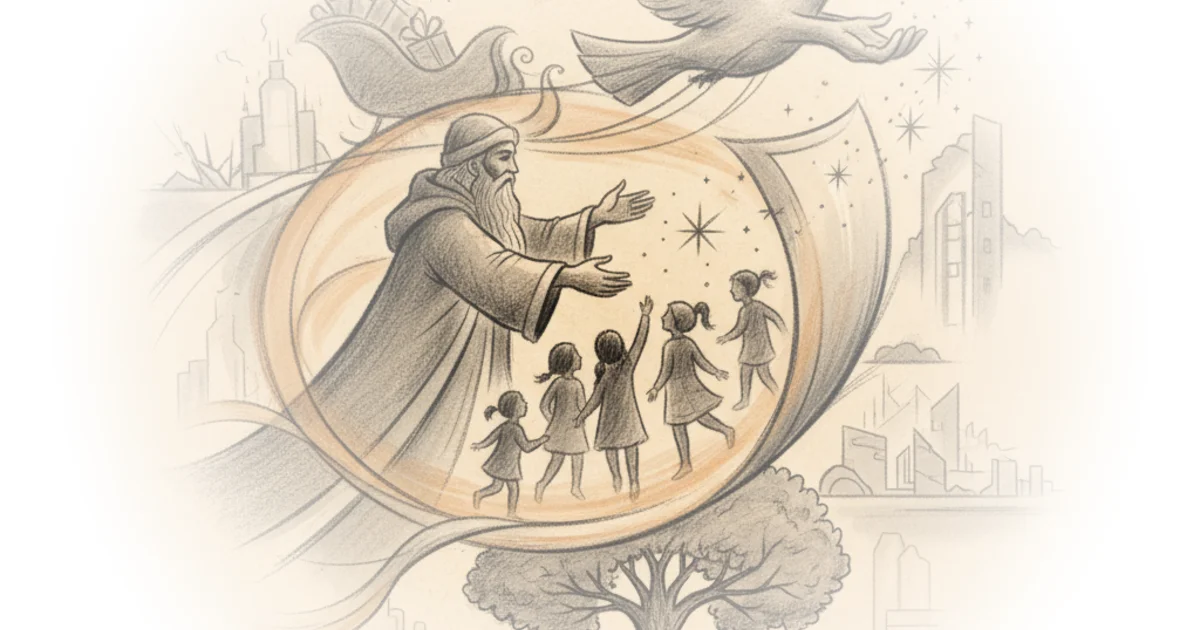
The piece highlights a critical, often overlooked aspect of the crisis: the failure of the state to provide adequate family-based care. Mak notes that while relatives often step in, "About 4,000 children are left in institutional arrangements, where they are known as 'children deprived of parental care.'" These facilities, described as isolating environments where children "eat whatever they are given," stand in stark contrast to the deinstitutionalization reforms Ukraine has been attempting since 2017. The transition from residential institutions to family-based care is a complex policy goal, yet the war has stalled progress, leaving thousands in limbo. Critics might argue that in a total war scenario, institutional care is a necessary stopgap, but Mak's reporting suggests that without a deliberate shift toward family integration, these children risk being permanently severed from the social fabric.
"The most important light is something Russia will never be able to take away: the light of support, love, and helping one another."
The Pragmatism of Survival
One of the most compelling arguments in Mak's piece is the subversion of holiday tradition to meet a survival need. While St. Nicholas Day is traditionally associated with sweets and toys, Mak describes a visit where the most vital gift was diesel fuel. "At first glance, diesel is a very strange present, especially for kids," he writes, "But it is incredibly necessary given this winter and the Russian attacks." This detail is crucial; it illustrates how the war has rewired the logic of care. The center relies on generators to maintain electricity, a lifeline in a country where energy infrastructure is a primary target.
Mak weaves in the historical weight of St. Nicholas, a figure who "quietly shared goods and clothes from his house, sneaking out at night and leaving them at the doors of people in need," to contrast the ancient legend with modern necessity. The author notes that the center was "flooded with gifts and sweets," yet the lack of fuel meant the lights could go out. This framing effectively demonstrates that for these children, the "magic" of the holiday is inextricably linked to basic survival. The administration's focus on high-level diplomacy often obscures these ground-level realities, where the difference between a warm room and a freezing one is a single tank of fuel.
The Fragility of Hope
The narrative takes a poignant turn when Mak addresses the children's desires. Rather than asking for world peace, the children at the center express wishes for "trendy items, phones, and sneakers," or simply to "see Ukraine again." Mak observes that "Children at the care center dream of more basic things, which hold deeper meaning for them and help them feel like their peers who have families." This observation cuts through the pity often directed at war orphans; these children want normalcy, not just survival. They want to play PUBG, learn makeup, and feel like teenagers, not victims.
The author recounts a moment of levity where the children quickly see through the "St. Nicholas" disguise, calling the volunteer "Tania-Nicholas." This interaction underscores the resilience of the children, who can still find joy in a costume and a game despite the trauma surrounding them. However, the piece also serves as a somber reminder of the stakes: "As of 2023, 22 facilities for children without parental care were targeted." The risk of these institutions becoming targets remains high, a fact that makes the administration's push for a peace deal that might cede territory even more fraught with danger for these vulnerable populations.
"The war made me a bit numb to any joy. Christmas turned into just another occasion to spend time with my family. But remembering what it meant for me as a child makes me sad that lots of Ukrainian children lost this magic far sooner."
Bottom Line
Tim Mak's reporting succeeds by humanizing the statistics of the war, proving that the most profound casualty is the loss of childhood itself. The strongest part of the argument is the juxtaposition of ancient holiday traditions with the brutal pragmatism of diesel fuel and generators, forcing the reader to confront the reality that for these children, survival is the only holiday gift that matters. The piece's vulnerability lies in its reliance on a single, small facility, which may not fully represent the scale of the institutional crisis, but its emotional resonance is undeniable. As the White House continues to pressure Kyiv on territorial concessions, the world must remember that for the 61,000 orphaned, the cost of a "peace deal" is not just land, but the future of an entire generation.