David Lat delivers a rare, unvarnished look at the fraying relationship between the executive branch and the federal judiciary, capturing a moment where legal rhetoric has shifted from policy debate to open hostility. The piece's most jarring element isn't the political maneuvering, but the admission from high-ranking Department of Justice officials that the system is no longer a neutral arbiter but a battlefield. For busy professionals tracking the rule of law, this is the warning sign that institutional norms are not just bending, but breaking under the weight of political warfare.
The War on the Bench
Lat anchors his analysis in a "fireside chat" at the Federalist Society's 2025 National Lawyers Convention, where Deputy Attorney General Todd Blanche, the second-in-command at the Department of Justice, made headlines not for policy, but for his tone. Lat reports that Blanche "laced into judges who have ruled against the Trump administration," dismissing their robes as mere costume for what he views as political operatives. The Deputy Attorney General's claim that these judges are "more political, or certainly as political, as the most liberal governor or D.A." sets a dangerous precedent for how the executive branch views judicial independence.
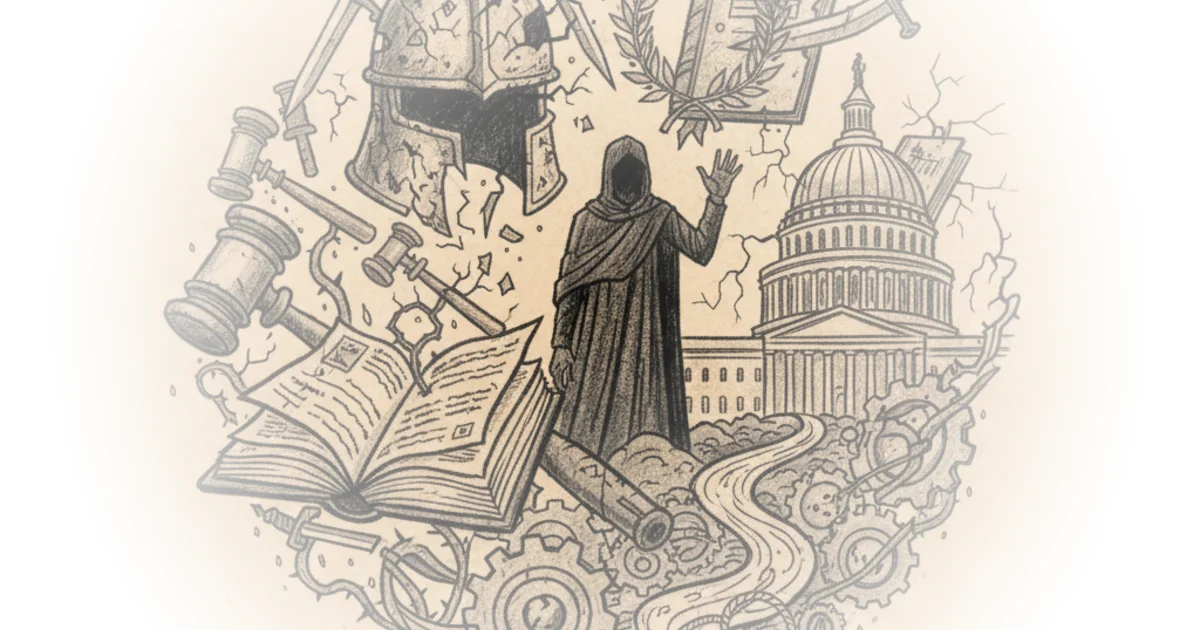
Lat writes, "Most notably, Blanche laced into judges who have ruled against the Trump administration... 'it's a war, man.'" This phrase, repeated by Blanche to describe the frequency of adverse rulings, is the piece's most alarming takeaway. It suggests a fundamental rejection of the concept that courts exist to check executive overreach. Instead, the administration frames judicial review as an obstacle to be overcome rather than a duty to be respected.
The author's critique here is sharp and necessary. Lat notes, "Personally speaking, I find this rhetoric unhelpful." He argues that while judicial overreach exists, it is a minority phenomenon, and that the current climate of threats against judges and their families makes such inflammatory language particularly irresponsible. The core of Lat's argument is that attacking the individuals rather than their opinions erodes the very legitimacy the government relies upon. This framing is effective because it contrasts the fiery rhetoric of the executive branch with the quiet, dangerous reality of judicial vulnerability.
"Blanche's attacks on the judiciary... overshadowed the legitimate issues he raised about so-called 'lawfare,' i.e., weaponization of the justice system against one's political adversaries."
Lat acknowledges that Blanche raised valid concerns about "regulation by prosecution," arguing that the previous administration used DOJ units to target industries. However, Lat contends that these structural issues are more serious than the existence of "rogue activist judges," who can be checked by appellate courts. This distinction is crucial: it separates the legitimate critique of prosecutorial overreach from the dangerous delegitimization of the judiciary itself. Critics might note that the administration's focus on "lawfare" is a genuine grievance shared by many conservatives, but Lat rightly points out that the solution cannot be to dismantle the perception of judicial neutrality.
The Human Cost of Political Retaliation
The commentary shifts to the tangible human consequences of this political friction, specifically the federal government shutdown. Lat highlights a grim reality for those on the front lines of justice: private-sector lawyers representing indigent criminal defendants have not been paid since July because the compensation fund ran dry. Even federal public defenders, who work for the judicial branch, have seen their funding evaporate as court fees like PACER access charges have been exhausted.
Lat writes, "Prosecutors and other DOJ lawyers haven't been getting paid, and private-sector lawyers who represent indigent criminal defendants... are in a even worse predicament." This is not merely a bureaucratic inconvenience; it is a direct threat to the Sixth Amendment right to counsel. When the government cannot pay the lawyers who defend the accused, the integrity of the entire criminal justice system collapses. The author's observation that "silence, for me, is now intolerable" in the context of Judge Mark Wolf's resignation underscores the moral weight of this crisis.
Judge Mark Wolf, a Reagan appointee, resigned after forty days of shutdown, stating he "no longer can bear to be restrained by what judges can say publicly or do outside the courtroom." Lat frames this resignation as a pivotal moment, noting that Wolf's departure leaves no vacancy for the current administration to fill, but serves as a stark warning to other judges. The author suggests that any judge hoping for a Republican successor must act quickly, as the political landscape has shifted following recent elections. This adds a layer of strategic urgency to the moral outrage.
The Battle for State Courts
Beyond the federal sphere, Lat turns his attention to Pennsylvania, where the stakes of judicial retention elections have become a proxy war for national power. The piece details how over $16 million was spent on advertising to ensure the retention of three Democratic justices, a move that maintains a 5-2 split on the state supreme court. Lat notes that "control over state supreme courts has become a vital part of both parties' quest for electoral power," especially in a swing state like Pennsylvania.
The author connects this local battle to the broader national trend, referencing the Federalist Society's role in shaping the legal landscape for decades. The retention of these justices ensures that the state's high court remains a check on executive power, a dynamic that mirrors the federal tension described earlier. Lat's inclusion of the specific vote percentages and the rarity of losing a retention election (the last loss was in 2005) provides concrete evidence of how deeply entrenched these judicial battles have become.
Critics might argue that the heavy spending on these elections reflects a healthy democracy where voters are informed, but Lat's framing suggests a more cynical reality: the judiciary is being treated as just another political prize. The fact that the justices had no Republican opponents yet still faced millions in attack ads highlights the intensity of the partisan divide.
Bottom Line
David Lat's commentary succeeds in exposing the dangerous rhetoric emanating from the Department of Justice, where the executive branch is increasingly treating the judiciary as an enemy rather than a co-equal branch. The piece's greatest strength is its refusal to let the administration's complaints about "lawfare" distract from the corrosive effect of calling judges "rogue" and declaring a "war." However, the argument's vulnerability lies in its reliance on the assumption that institutional norms will hold; as Judge Wolf's resignation proves, those norms are already fraying. The reader must watch closely to see if the executive branch's rhetoric translates into further attempts to undermine judicial independence, or if the backlash will force a return to civility.