Freddie deBoer delivers a blistering indictment of a cultural moment where the fear of offending has extinguished the very possibility of negative criticism. He argues that we are living through the "death rattle" of genuine art evaluation, replaced by a performative, risk-averse cheerleading that treats any dislike as a moral failing. This is not just a complaint about bad television; it is a diagnosis of a professional class that has abandoned its core function to appease an algorithmic audience that demands everything be "nice and painless."
The Death of the Critic
DeBoer opens by contextualizing his frustration within a broader trend observed by music critics Wesley Morris and Kelefa Sanneh. He notes that while Sanneh correctly identifies that "negative criticism of K-pop essentially doesn't exist, for example, because K-pop fans are lunatics who will attempt to ruin or end your life if you criticize their favorite artists," the professional response has been to retreat entirely. DeBoer observes that the music media reaction involved "far more fulminating and performative allyship than defenses of negative criticism among the music reviewer class." The core of his argument is that critics are terrified of being labeled the "old white guy griping about the shitty music the youths listen to," even when the music genuinely lacks merit.
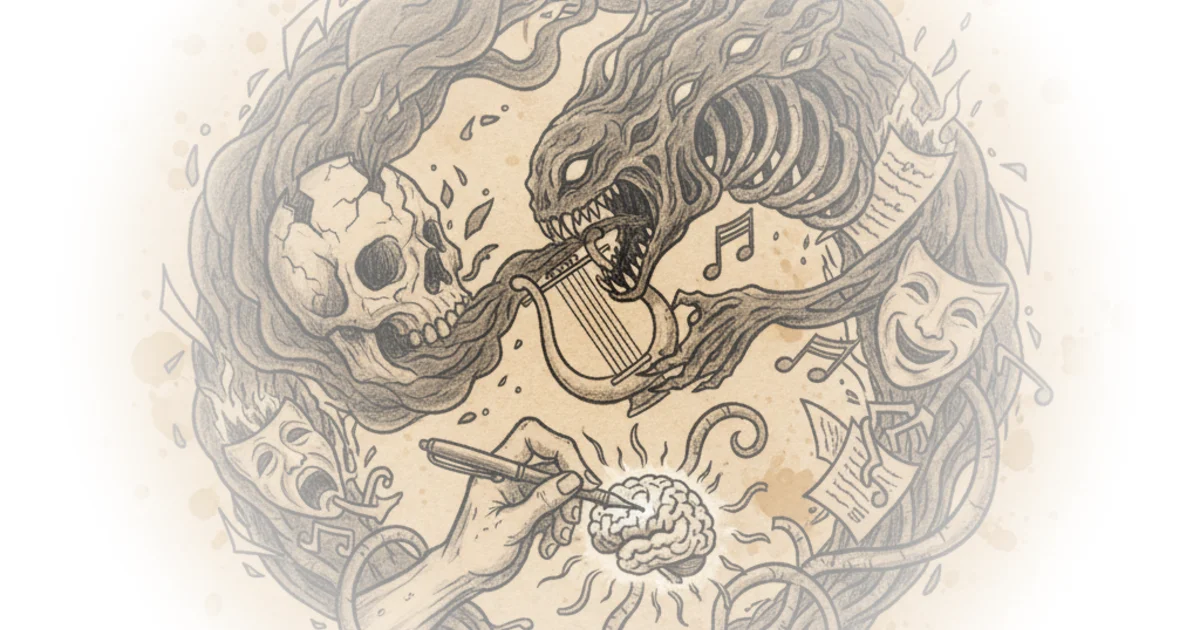
This fear has created a vacuum where "the very existence of negative criticism seems threatened, not long for this world." DeBoer suggests that the industry has collectively decided that "life is too hard and we all should just slip into a warm bath of low standards and perpetual excuses." This framing is potent because it identifies a psychological surrender rather than just an aesthetic shift. Critics might argue that this is an overstatement of the current landscape, pointing to the existence of harsh reviews in niche publications, but deBoer's point is about the dominant, mainstream ethos where "everyone is just looking for an excuse to like everything."
Every day, professional cultural commentary seems closer and closer to marketing copy, as we slouch deeper and deeper into an era defined by our collective decision that life is too hard and we all should just slip into a warm bath of low standards and perpetual excuses.
The Ringer and the Refusal to Hate
To illustrate this phenomenon, deBoer dissects a recent episode of The Watch podcast on The Ringer, featuring hosts Chris Ryan and Mallory Rubin. He describes a dynamic where Ryan attempts to offer a tepid criticism, only to be immediately yanked back by Rubin's relentless positivity. He writes, "Ryan tepidly begins with some version of 'Hey, maybe one thing that wasn't perfect was -' and then Rubin says 'BUT ACTUALLY, IT WAS PERFECT, BECAUSE….'" This interaction serves as a microcosm for the broader media environment, where the "combination of her relentless positivity and Ryan's malleability" results in an hour of forced consensus.
DeBoer acknowledges that Rubin is likely "sincere" and "wired that way," but he argues that the problem is the lack of any counterweight in the professional critical culture. "I wouldn't mind the existence of fanboying on podcasts if I felt like that was the exception instead of the norm," he writes. Instead, the media landscape has become a "soft landing for celebrities out to promote something," stripping criticism of its necessary friction. This is where the argument gains its sharpest edge: the idea that without the ability to say "this is bad," the statement "this is good" loses all meaning. The absence of a "hater" like Andy Greenwald, who at least "laboriously clears his throat" before criticizing, leaves a void where nuance should be.
Stranger Things as the Apex of Nerd Hegemony
DeBoer then pivots to his primary target: Stranger Things. He does not mince words, declaring, "Stranger Things is a bad show. Indeed, I think it's a positively awful show, mawkish and clumsy, totally inconsistent with its own clownish mythology." His critique goes beyond plot holes—such as the absurdity of characters using unsecured walkie talkies across implausible distances—to attack the show's ideological core. He argues that the show's portrayal of "nerds" as downtrodden saints is a grotesque lie in 2025, a time when "nerds are not the bullied kids hiding in basements - they are the ones who own the basements, the houses above them, and the streaming platforms."
This is the piece's most provocative claim: that the show is a "victory parade" for a demographic that now holds totalizing cultural and economic power. DeBoer writes, "To keep portraying nerds as lovable outsiders is to watch the new aristocracy spike the football over and over again, insisting they're still scrappy underdogs while they dictate the terms of our economy and our imagination." He connects this to the show's reliance on shallow nostalgia, noting that the Duffer Brothers "rewrote history to flatter contemporary taste," such as making a Midwestern teenager obsessed with Kate Bush, a niche UK artist, rather than acts that actually dominated American airwaves like Wham! or Huey Lewis.
Nerds are the new bullies, and Stranger Things is their victory parade, disguised as nostalgia for a false past.
He further critiques the show's use of references as a cheap substitute for storytelling, comparing it to Ready Player One and Deadpool & Wolverine. He argues that "fandom is an incredibly cheap date that will reliably point at the screen and say 'Ooh, 'memba? 'memba that?' if you dangle references in front of them." This observation aligns with the broader theme of the article: that the current cultural moment prioritizes the comfort of recognition over the rigor of artistic creation. Just as Pauline Kael once championed the idea that criticism should be a passionate, personal engagement with art, deBoer suggests we have moved to a place where engagement is merely a reflex of memory. The show's reliance on "meaningless references" betrays a lack of confidence in its own narrative, relying on the audience's "cheap date" willingness to cheer for a callback rather than a well-constructed story.
The Cost of Perpetual Excuses
The underlying tragedy deBoer identifies is the loss of the "banal and inescapable reality" that some people will hate what you love. He argues that "an absolutely non-negotiable fact of aesthetic life is that some people are going to hate what you love," yet contemporary culture treats this as an "unpardonable assault." This shift has led to a society where "sharing such negative thoughts might soon result in a lengthy prison sentence or literal crucifixion." The stakes, he implies, are the health of our collective discourse. If we cannot say a show is bad, we lose the ability to distinguish quality from mediocrity, and we surrender our critical faculties to the lowest common denominator.
Critics might note that deBoer's tone is occasionally self-congratulatory, positioning himself as the "lifelong and dedicated hater" in a sea of sycophants. However, his specific examples—the walkie talkie logic, the anachronistic drug slang, the historical revisionism regarding music—provide concrete evidence that his disdain is not merely contrarianism but a reaction to genuine failures in writing and world-building. The argument holds weight because it is not just about Stranger Things; it is about the ecosystem that allows such a show to be treated as untouchable.
Bottom Line
Freddie deBoer's essay is a necessary, if abrasive, corrective to the current trend of uncritical adulation in media. His strongest point is the identification of "nerd hegemony" as a blind spot in cultural criticism, where the demographic that now controls the industry refuses to critique its own output. The argument's vulnerability lies in its occasional tendency to conflate all positive enthusiasm with cowardice, yet the specific evidence regarding Stranger Things' narrative failures and historical inaccuracies validates his core thesis. The reader should watch for whether this "death rattle" of criticism can be reversed, or if the "warm bath of low standards" will continue to lull the public into accepting marketing copy as art.