Naomi Kanakia constructs a searing allegory that strips away the comforting veneer of "civilizing missions" to reveal the brutal mechanics of exploitation. This is not a fantasy about good versus evil, but a dissection of how power rationalizes atrocity through the language of necessity and order. The piece forces the reader to confront a terrifying question: when the institutions meant to protect us are built on the backs of the vulnerable, is the true hero the one who upholds the law, or the one who breaks it to save a life?
The Architecture of Rationalization
Kanakia introduces us to Erdric, a Paladin whose moral compass is calibrated to "Rightness itself," a stark contrast to the complex theological gymnastics performed by his companion, Ser Andras. The author uses their dialogue to expose how systems of oppression are maintained not just by force, but by the intellectual labor of the privileged. Andras, educated and well-meaning, argues that the subjugation of pagan women is a "lot in life" that provides them with food and safety. "They have nowhere else to go," Andras insists, framing captivity as a form of benevolent stewardship.
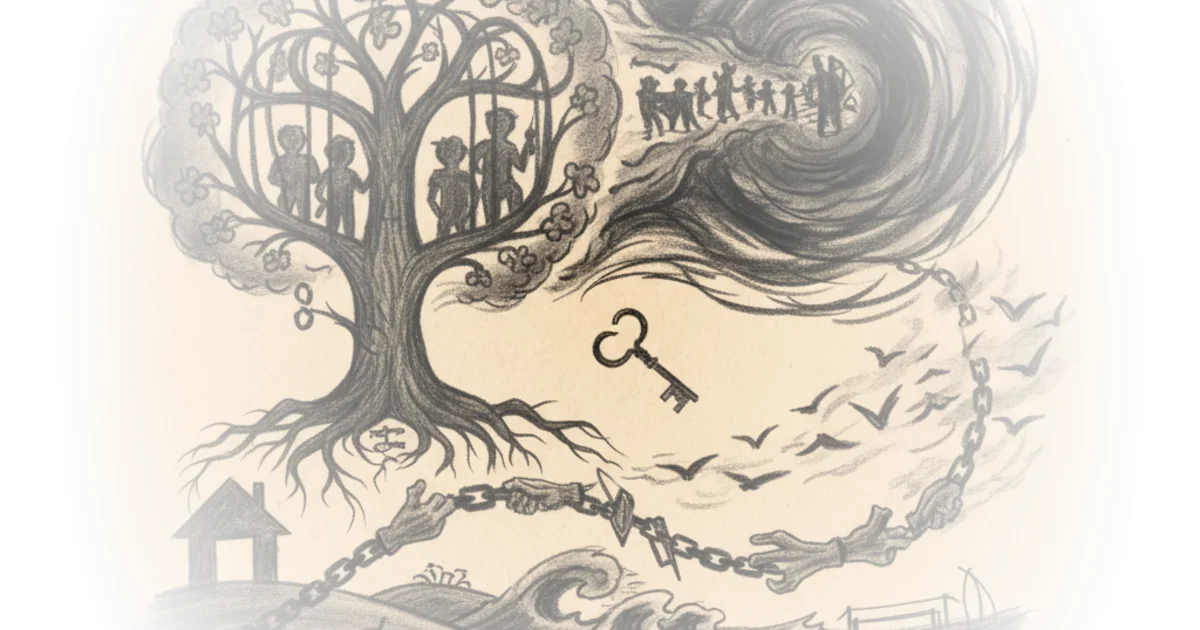
This framing is chillingly effective because it mirrors real-world justifications for colonialism and authoritarianism. Kanakia writes, "The bulk of people—those destined to serve—did not understand the difficult cup from which the rulers drank, the terrible responsibility that came with their position." By attributing this logic to a character who is otherwise sympathetic, the author forces us to see how easily moral blindness is cultivated by a belief in one's own superiority. The argument lands with a thud because it is so familiar; it is the voice of the bureaucrat who believes that order, however unjust, is preferable to chaos.
"It is the legitimate spoils of war."
The knights at Lord Damien's table do not see rape and enslavement; they see the natural order of things. Kanakia highlights the disconnect between the "One God" of the nobility and the local spirits of the common folk to show how religion is weaponized to sanctify the status quo. While Erdric sees the women as victims of a crime, the court sees them as "playthings" and "rescued" captives. The author's choice to have the women described as "nymphs" and "smooth-skinned" serves to dehumanize them in the eyes of the men, turning them into objects of aesthetic consumption rather than human beings with agency.
Critics might argue that the allegory is too heavy-handed, presenting a binary where the nobility is purely corrupt and the outsider is purely righteous. However, Kanakia complicates this by showing Erdric's own hesitation. He recognizes that killing the tyrant, Damien, might not save the women. "If Damien was dead, these men would hurt these girls," Erdric realizes, understanding that the tyrant's protection is the only thing keeping the mob at bay. This nuance prevents the piece from becoming a simple revenge fantasy and elevates it to a tragedy of systemic failure.
The Failure of Institutional Power
The narrative shifts when Erdric encounters the new class of power brokers, represented by Theodoric, a non-knight who wields influence through wealth and trade concessions. "He serves his own interests," Andras explains, a concept that baffles the martial Erdric. Here, Kanakia critiques the transition from a feudal order based on martial valor to one driven by capital and political maneuvering. The presence of Theodoric at the table, laughing with Damien, signals that the violence is no longer just the domain of the sword; it is now the business of the state.
The author meticulously details the atmosphere of the castle, where the "easy command" of the lords is contrasted with the "rotten straw" and shivering children in the village outside. This juxtaposition underscores the human cost of the "peace and prosperity" that Damien claims to have brought. "You cannot explain. It is the legitimate spoils of war," one knight says, dismissing Erdric's moral outrage. Kanakia uses this moment to show the complete collapse of the social contract. When the law is defined by the powerful, justice becomes a private commodity.
"When the lord considered himself above the law, then he had no ability to enforce it on others."
This insight is the crux of the piece's political commentary. Erdric understands that in a lawless environment, the only recourse is direct action. The author does not shy away from the violence of this solution. Erdric kills five men in the hallway, an act that is described not with glory, but with grim necessity. The text notes that "nobody went out into the halls to see what he had done," highlighting the isolation of the moral actor in a corrupt system. The fear that grips the castle is not fear of justice, but fear of the disruption of their comfortable hierarchy.
The inclusion of the servant woman who subtly gestures to Erdric adds a layer of quiet resistance from the marginalized. It suggests that while the nobility is blind to the horror, the oppressed are fully aware and are waiting for a crack in the armor. This small detail prevents the narrative from being solely about the heroism of the Paladin and acknowledges the agency of those who have no voice in the hall.
Bottom Line
Naomi Kanakia's "A Dilemma" is a masterful exploration of how systems of power manufacture consent for atrocities, arguing that true justice often requires breaking the very laws that protect the oppressor. The piece's greatest strength is its refusal to offer a clean resolution, forcing the reader to sit with the uncomfortable reality that in a broken world, the path to rightness may be paved with blood. The biggest vulnerability lies in its reliance on a singular, almost mythical hero to effect change, a trope that can obscure the need for collective, structural reform. Readers should watch for how this allegory resonates with contemporary debates on intervention, sovereignty, and the moral cost of maintaining order.