Tim Mak's reporting cuts through the noise of daily headlines to reveal the grueling, unglamorous reality of modern warfare: the 24 hours after a strike are not a pause, but a chaotic, high-stakes race against time and unexploded ordnance. While global attention often fixates on the launch of 600 drones, Mak forces the listener to confront the human toll of the aftermath, where a single crater becomes a theater of exhaustion, grief, and forensic necessity. This is not just a story about weapons; it is a profound examination of the resilience required to clear a path through debris that never seems to end.
The Evolution of Destruction
Mak anchors his narrative in the specific, terrifying transformation of the drone from a novelty to a weapon of mass destruction. He writes, "If earlier the word 'drone' brought to mind a small quadcopter used to film wedding videos, the Shaheds turned that notion on its own." This observation is crucial because it highlights a shift in the nature of the threat that has outpaced public perception. The article details how these Iranian-supplied aircraft, stretching over 3.5 meters, carry payloads capable of tearing buildings apart, effectively functioning as low-cost missiles that can be launched in swarms.
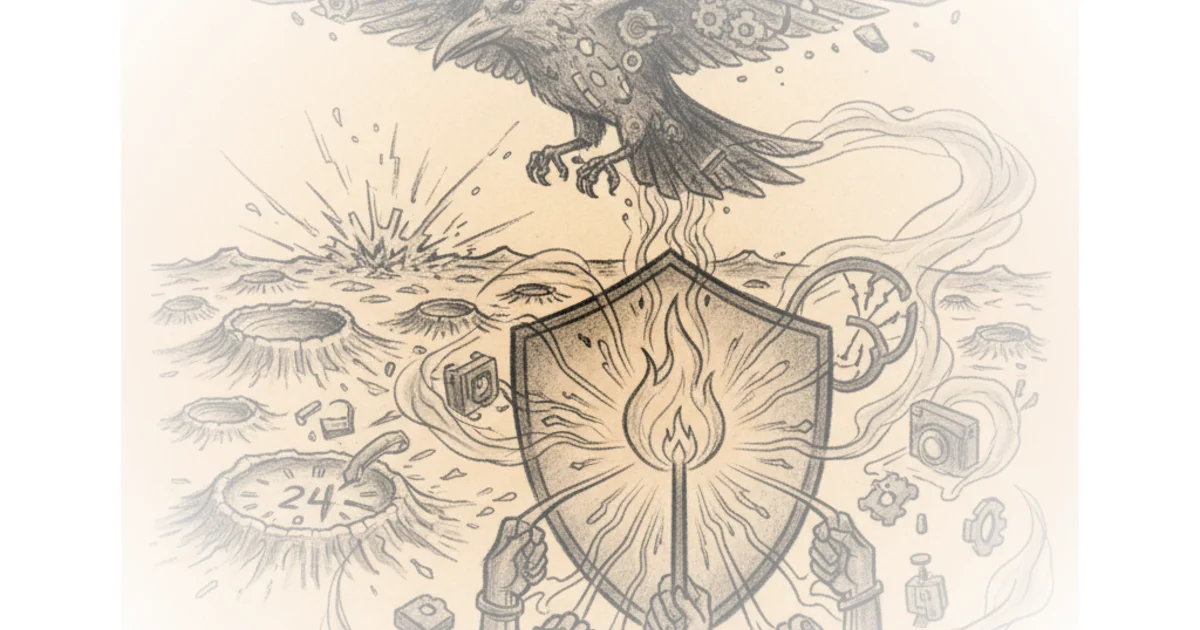
The sheer scale of this campaign is staggering. Mak notes that since 2022, Russia has deployed around 60,000 of these drones, with nearly 44,000 launched in the current year alone. Yet, as Mak points out, "Reports like last week's strike on Ukraine, when 600 Shaheds were launched, now barely register with people who live thousands of kilometers away." This desensitization is a central theme of his piece. The coverage suggests that the normalization of such violence is a strategic victory for the aggressor, even as the local reality remains one of constant, visceral danger.
"Everything is calculated already at the planning stage... We work only within our assigned sectors and cannot shoot beyond them, especially in urban areas. We'd simply end up firing into someone's windows."
This quote from an air-defense serviceman, callsign 'Kit', underscores the impossible calculus of urban warfare. The defense is not just about shooting down threats; it is about managing the collateral damage of the defense itself. Mak's framing here is effective because it strips away the abstraction of "air defense" to reveal the terrifying precision required to avoid killing the very people they are protecting. A counterargument might suggest that the sheer volume of drones makes such precision impossible, but the article insists that the discipline of the defenders is the only thing preventing total urban annihilation.
The Human Cost of Clearance
The heart of Mak's piece lies in the profile of Serhii, a bomb disposal technician whose childhood in a village of ammonium nitrate warehouses foreshadowed his grim profession. Mak writes, "A bolt with some nuts, pour in match heads, and throw it," quoting Serhii's recollection of childhood games that have now become a deadly trade. This juxtaposition is jarring and necessary. It reminds the audience that the people clearing these sites are not faceless soldiers, but individuals whose lives have been irrevocably altered by the conflict.
The operational reality described is one of extreme fatigue and emotional toll. Serhii explains that the team must work in pairs, with one technician monitoring for threats while the other handles the ordnance. "God saved him three times at the front when he almost stepped on a tripwire," Mak recounts, illustrating the constant proximity to death. The psychological burden is compounded by the sheer volume of casualties. "By the end of their shift, the guys are just collapsing from exhaustion. They can't even fill out the paperwork because they fall asleep at the computer," Serhii says.
This section of the article is particularly powerful because it refuses to romanticize the cleanup. Mak does not shy away from the grim details: the smell of incendiary mixtures, the sight of decomposing bodies, and the routine of exchanging remains with the enemy. The coverage highlights that for these technicians, the war is not a series of battles, but a continuous, grinding process of managing death. The human cost is not a footnote; it is the entire story.
"No one but us, the explosives technicians, can do our job. No one knows when it will end."
This statement from Serhii serves as a haunting conclusion to the operational narrative. It captures the isolation of their role and the uncertainty that defines their existence. While the article focuses on the Ukrainian response, it implicitly critiques the international community's inability to stop the flow of weapons that necessitate this work. The fact that locals sometimes scavenge drone parts for agricultural use—turning war machines into walk-behind tractors—adds a layer of dark irony to the tragedy, showing how the conflict has permeated every aspect of daily life.
The Forensic Battle
Beyond the immediate danger, Mak explores the strategic importance of the debris. The remnants of the Shaheds are not just scrap; they are evidence. Investigators from the Security Service of Ukraine (SBU) and the State Scientific Research Institute analyze the components to document war crimes and justify sanctions. Colonel Oleksandr Zaruba notes that "the Russians are constantly improving the Shaheds to inflict as much damage as possible," indicating an ongoing arms race that extends beyond the battlefield.
This forensic angle adds a layer of accountability to the narrative. The article suggests that every crater is a potential case file, a piece of the puzzle used to hold the Kremlin accountable. However, Mak also notes the fragility of this evidence. When locals strip the crash sites of valuable parts, the chain of evidence is broken. "We arrive at the crash site and there's nothing left," Serhii jokes, highlighting the chaotic environment in which justice must be pursued. This detail serves as a reminder that the fight for truth is as difficult as the fight for survival.
Bottom Line
Tim Mak's coverage succeeds by shifting the focus from the spectacle of the attack to the endurance of the aftermath, grounding the abstract statistics of 60,000 drones in the exhausted reality of a single bomb disposal team. The piece's greatest strength is its refusal to look away from the human toll, forcing the listener to confront the reality that for Ukrainians, the war does not end when the sirens stop. Its vulnerability lies in the sheer weight of the tragedy it presents, which risks overwhelming the reader with a sense of futility, yet it is precisely this unflinching gaze that makes the story essential. The reader must watch for how the international community responds to this evidence of war crimes, as the forensic work described here is the foundation for future accountability.