Musa al-Gharbi delivers a jarring diagnosis for the modern professional class: the very cognitive traits that define "smart" people are the engine of their political blinders. Rather than viewing intelligence as a shield against bias, he argues it is often the weapon that sharpens it, creating a feedback loop of tribalism that has alienated the Democratic Party from the median voter and fueled a decades-long electoral backlash.
The Myth of the Rational Elite
The piece begins by dismantling the Enlightenment-era fantasy that human cognition is a machine designed for pure truth. Al-Gharbi writes, "The contemporary scientific consensus has coalesced around a completely different understanding of human rationality and perception." He posits that our brains evolved not to be objective observers, but to win coalitional struggles and maintain social standing. This reframing is crucial because it removes the moral high ground from the "symbolic capitalist"—the consultant, the academic, the tech worker—who believes their intelligence insulates them from the herd mentality.
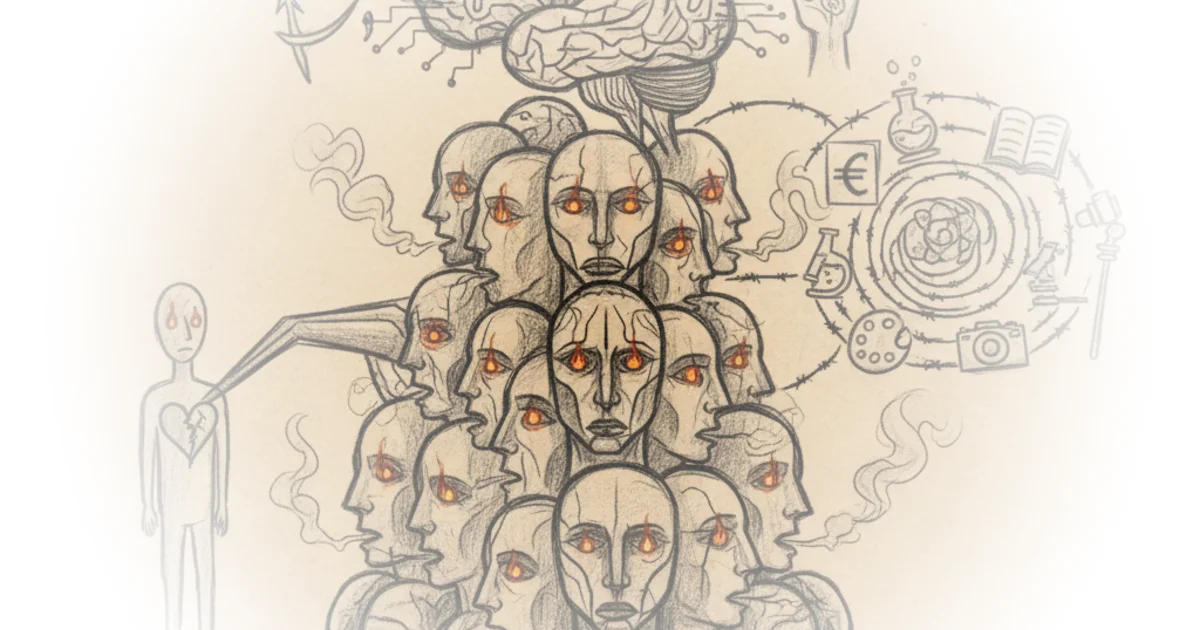
The author suggests that high-IQ individuals often fail in social situations precisely because they overthink. As Al-Gharbi notes, "The reason why individuals with high IQ tend to fail in understanding and coping with basic human situations is that they try to apply complex and abstract thinking to problems for which instinctive strategies are more adaptive." This is a provocative claim that challenges the core identity of the professional class: the idea that more analysis always equals better judgment. In reality, the "rider" of our conscious mind often just rationalizes the decisions made by the "elephant" of our intuition.
"The inclination towards tribalism, status seeking, identity reinforcement and other forms of motivated reasoning may be, in fact, the main purpose of our advanced cognitive faculties – it's the thing they're best at, and it influences everything else they do."
This argument holds significant weight when looking at the polarization of the last decade. It suggests that the "Great Awokening" wasn't a sudden moral awakening, but a predictable intensification of group signaling among a specific demographic. Critics might argue that this biological determinism risks excusing bad behavior by attributing it to evolutionary hardwiring, but Al-Gharbi uses it to call for humility, not resignation.
The Feedback Loop of Institutional Capture
Al-Gharbi traces how these cognitive biases became institutionalized within the Democratic Party and the broader "symbolic economy." He argues that after 2010, these sectors grew more "morally and politically homogenous," prioritizing the preferences of their own employees and clientele over the general public. The result, he writes, was that "the Democratic Party's messaging and priorities shifted radically to reflect 'our' desires, in ways that left the party increasingly out of step with the median voter."
This shift created a vacuum. By becoming more disdainful of public opinion, these institutions inadvertently handed a powerful narrative to political entrepreneurs on the right. Al-Gharbi observes that the backlash isn't a unique anomaly but a recurring historical pattern where institutions fail to remain responsive to the people they serve. He notes, "This has contributed to growing mistrust in 'our' institutions among large swaths of the public, creating an opening for right-aligned political entrepreneurs to win support by running against 'us.'"
The analysis is particularly sharp in its diagnosis of "knowledge alienation." Al-Gharbi explains that professionals suffer from a delusion of exception: "Most view themselves as smarter, less biased, and more authentic and moral than average." They assume their beliefs are driven by facts while dismissing opponents as driven by ideology or pathology. This creates a dangerous disconnect where the people running major institutions are convinced they are the most representative, even as their policies and rhetoric increasingly alienate the very populations they claim to champion.
The Cost of Overconfidence
The piece concludes by warning that even as the "Great Awokening" appears to moderate, the underlying structural issues remain. The symbolic professions are still "morally and politically unusual and parochial," and their outputs suffer from a lack of representativeness. Al-Gharbi writes, "We pay attention to, easily recall, and feel positive emotions towards things we deem interesting or useful. We dismiss, downplay, dump, and have negative emotional reactions to information that is threatening to our objectives or our self-image."
This selective perception is the root of the current crisis of legitimacy. When institutions filter out inconvenient truths to protect their self-image, they lose the ability to function effectively. The author's call to action is implicit but urgent: until the professional class accepts that their intelligence does not exempt them from the same biases that plague everyone else, their institutions will remain vulnerable to populist backlashes. The danger lies not in the existence of bias, but in the refusal to acknowledge it.
"People typically think their beliefs are correct – morally, factually, and otherwise. We further assume that we arrived at our beliefs in a good way, that we think the things we think for good reasons."
A counterargument worth considering is whether this focus on cognitive bias lets structural power off the hook. While self-deception is real, the concentration of wealth and influence in the hands of these groups also drives policy outcomes regardless of their internal psychological state. However, Al-Gharbi's point remains that without addressing the psychological insulation of the elite, no structural reform will stick.
Bottom Line
Al-Gharbi's most compelling contribution is the inversion of the intelligence narrative: he proves that high cognitive ability often exacerbates, rather than mitigates, tribalism. The argument's greatest vulnerability is its potential to sound like an apology for the status quo, yet its diagnosis of the "knowledge alienation" plaguing the professional class is a necessary corrective for anyone trying to understand modern political fractures. Readers should watch for how these institutions attempt to recalibrate their messaging without first confronting their own cognitive blind spots.