PolyMatter cuts through the noise of 'Cold War' rhetoric to reveal a far more transactional and unstable reality: a partnership between China and Russia driven not by shared ideology, but by a mutual desire to disrupt American dominance. While the world fixates on the awkward hugs and 'No Limits' declarations, the analysis exposes a fundamental divergence in goals that makes this alliance fragile, dangerous, and ultimately unlike the Soviet era. For a busy executive trying to navigate supply chains or geopolitical risk, understanding this distinction is not academic—it is the difference between anticipating a coordinated bloc and managing a volatile, opportunistic marriage of convenience.
The Illusion of Ideological Alignment
The piece begins by dismantling the romanticized notion of a unified front, tracing the historical arc from the Sino-Soviet split to the current thaw. PolyMatter notes that the last time Chinese and Russian leaders embraced so effusively, "the two countries were in a full-blown Alliance," yet that alliance collapsed within years due to "ideological differences, personal animosity... and a glaring power imbalance." This historical context is crucial because it suggests that the current closeness is not a return to the past, but a reaction to a specific moment in time.
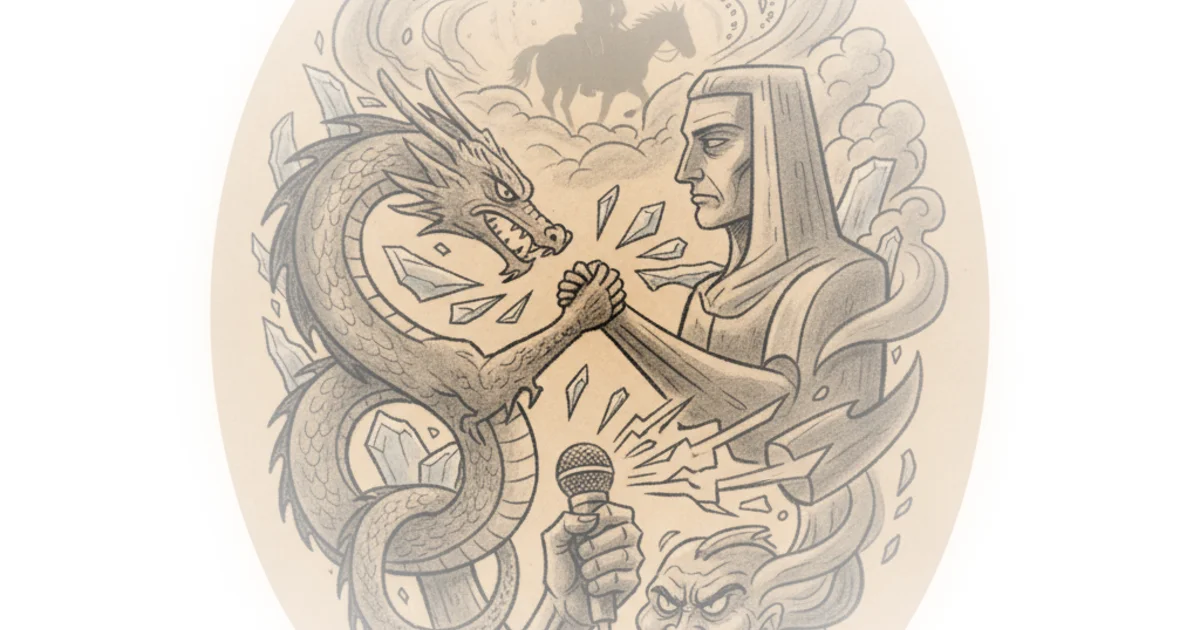
The author argues that the 2008 financial crisis was the turning point where the dynamic shifted. "China not only emerged unscathed but it did so by building shiny new trains, airports, roads, bridges and skyscrapers," while America's reputation "fell precipitously." This contrast created the conditions for a new partnership, one cemented by the 2014 invasion of Crimea. As PolyMatter observes, "Putin began shopping for new partners... China checked all the boxes and then some." The analysis here is sharp: it identifies the economic and geopolitical vacuum that allowed this relationship to flourish, rather than attributing it solely to the personalities of the leaders.
However, the commentary must note that this framing slightly underplays the role of domestic political survival in both Beijing and Moscow. While the economic incentives are clear, the ideological alignment of authoritarian resilience is a stronger glue than the article suggests. Still, the distinction remains vital: this is a marriage of necessity, not of shared vision.
The Limits of 'No Limits'
The most compelling section of the coverage addresses the contradiction at the heart of the China-Russia relationship. PolyMatter writes, "Despite talk of an unbreakable 'No Limits' friendship, it certainly looks like there are in fact limits." The evidence is compelling: China has not provided unambiguous military equipment like artillery shells, preferring instead to offer "dual-use technology" that allows for "plausible deniability."
This strategic ambiguity is the key to understanding China's position. The author explains that unlike North Korea, which has "nothing to lose," China has "everything to lose" by fully committing to Russia's war. "China on the other hand simply can't afford such recklessness," PolyMatter argues, because it remains "deeply embedded in the global order." This is a critical insight for business leaders and policymakers: China's self-interest in maintaining global trade stability acts as a brake on Russian aggression, even as it enables it through energy purchases.
The piece highlights the stark difference in their motivations: "China seeks to change the global order yet maintain its stability. Russia seeks to destroy it." This divergence is the Achilles' heel of the alliance. As PolyMatter puts it, "What unites the 2 is not a positive vision for the future but a negative reaction to US dominance. They're anti-america but not really Pro anything."
China seeks to change the global order yet maintain its stability. Russia seeks to destroy it.
Critics might argue that this distinction is too neat, suggesting that China's support for Russia's sovereignty narrative is a direct challenge to the US-led order regardless of whether they want to destroy it. Yet, the practical constraints on China's actions—its reliance on Western markets and technology—support the author's thesis that Beijing is playing a long, cautious game while Moscow burns the house down.
The Failure of Competing Visions
The analysis concludes by examining the ideological vacuum left by the end of the Cold War. The author notes that while the US and its allies share "a common language, cultural affinity and the same fundamental values," the China-Russia bloc offers no such cohesion. China promotes "sovereignty and multipolarity," but PolyMatter points out the hypocrisy: "whatever enthusiasm you may have will likely diminish after watching Beijing stand by Russia as it flagrantly violates Ukrainian sovereignty."
The piece argues that China's vision is not a universal ideology like communism was for the USSR. Instead, it promotes "Han exceptionalism," the idea that "the Chinese civilization but especially Han Chinese are unique, superior and destined for greatness." This, the author suggests, "doesn't even leave room for all Chinese people, never mind all people around the globe." This is a devastating critique of China's soft power strategy. By framing its rise as a civilizational destiny rather than a political model, China fails to offer a compelling alternative to the West for the rest of the world.
As PolyMatter writes, "China and Russia have different goals and different means to achieve them. Neither tries very hard to create converts." This lack of a unifying ideology means the alliance is held together only by the "enemy of your enemy" dynamic. The author warns that "eventually, if history is any indication, they may drift apart," driven by the same power imbalances that split the Soviet Union and China decades ago.
Bottom Line
PolyMatter's strongest argument is the exposure of the fundamental incompatibility between China's desire for a stable, profitable global order and Russia's desire for chaos and destruction. The piece's greatest vulnerability is its reliance on the assumption that China's economic integration will always trump its geopolitical ambitions, a bet that could be upended by a sudden shift in Beijing's risk calculus. The reader should watch for the cracks in this alliance as Russia's dependence on China grows and China's tolerance for Moscow's recklessness wanes.