Most analysis of European governance stops at the headlines of individual scandals, but Joeri Schasfoort pushes past the noise to ask a far more unsettling question: is the European Union normalizing corruption in a way that invites authoritarianism? By weaving together data from the scientific literature with deep-dive reporting from the watchdog group Follow the Money, Schasfoort constructs a narrative that challenges the comforting assumption that the EU is immune to the democratic backsliding seen elsewhere. This is not just a story about embezzlement; it is an investigation into whether the EU's current response to corruption is inadvertently paving the road to a flawed democracy.
The Slippery Slope of Normalization
Schasfoort begins by confronting the sheer scale of recent revelations, noting that "almost a quarter of EU lawmakers were involved in scandals or breaking the law on issues ranging from harassment to corruption." He juxtaposes this with the situation in the United States, where public cynicism has reached a fever pitch, asking if Europe is following the same trajectory where scandals become mundane. The author's framing is particularly sharp when he notes that in the US, "what used to be scandals is now just another Tuesday," suggesting a dangerous desensitization that the EU must avoid.
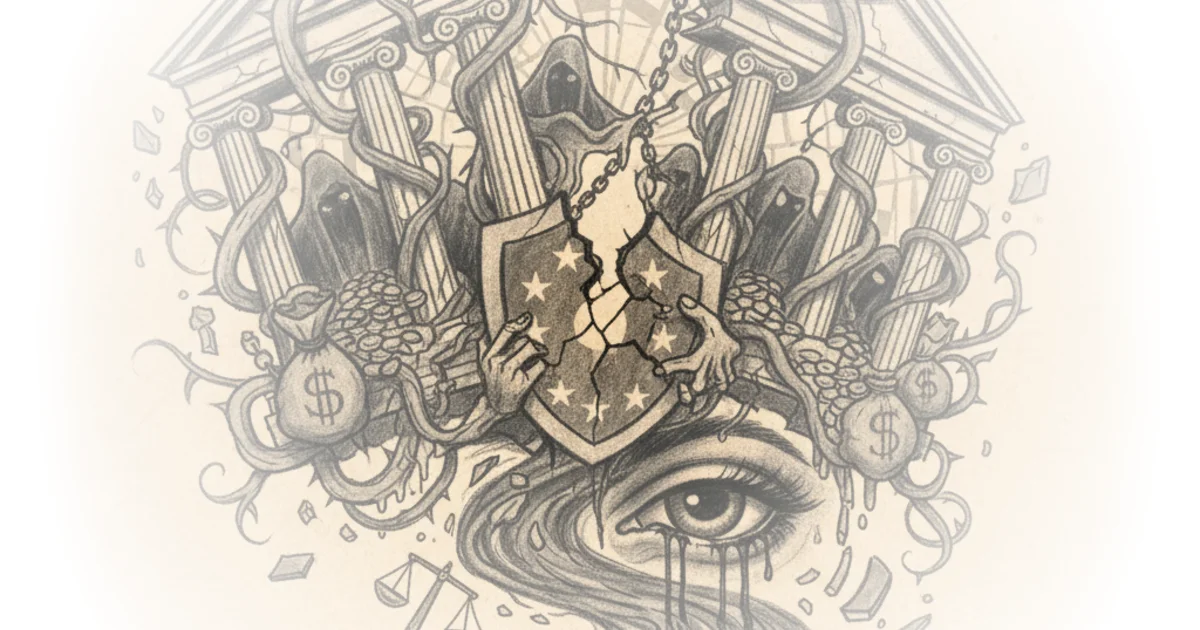
The piece leans heavily on the work of Lisa Vitaman from Follow the Money to illustrate a disturbing pattern of selective justice. Schasfoort highlights the conviction of Marine Le Pen while pointing out that "over the last couple of years actually really more than a hundred members of the European Parliament have been misspending money... and only a few of them get actually sent through to the prosecutors." This disparity suggests a political system where enforcement is uneven, a point Vitaman articulates clearly: "I do think everybody should be treated the same. Which fuels obviously into the narrative of the populist and into the mistrust of citizens into the European Union." The commentary here is vital; it moves beyond the moral outrage of a single conviction to expose a systemic failure that erodes public trust more than the corruption itself.
Critics might argue that focusing on the conviction of a high-profile figure like Le Pen is necessary to maintain the rule of law, regardless of whether others are prosecuted. However, Schasfoort effectively counters this by showing that the lack of uniform accountability is what gives populists their ammunition.
The Architecture of Secrecy
The analysis shifts from parliamentary scandals to the executive branch, specifically the European Commission under Ursula von der Leyen. Schasfoort identifies a worrying trend of "increased secrecy," citing the "Fiser Gate" scandal where vaccine deal details were obscured. The author notes a bureaucratic maneuver that is both clever and alarming: officials used the fact that deals were made via text message to claim there were "no official documents" to release. This tactic, combined with moving critical information from public minutes to secret annexes, creates a veil over decision-making that is antithetical to democratic oversight.
"You can't hold them accountable for it which is one of the basics of a democracy that you are able to question the people in power."
Schasfoort draws a parallel between these tactics and the strategies of authoritarian leaders like Viktor Orbán in Hungary, though he is careful to note the distinction. He quotes Vitaman again to clarify the difference: "The big difference between countries such as Hungary, such as Russia, and the European Union as it is still today, is that do you stand up against corruption? Do you send people to prison who are fraudsters, who are corrupt, or do you let it go?" This distinction is the crux of the argument. The EU is not yet a dictatorship, but the erosion of transparency and the selective application of justice are the early warning signs of a "corruption trap."
The Causation Conundrum
A significant portion of Schasfoort's commentary is dedicated to the academic debate on the relationship between corruption and democracy. He wisely cautions against assuming a simple cause-and-effect relationship, stating that "correlation is not causation." He presents evidence suggesting that the transition from autocracy to democracy can initially lead to more corruption before it eventually declines, a phenomenon observed in various African nations. This nuance is crucial; it prevents the piece from becoming a simplistic moral panic and instead grounds the argument in political science reality.
However, the author ultimately sides with the "slippery slope" theory, supported by the experiences of journalists in Russia and Turkey who warn that without a pushback, authoritarians "will go further and faster." Schasfoort argues that the normalization of minor corruption creates a self-perpetuating cycle, making the EU vulnerable to the very populists it seeks to marginalize. He notes the paradox where "perceived high corruption can provide a platform for authoritarian leaders that then promise to fight that very corruption, only then to be even more corrupt themselves when they get into office."
Bottom Line
Joeri Schasfoort's most compelling contribution is the argument that silence or inconsistency in the face of minor corruption is a strategic error that accelerates democratic decline. The piece's greatest strength lies in its refusal to treat scandals as isolated incidents, instead framing them as symptoms of a broader institutional rot that threatens the EU's legitimacy. The biggest vulnerability remains the inherent difficulty of proving causation in complex political systems, but the evidence of a "corruption trap" is too significant to ignore. For busy observers of global affairs, the takeaway is clear: the EU's ability to hold its own leaders accountable is not just a matter of ethics, but a prerequisite for its survival as a democracy.