PolyMatter delivers a piercing analysis of China's 2021 education crackdown, arguing that the ban on private tutoring was less about student well-being and more about preserving the fragile illusion of social meritocracy in a deeply unequal society. The piece stands out by reframing a massive regulatory shock not as a victory for the state, but as a desperate, ultimately futile attempt to stop parents from gaming a system that the government itself cannot fix. For busy observers of global policy, this is essential listening because it exposes the universal limits of top-down reform when it clashes with the bottom-up desperation of families fighting for their children's future.
The Mechanics of the Crackdown
The narrative begins by painting a visceral picture of the "soul crushing existence" facing millions of Chinese children, where a 12-year-old's entire future hinges on a single exam score. PolyMatter writes, "The only beneficiary of this soul crushing existence are tutoring companies the market for which quadrupled between 2012 and 18 alone." This sets the stage for the administration's drastic intervention: a single Saturday evening in 2021 when the state effectively erased a $120 billion industry. The author notes that "120,000 tutoring centers were ordered to permanently close," transforming the physical landscape of cities as if major global chains had vanished overnight.
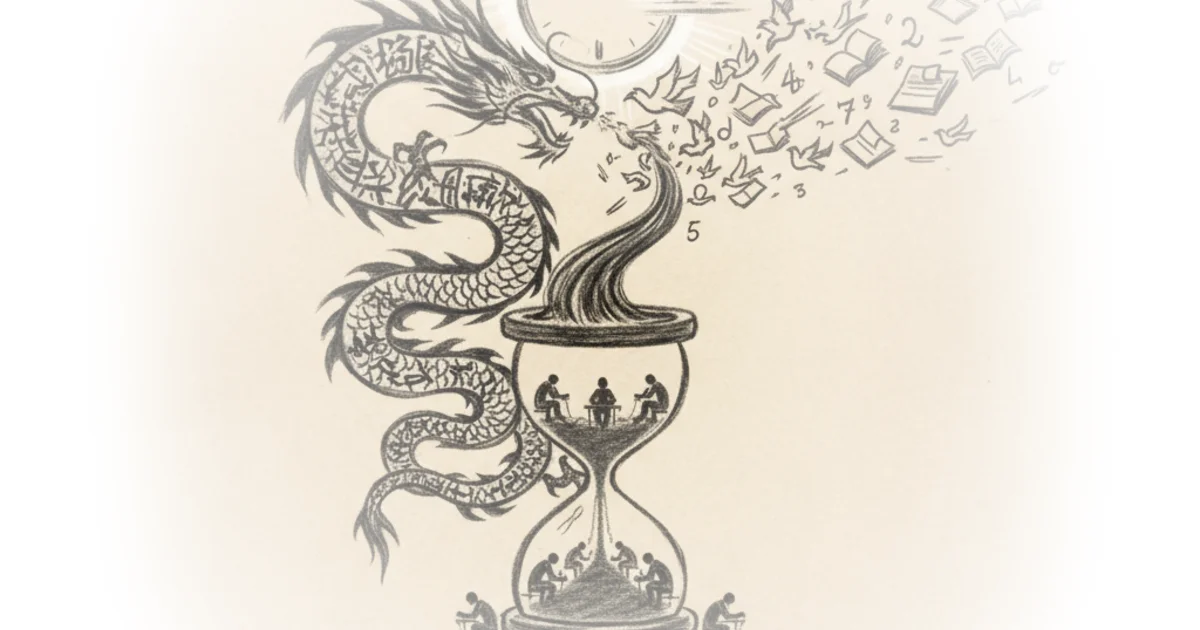
The commentary here is sharp because it refuses to accept the official narrative of "reducing burdens." Instead, PolyMatter points out the economic contradiction: the government destroyed one of the largest employers of fresh college graduates while youth unemployment was already soaring to record highs. The author argues that the move was driven by a need to reclaim control, noting that "gradually the government had lost control of Education" as private firms listed on foreign stock exchanges and offered an exit ramp for wealthy families. This reframing is crucial; it suggests the crackdown was a power play as much as a social policy.
The Illusion of Fairness
The core of the argument rests on the concept of meritocracy as the glue holding a fractured society together. PolyMatter explains that China is one of the most unequal nations on earth, with a massive wealth gap that would otherwise provoke social unrest. The college entrance exam, the Gaokao, serves as the great equalizer, or so the story goes. As PolyMatter puts it, "It absorbs all the anger that might otherwise be provoked by such vast disparities in wealth because Chinese employers care only about the college you attended and not the grades you got there."
However, the author argues that the tutoring industry threatened to shatter this illusion by convincing parents that the exam could be "hacked." The piece highlights the aggressive marketing tactics used by these firms, which exploited parental anxiety with slogans like, "Don't [tutor your child] and we'll train your child's competitor." This commercialization turned education into an arms race, where the rich could buy shortcuts, thereby tarnishing the sanctity of the standardized test. The author's insight here is that the government wasn't just fighting inequality; it was fighting the perception that the game was rigged.
Inequality disguised as equality is a tale as old as time.
Critics might note that the article glosses over the genuine mental health crisis among Chinese youth, which was a legitimate driver for the policy regardless of the government's political motives. While the author focuses on the political economy of the ban, the human cost of the "rat race" remains a valid, independent justification for intervention.
The Failure of Supply-Side Reform
The most compelling section of the piece is its analysis of why the crackdown failed. PolyMatter observes that despite the heavy-handed enforcement—where police patrolled cafes for illicit algebra lessons—the demand for tutoring simply went underground. The author writes, "The Chinese government reduced the supply of tutors, the symptom, but it failed to address demand, the root cause." By forcing tutoring into the shadows, the policy made it more expensive and exclusive, effectively pricing out low and middle-income families who previously relied on the regulated market.
The commentary draws a parallel to similar dynamics in the United States, where well-intentioned reforms often end up widening the gap they seek to close. PolyMatter argues that "everything favors the rich" and that no test or metric is immune to the advantages wealth provides. The author concludes that the ban was a political convenience, a way to "apply an ineffective Band-Aid than address the underlying disease" of high housing prices, long work hours, and economic insecurity. This is a powerful indictment of the limits of authoritarian efficiency; even a government that can purge millions of cadres cannot persuade parents to stop fighting for their children's advancement.
Bottom Line
PolyMatter's strongest contribution is the identification of the ban as a failure of political will rather than enforcement capability, revealing that the state chose to blame schools rather than confront the structural economic pressures driving the competition. The piece's biggest vulnerability is its slightly deterministic view that no educational metric can ever be truly fair, potentially underestimating the long-term cultural shifts that might occur if the pressure cooker of the Gaokao is eventually replaced. Readers should watch for how the Chinese state navigates the next phase of this crisis, as the underlying demand for educational advantage shows no sign of abating.