The man who wants to build the world's largest knowledge repository is also the one deciding what counts as truth. Elon Musk launched Groipedia this month, an AI-powered encyclopedia meant to replace what he calls a woke, compromised Wikipedia. But the project raises a far more fundamental question: can anyone truly trust an AI chatbot to fact-check reality?
Musk has framed Groipedia as a purge of misinformation and a correction to what he sees as ideological bias in Wikipedia. His stated goal is creating an open-source collection of all human knowledge, etched in glass (a stable oxide) and stored on the Moon and Mars for posterity. The project leans heavily on his chatbot, Grock, which handles both generation and fact-checking.
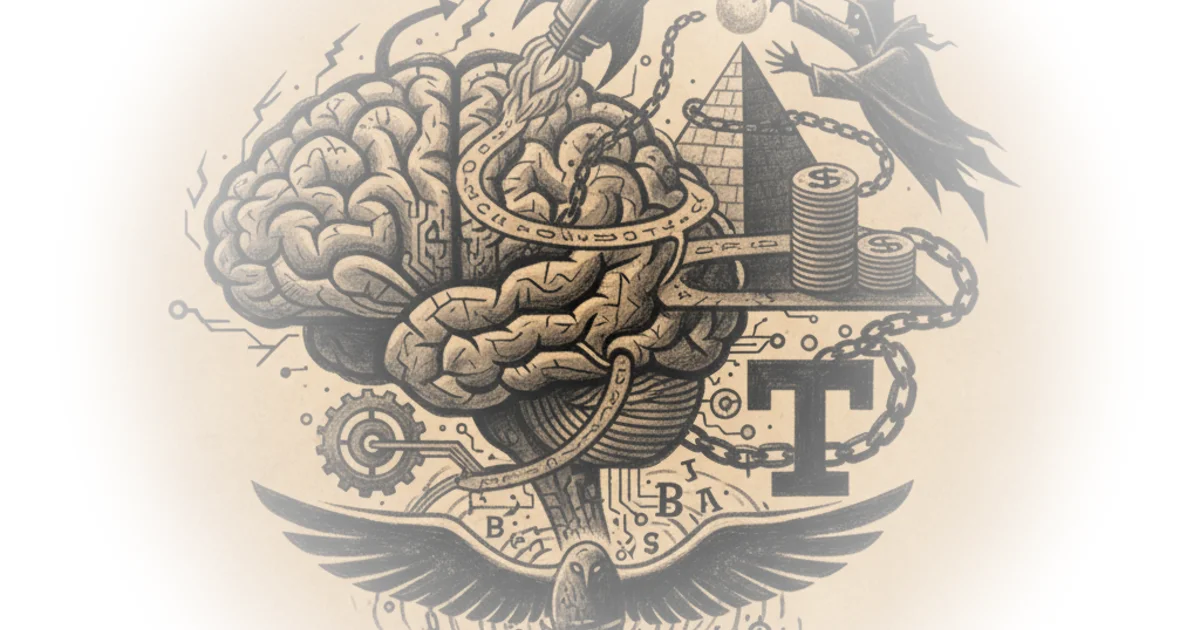
The problem? Grock's internal workings are entirely opaque even to its creators. Musk has personally admitted to intervening when Grock produces outputs he dislikes. There's no visible edit history, no talk pages, no public debate process. You get finished articles with no trace of how they were made.
Wikipedia's model is built on transparency and consensus. Every article shows its full editing history, debates, reversions, and compromises. Disputes are hashed out publicly with democratic rigor. It requires citations from reputable sources, though that means reflecting the biases of academia and big media institutions—biases that are at least visible and traceable.
Groipedia offers none of that transparency. Early analysis shows most articles appear directly adapted from Wikipedia but with fewer citations. When topics become politically or culturally charged, Groipedia often diverts sharply from Wikipedia's version. The article on Musk himself is telling: on Wikipedia, it's a sprawling biography including both praise and criticism, noting controversies about his salute at Trump's inauguration. On Groipedia? Those controversies were omitted entirely.
The irony runs deeper. Grock was released with Musk claiming it avoids left-leaning bias, but testing by Michael D'Angelo found Grock actually has more extreme political opinions than its competitors—56% strongly left compared to 3% neutral. Studies also show LLMs are quite good at obscuring their biases while possessing them.
Critics might note that Wikipedia itself isn't free from problems. A small group of volunteer editors wield outsized influence over what counts as neutral knowledge, and a 2023 Manhattan Institute analysis found mild to moderate left-leaning bias in coverage of US politicians. Groipedia doesn't fix these issues—it simply shifts the problem to an AI system trained on a mystery mix of data.
The desire to control the narrative isn't unique to Musk. It's actually visible in Wikipedia's structure, where volunteer editors shape knowledge according to their priorities. What makes Groipedia different is replacing that messy but visible process with a chatbot whose outputs are shaped by training data, tuning, and owner interventions—without any public accountability.
"It's not clear how far the human hand is involved, how far it's AI generated, and what content the AI was trained on. It's hard to place trust in something when you can't see how those choices are made."
Groipedia claims to offer a cleaner alternative, but it doesn't actually fix anything. It simply shifts the problem. Bias isn't a flaw that can be patched out of knowledge systems—it's a persistent byproduct of how humans and now machines process the world.
Bottom Line
Musk's core insight is valid: Wikipedia carries bias and lacks transparency. But Groipedia solves nothing—it merely replaces one form of unobservable influence with another. The project's biggest vulnerability is its fundamental architecture: an AI chatbot that Musk himself can recalibrate at will. If you wanted a cleaner process, you'd need to open up the editing history, not remove it entirely.