This piece cuts through decades of polite silence to expose a stark contradiction: while the executive branch insists the former president was oblivious to a notorious sex trafficking ring, newly released emails suggest he was fully aware. Judd Legum brings a forensic eye to the gap between public denials and private admissions, forcing a reckoning with what the administration knew and when. For busy readers tracking the erosion of accountability, this is not just gossip—it is a documented challenge to official narratives.
The Paper Trail of Denial
Legum begins by dismantling the timeline of ignorance. He notes that from the late 1980s to the early 2000s, the two men were "friends," attending the same elite social events and even sharing a wedding photo. Yet, when pressed in 2019, the former president claimed, "No, I had no idea. I had no idea. I haven't spoken to him in many, many years." Legum contrasts this with a July 2025 exchange where the former president again insisted, "No, I didn't know," regarding the trafficking of women from his own spa.
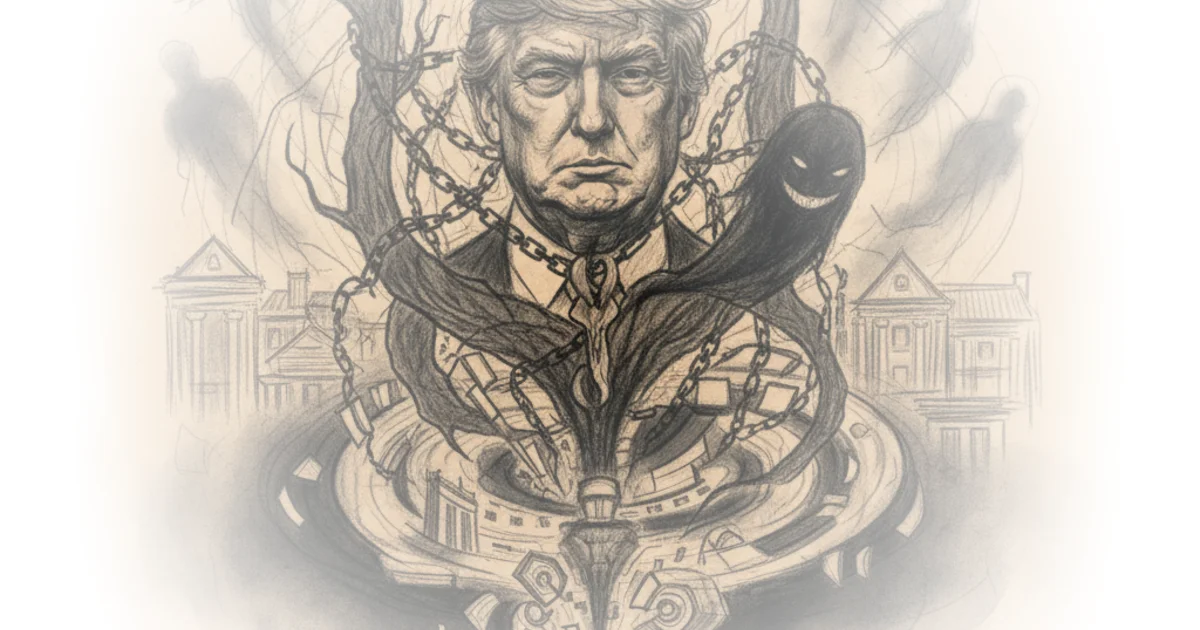
The author's framing is sharp: he does not rely on hearsay but on the words of the accused trafficker himself. Legum writes, "In a January 31, 2019, email to journalist Michael Wolff, Epstein wrote that Trump 'of course… knew about the girls.'" This is the pivot point of the article. The argument gains weight because it comes from the source of the crimes, not a political opponent. As Legum puts it, the emails "directly contradict Trump's denials."
The piece further deepens the mystery with a 2011 email where Epstein, facing legal trouble, told his accomplice that the "dog that hasn't barked is Trump." Legum explains that this implies the former president had spent "hours at my house" with victims yet remained silent to authorities. This is a devastating inference: the silence was not ignorance, but complicity. Critics might note that an email from a convicted criminal is not a legal confession, but Legum's point stands on the sheer inconsistency of the public record versus the private correspondence.
The emails do not show that Trump was involved in sexual misconduct facilitated by Epstein, they do directly undermine Trump's claims that he was unaware of Epstein's crimes.
The Scramble to Silence
The narrative shifts from historical record to active obstruction. Legum details how the administration is now fighting to keep the Department of Justice's files sealed. He describes a "record 50-day delay" by House Speaker Mike Johnson before finally allowing a discharge petition to move forward. The stakes are high, and the reaction is frantic. Legum writes that "Trump scrambles to prevent the release of more Epstein information."
The author highlights the intensity of the pressure campaign, noting that the former president personally called Congresswoman Lauren Boebert and summoned her to the White House. The meeting took place in the Situation Room, a space "reserved for handling high-level crises and military operations," alongside Attorney General Pam Bondi and FBI Director Kash Patel. This detail is crucial; it elevates the issue from a political squabble to a national security-level crisis in the eyes of the administration. Legum argues that this use of high-level machinery to suppress information reveals the depth of the fear surrounding the files.
The article also touches on the treatment of Ghislaine Maxwell, who was recently transferred to a minimum-security facility. A whistleblower reports she is receiving "custom-prepared meals" and "special time to play with a puppy." Legum connects this to the former president's refusal to rule out a pardon. The implication is clear: the administration is preparing a safety net for those who might testify against the former president. This framing suggests a systemic effort to protect the inner circle rather than seek justice.
The Human Cost of Silence
While the article focuses on political maneuvering, the human toll remains the shadow over every paragraph. The victims, including Virginia Giuffre, are reduced to political pawns in the White House's narrative. The piece notes that the White House claims Democrats redacted Giuffre's name to create a "fake narrative," even as Giuffre herself has stated the former president never acted inappropriately in her presence. Legum navigates this carefully, acknowledging the complexity without letting the political spin obscure the reality of the trafficking ring.
The core of Legum's argument is that the administration's focus on procedural disputes and redactions distracts from the fundamental question: why was there such a desperate rush to control the flow of information? The evidence presented suggests that the fear is not of a scandal, but of a truth that could implicate the highest levels of power. The author's choice to focus on the emails and the Situation Room meeting effectively bypasses the noise of partisan bickering to show the mechanics of the cover-up.
Bottom Line
Legum's strongest move is anchoring the entire controversy in the direct words of Jeffrey Epstein, rendering political denials hollow. The piece's vulnerability lies in its reliance on the interpretation of emails that, while damning, do not constitute a criminal indictment. However, the narrative of active obstruction—using the Situation Room to block a congressional vote—is a compelling and terrifying development. Readers should watch for the December vote on the Department of Justice files, as that will be the true test of whether the administration can continue to hold back the truth.