The last functioning blast furnaces in Britain are at risk of permanent damage. If they cool down, the metal inside could solidify into an immovable lump—rendering the equipment useless. This isn't just about one factory; it's a test of whether Britain can maintain its industrial capacity and transition to clean steel production.
The Crisis Unfolds
The UK government is in a race against time to secure iron ore and coking coal for British Steel's Scunthorpe plant. Without these raw materials, the blast furnaces—massive hundred-meter towers that operate continuously like giant crucibles—could fail within weeks or even days.
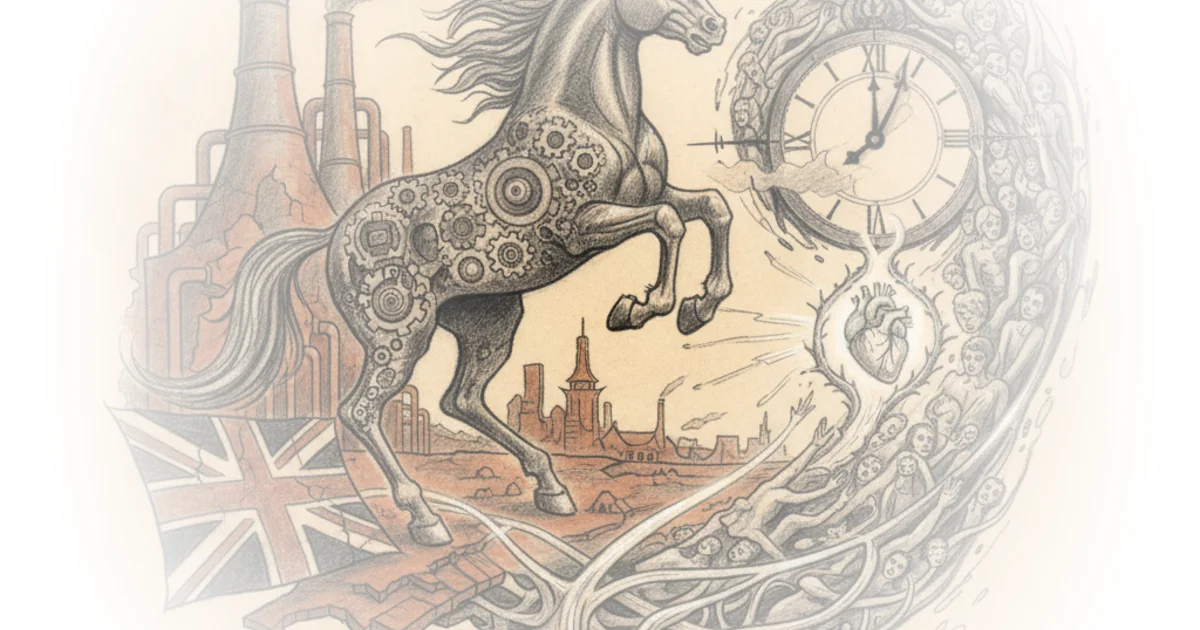
Business Secretary Jonathan Reynolds took emergency control of negotiations from the Chinese operators Jing, accusing them of running British Steel into the ground. The government made a generous offer including sensible conditions to protect workers and taxpayers while creating a commercially viable company. But Jing refused to purchase sufficient raw materials, apparently intending to cancel existing orders and unilaterally close primary steelmaking at Scunthorpe.
The Guardian explained what happens if the furnaces fail: blast furnaces run continuously through Christmas, pandemics, or financial crises. Letting them cool wastes enormous energy. The bigger problem emerges if metal solidifies—a lump of iron and slag blocks the bottom, leaving the furnace beyond repair.
A History of Failure
British Steel's recent history reads like a catalog of broken promises. In 2016, private equity bought the business for just one pound, promising to invest four hundred million pounds. Three years later, the company went bust. The official receiver sold it to Chinese Jing in 2020, who promised to invest 1.2 billion pounds—but within three months, the Chinese operators asked for taxpayer support.
By 2024, British Steel was losing around seven hundred thousand pounds a day. Talks of a government support package broke down. The industry has faded far from its glory years.
Why This Matters
Matt Lawrence from Commonwealth explained what is at stake: British Steel owns the last virgin steel-making capacity in the UK at Scunthorpe. It's the only asset that can produce steel from scratch for wind turbines, railway transport networks, and defense industry requirements. Without it, Britain loses a massive strategic asset in an increasingly unstable world.
If we lose that capability, we will become very reliant on supply chains that are deeply vulnerable and fragile in a world that is becoming more unstable geopolitically.
Steel forms the backbone of any modern economy—it's in buildings, infrastructure, and countless other applications. Losing domestic production means relying entirely on imports from countries like China.
The Perfect Storm
The British steel industry has faced a perfect storm of conditions: global overcapacity, massive Chinese dominance of the global steel industry with dumping products into Europe, higher energy costs during the energy crisis, and carbon taxes. Private equity players divested and de-industrialized the sector.
But Lawrence argues the solution isn't to accept decline—it's a root-and-branch comprehensive plan with long-term investment and willingness to take on high energy costs rooted in reliance on fossil fuels.
The argument for public ownership: the current plant runs on fossil fuel, and transitioning steel (which accounts for about ten percent of global emissions) requires massive capital investment that private owners can't deliver. State ownership could provide a smooth pathway toward clean steel production—the industry's future.
The Scandinavian Example
One successful example exists in Sweden: hybrid steel factory using hydrogen-based production undertaken by a coalition of state-owned enterprises, mixing Swedish and Finnish companies. They can undertake long-term investment and green industrial strategy planning because their governance models allow sustained commitment.
Other G7 nations apart from the UK have shown that sensible industrial strategy means retaining a bigger manufacturing base than Britain has pursued through deliberate divestment and de-industrialization.
Critics might note that accepting this argument requires believing state ownership is the solution—but some would argue it's simply inevitable that developed economies move away from heavy industry toward services. They contend Britain should rely on China for steel while focusing on financial services.
Bottom Line
The strongest part of this argument is its emphasis on strategic industrial capacity as existential infrastructure—not just another business sector to be outsourced. The vulnerability lies in the assumption that public ownership would solve what private ownership couldn't, which remains unproven. What matters next: whether the government can secure raw materials before the furnaces are permanently damaged—and whether anyone can deliver the massive investment needed for green steel production.