Matt Stoller delivers a blistering indictment of a proposed $72 billion merger between Netflix and Warner Bros. Discovery, arguing that the deal is not just a business transaction but a potential catastrophe for American culture and competition. While the public narrative often focuses on the convenience of streaming bundles, Stoller reframes the issue as a direct assault on the theatrical marketplace and a violation of long-standing antitrust principles. He brings a rare historical depth to the conversation, connecting modern consolidation to the collapse of the mid-20th-century studio system, urging listeners to see this not as inevitable progress, but as a deliberate dismantling of the open market.
The Illusion of Choice
Stoller opens by dismantling the corporate rhetoric surrounding the deal. He notes that Ted Sarandos, co-chief executive of Netflix, claims the combination will "give audiences more of what they love and help define the next century of storytelling." Stoller immediately counters this with the reality on the ground: "Just the fact that creative powerful storytellers are afraid of opposing this deal publicly should tell us something." This observation is crucial; it suggests that the threat is so palpable that even industry insiders are self-censoring to avoid retaliation. The author argues that the merger is a move to kill the theatrical business entirely, pushing a precarious industry over the edge.
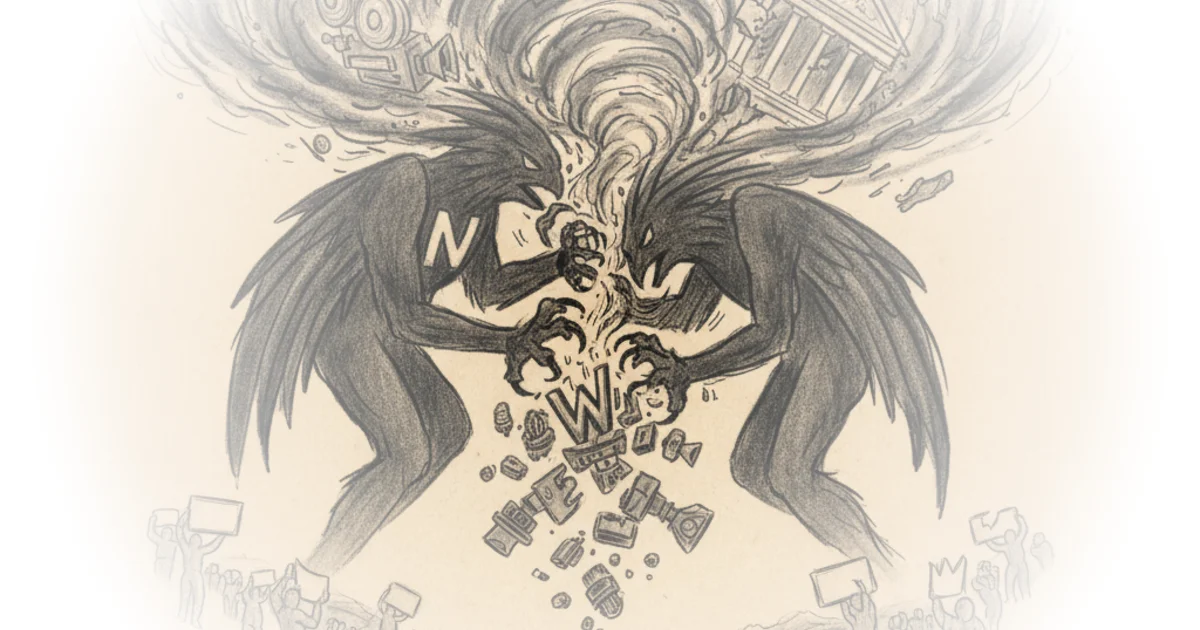
The core of Stoller's economic argument rests on the precedent of the Disney-Fox merger in 2019. He points out that when that consolidation occurred, the number of wide-release films dropped by 44%, from an average of 24 to just 14 annually. "A theater needs a certain number of new releases to be profitable, and are very close to that line right now," Stoller writes, highlighting the existential threat to physical cinemas. This data-driven approach effectively counters the "efficiency" argument often used by dealmakers. Critics might note that streaming giants could argue they are expanding content volume through digital channels, but Stoller's focus remains on the specific erosion of the theatrical ecosystem, which he views as the primary engine for cultural discovery.
Netflix is the number one streamer, and would be buying the number three streamer. It would also be buying a large and important content library, which would presumably then be unavailable for potential rival streaming services.
The Legal and Political Minefield
The commentary shifts to the legal viability of the deal, where Stoller is particularly scathing. He identifies the involvement of antitrust lawyer Steve Sunshine as a major red flag, noting that Sunshine has a history of advising clients on deals that were subsequently blocked, such as Visa's purchase of Plaid and Adobe's attempt to buy Figma. "If Netflix wanted to set itself up for a monopolization case, an ill-fated attempt to buy Warner Bros Discovery would be a good way to get a bunch of internal documents over to enforcers," Stoller argues. This suggests a level of recklessness that goes beyond standard corporate strategy.
Stoller draws a powerful parallel to the 2022 case where Judge Florence Pan blocked the merger of Penguin and Simon & Schuster. He explains that the logic used by the book publishers—consolidation is necessary to compete with Amazon—mirrors the current Hollywood argument about competing with streaming and YouTube. "Five book publishers combining into four meant fewer opportunities to publish interesting books and less money for writers," he writes, applying this directly to the five remaining major film studios. The historical context here is vital; Stoller reminds us that the old Hollywood model relied on separating production and distribution, a structure dismantled by the end of the Paramount decrees and financial syndication rules. Without these guardrails, the market has tilted toward monopolistic behavior.
The political landscape adds another layer of complexity. Stoller notes that while the Trump administration might have been more permissive of consolidation, the current political environment is fractured. He points out that even some Democrats are wary, citing Jane Fonda's recent piece warning that the administration has used antitrust hurdles as "tools of political pressure and censorship." This creates a unique alignment where both consumer advocates and free speech proponents might find common ground against the merger.
The Human Cost of Financial Engineering
Perhaps the most damning part of Stoller's analysis is his focus on the incentives driving the deal. He portrays the leadership of Warner Bros. Discovery not as visionaries, but as executives prioritizing short-term payouts over long-term viability. "The CEO of the company, David Zaslav, is a reviled executive who has done a poor job for shareholders and filmmakers, but will nonetheless get paid $500 million if the deal closes," Stoller writes. This highlights a disconnect between the financial class and the creative class. The author suggests that the financiers simply do not believe the movie business can offer the returns they see in tech monopolies, leading them to pursue a strategy of "arson" rather than innovation.
It's bizarre that our financiers have convinced themselves the only way to do well is through arson.
Stoller contrasts this with the alternative: a return to the model where companies focus on making profitable content without needing to dominate the entire supply chain. He cites the example of KKR, a private equity firm that bought Simon & Schuster after the failed merger, and found that investing in new titles actually made the company more profitable. This serves as a counter-narrative to the idea that consolidation is the only path to success. While some might argue that the scale of modern media requires massive integration to compete globally, Stoller's evidence from the publishing industry suggests that competition and diversity of ownership can actually drive better financial and creative outcomes.
Bottom Line
Matt Stoller's argument is at its strongest when he connects the dots between historical antitrust failures and the current threat to the theatrical marketplace, providing a clear, evidence-based case against the merger. The piece's greatest vulnerability lies in its assumption that the Department of Justice will act decisively, given the complex political maneuvering and the potential for regulatory capture. Readers should watch closely for the initial filing from the Justice Department, as Stoller predicts a high-stakes legal battle that could redefine the future of American media.
The ideal scenario now is a trial that puts the secrets of Hollywood executives and financiers on display, and crushes the financiers who think mergers are the only move in business.