Andrew Henry challenges a beloved fantasy trope with a surprising twist: the most magical forests in our stories are actually the least accurate to real-world history. While pop culture obsesses over untouched, primeval wilderness, Henry reveals that true sacred groves are vibrant products of human labor, politics, and ritual. For busy readers seeking a fresh perspective on environmentalism and storytelling, this is a necessary correction to the "relic theory" that has dominated our imagination for a century.
The Illusion of the Untouched Wild
Henry begins by dismantling the fantasy image of the sacred grove as a frozen relic of an ancient, pre-human world. He points to the pervasive trope found in games like The Legend of Zelda and films like Princess Mononoke, where forests are depicted as "impossibly ancient untouched primeval places that seem to operate by different rules." This framing is seductive because it offers a clean escape from human complexity, but Henry argues it is fundamentally wrong. He writes, "Real world sacred groves are usually not untouched by human hands. They're not frozen relics of an ancient wilderness."
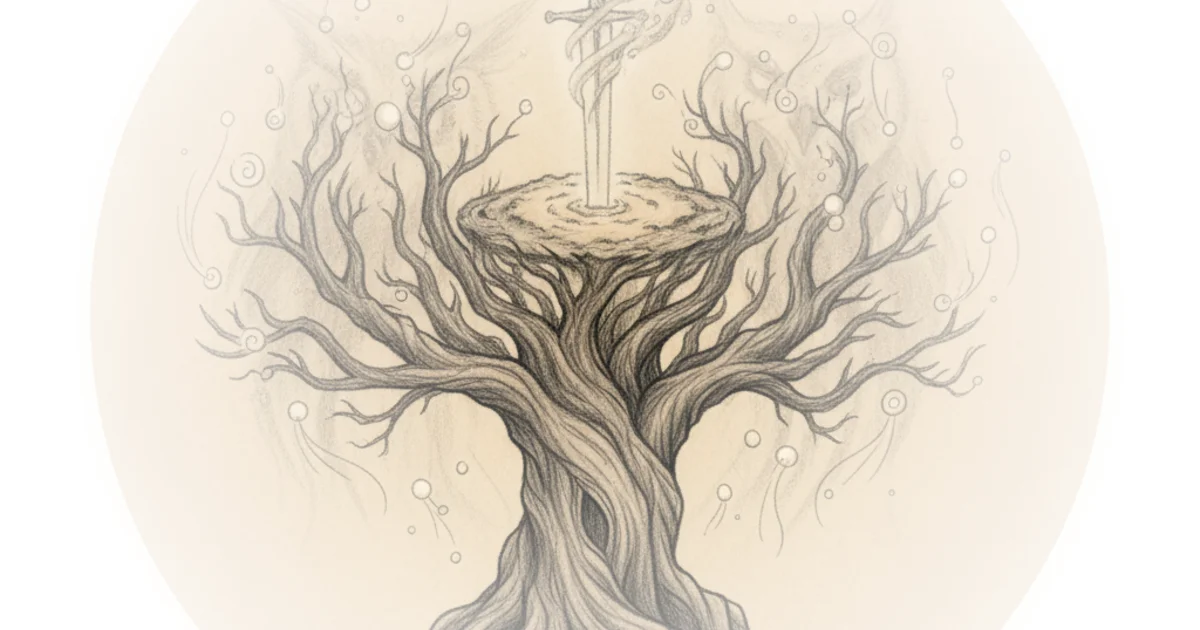
Instead of abandonment, these spaces are defined by intense human engagement. Henry explains that sacredness is not an inherent quality of nature but a social construct. He notes, "Sacredness is produced and maintained by people through stories, rituals, taboos, enforcement, and tradition." This distinction is crucial. It shifts the narrative from nature protecting itself to communities protecting nature through specific, often difficult, social contracts. The author effectively uses the etymology of "sacred"—derived from the Latin sacer, meaning "set apart"—to ground this argument in a universal human behavior rather than a mystical accident.
Sacredness is not a natural or self-evident quality that a space can possess. It is produced and maintained by people through stories, rituals, taboos, enforcement, and tradition.
The Relic Theory and Its Consequences
The piece then traces the intellectual lineage of this misconception to the "relic theory," a concept popularized by early 20th-century anthropologist James Frazer. Henry describes how Frazer and later environmentalists viewed these groves as "survivals, living remnants of prehistoric forests" that represented a lost golden age of human-nature balance. This narrative, while emotionally powerful, has a dark side. Henry argues that this view "tends to write the role of local communities out of the picture," treating indigenous societies as static or frozen in time rather than dynamic agents of history.
Critics might note that the environmental movement's reliance on this imagery has yielded real conservation successes by inspiring public support for protected areas. However, Henry suggests that this approach is fragile because it ignores the actual mechanisms of preservation. He illustrates this with the Italian shrine groves, which are biodiverse not because they are wild, but because locals actively prune trees and manage grazing. As Henry puts it, "These groves flourish not because they've been left alone, but because they've been carefully tended to."
Case Study: Tanzania and the Politics of Roots
The argument reaches its peak with a detailed examination of sacred groves in Tanzania, where the clash between conservation theory and local reality becomes stark. Henry details how European ecologists once assumed these forests were ancient remnants, only to discover they were often planted by communities to mark lineage and political authority. In the North Pare mountains, groves called mhu are tied to ruling clans, and their existence is a direct result of ritual protection rather than natural isolation.
The most compelling evidence Henry offers comes from a 1990s government conservation program that inadvertently threatened these very groves. When officials introduced new tree species to boost biodiversity, local caretakers sabotaged the effort. Henry explains the reasoning: "Planting trees was political... if they let those trees take root, then this would actually grant the government cultural authority over the groves." This anecdote powerfully demonstrates that for these communities, the grove is not just a forest; it is a legal and spiritual document of their right to the land. Conservation efforts that fail to respect this political dimension are destined to fail.
Conservation of these groves only works when it aligns with the religious and political systems of the people who tend them.
Bottom Line
Andrew Henry's most valuable contribution is exposing how the "untouched nature" myth actually undermines real-world conservation by erasing the human labor required to maintain biodiversity. While the argument occasionally leans heavily on anthropological theory, the Tanzania case study provides a concrete, undeniable proof of concept. The biggest vulnerability remains the difficulty of translating this complex, community-centric model into broad environmental policy that often prefers simple, nature-focused narratives. Readers should watch for how modern conservationists are beginning to integrate this "tended landscape" approach into their strategies.