Asianometry reframes the history of medicine not as a series of lucky accidents, but as a frantic, industrial-scale scavenger hunt that has since hit a dead end. The piece's most striking claim is that the "Golden Age" of antibiotics wasn't defined by the drugs themselves, but by a specific, now-defunct methodology: the systematic, global sifting of soil that yielded two-thirds of our therapeutic arsenal in just twenty years. For busy listeners facing a modern crisis of superbugs, this historical autopsy offers a crucial, if sobering, context for why the well has run dry.
The Shift from Chance to System
The narrative begins by dismantling the romantic myth of Alexander Fleming's solitary breakthrough. While Fleming noticed mold killing bacteria in 1928, Asianometry correctly notes that "it's important to note, however, that has been long been known that chemicals and molds can kill or inhibit bacteria. like really long known." The author uses this to pivot to the real turning point: the transition from observation to industrial application. The Oxford team of Howard Florey, Norman Heatley, and Ernst Chain didn't just find penicillin; they made it usable, proving that a drug must be effective, non-toxic, and stable enough to survive inside the human body.
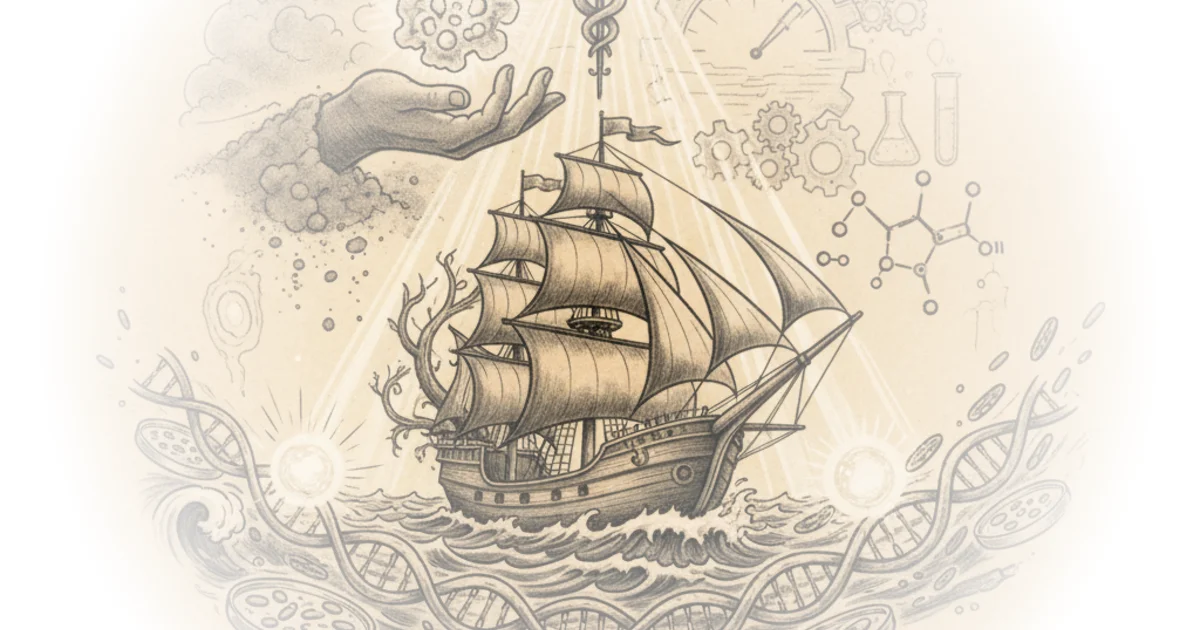
The true protagonist of this era, however, is Selman Waksman. Asianometry highlights how Waksman moved beyond the "pure chance" of Fleming's discovery to create a repeatable engine for drug discovery. He instructed his team to "Drop everything you're doing and start isolating some streptomyces and see if you can find an antibiotic that's better than penicillin." This directive launched a massive, manual screening operation where teams visually scanned thousands of petri dishes for signs of bacterial inhibition. The author emphasizes the sheer scale of this labor, noting that "in contrast to the discovery of penicillin by professor Fleming, which was largely due to a matter of chance, the isolation of streptomycin has been the result of a long-term systematic and assiduous research by a large group of workers."
"The big deal wasn't necessarily the discovery of the drug itself, though that was certainly important. Rather, it was Waksman producing a systematic search methodology."
This framing is powerful because it shifts credit from the lone genius to the collective effort, a nuance often lost in pop science. However, the author doesn't shy away from the ethical murkiness of this success. The piece details the bitter dispute over credit and royalties for streptomycin, where Waksman secured a 10% share while his student Albert Schatz and colleague Elizabeth Bugi received significantly less. Asianometry offers a blunt assessment: "my readings of the accounts of Waksman's actions find him to have acted like an ungenerous a-hole." This candid admission adds necessary human texture to the scientific triumph, reminding us that the machinery of discovery is often driven by flawed individuals.
The Global Soil Rush
Once Waksman's method proved viable, the pharmaceutical industry went into overdrive. The article paints a vivid picture of a global expedition where employees were encouraged to bring back soil samples from their vacations. "Employees taking trips or vacations abroad were encouraged to bring sampling bags with them so they can bring soils back," Asianometry writes. This led to a treasure trove of discoveries: erythromycin from the Philippines, chloramphenicol from Venezuela, and vancomycin from a remote forest in Borneo.
Yet, the efficiency of this model was deceptive. The author points out that the hit rate was abysmal. "Eli Lilly studied over a million isolates over 30 years. Out of that million, vancomycin was one of just three antibiotics eventually brought to the market." The sheer volume of work required to find a single viable drug meant that by the late 1960s, the low-hanging fruit was gone. The industry began rediscovering the same compounds repeatedly, with the number of duplicate discoveries surging from 63 between 1947 and 1956 to 253 in the following decade.
Critics might note that the article somewhat underplays the role of regulatory hurdles and the rising cost of clinical trials as factors in the slowdown, focusing almost exclusively on the exhaustion of natural sources. While the soil was indeed running dry, the economic calculus of drug development also shifted. Nevertheless, the core observation holds: the simple act of digging up dirt and looking for inhibition zones was no longer sufficient.
The Rise of Resistance and the Semi-Synthetic Pivot
As the soil ran dry, a new threat emerged with terrifying speed. Asianometry illustrates the rapid evolution of resistance with chilling data: "One hospital in 1951 had just 4.8% of its cases resistant to tetracycline and erythromycin. two years later that had risen to 78%." This accelerated the need for a new approach. The narrative introduces Hamao Umezawa, a Japanese scientist who pioneered a different strategy. Instead of just screening for new natural products, Umezawa began modifying existing molecules to evade bacterial defenses.
The author describes Umezawa's work as a game of chemical whack-a-mole. When bacteria developed enzymes to destroy a drug, Umezawa would "synthesizes a new drug that works like kanamycin but evades those enzymes by removing a specific hydroxyl group." This semi-synthetic method—taking a natural scaffold and adding new side chains—became the new standard. Umezawa's legacy is immense, with nearly 70 antibiotics and 40 anti-cancer agents to his name, including bleomycin, which turned testicular cancer from a death sentence into a curable disease.
"When the soils finally ran dry, drug chemists like Umezawa turned to what is now called the semi-synthetic method. This worked by modifying or improving known molecules called scaffolds to create new drugs."
This section effectively bridges the gap between the historical golden age and the modern era of genetic engineering and synthetic biology. It suggests that the future of antibiotics lies not in finding new bugs in the dirt, but in re-engineering the molecules we already know. The author's focus on Umezawa provides a hopeful counter-narrative to the gloom of resistance, showing that human ingenuity can at least temporarily outpace bacterial evolution.
Bottom Line
Asianometry's strongest argument is that the antibiotic golden age was a unique, non-replicable window of opportunity driven by a specific, labor-intensive methodology that has since exhausted the most accessible natural sources. The piece's biggest vulnerability is its heavy reliance on the soil-screening narrative, which, while accurate for the mid-20th century, risks oversimplifying the complex modern challenges of synthetic biology and the economic disincentives for antibiotic development. The reader should watch for how current research is moving beyond both the soil and the semi-synthetic model toward AI-driven molecular design, the true successor to Waksman's systematic hunt.