In a culture obsessed with optimization and endless growth, Ryan Holiday's latest piece for The Daily Stoic offers a jarring but necessary pivot: the most effective way to live is to constantly remember that you will die. This isn't morbid fixation; it is a strategic tool for clarity. Holiday reframes the ancient practice of Memento Mori not as a meditation on the end, but as a mechanism to strip away the trivialities of the present, arguing that the fear of death is often the very thing that paralyzes us from living fully.
The Architecture of Mortality
Holiday begins by dismantling the instinct to avoid the topic. He notes that while the Mid-Autumn Festival celebrates reunion, he uses the occasion to practice the opposite: "如何思考死亡" (how to think about death). He defines the core Latin phrase simply: "記住你會死" (Remember you will die). The author argues that this reminder is not meant to induce despair, but to highlight the finite nature of our time. "這種'提醒'練習的目的是為了讓人們經常提醒自己生命的有限性,以便更好地面對當下的生活" (The purpose of this 'reminder' practice is to constantly remind people of the finiteness of life, so they can better face current life).
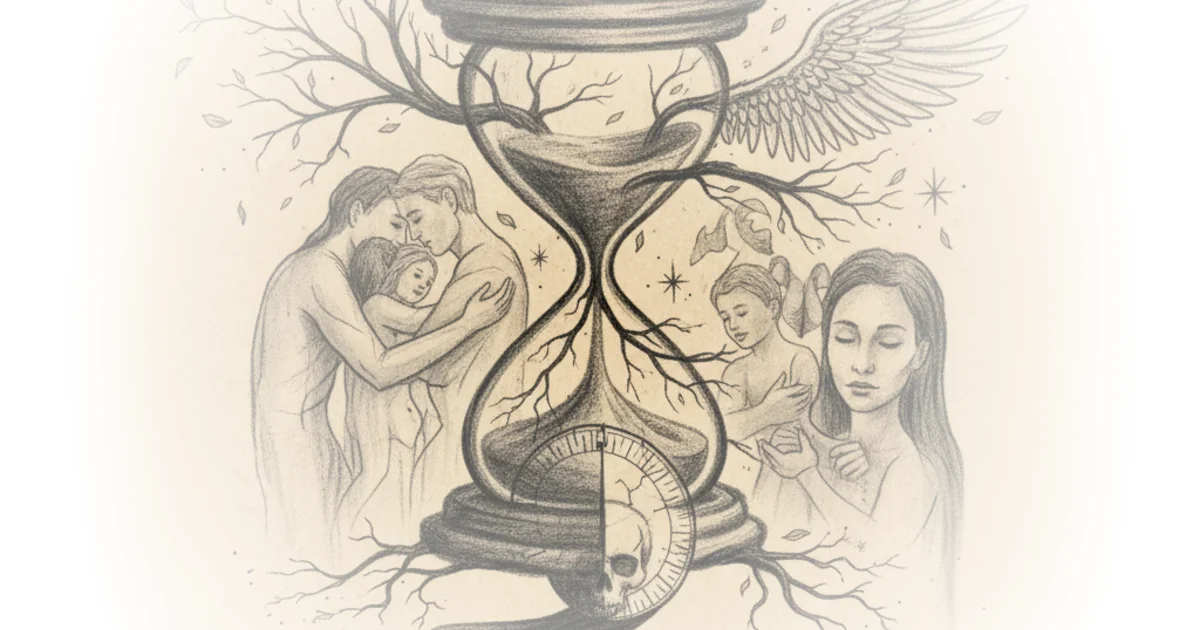
This framing is powerful because it shifts the burden of anxiety. Instead of fearing the unknown, Holiday suggests we accept the inevitability. He writes that "死亡是人生中不可避免的自然現象,並且無法預測何時會降臨" (Death is an inevitable natural phenomenon in life, and it is impossible to predict when it will arrive). By accepting this unpredictability, the reader is invited to stop treating life as a guaranteed resource. Holiday pushes this further with a stark visualization: when kissing a child goodnight, one should consider the possibility that tomorrow they might not see them again. "也許明天他就會因為各種意外災難或無法挽回的疾病而死去,你再也見不到他" (Perhaps tomorrow he will die from various accidents or irreversible diseases, and you will never see him again).
"只有時刻意識到死亡的存在,才能真正珍惜活著的每一刻" (Only by constantly being aware of the presence of death can we truly cherish every moment of being alive).
Critics might argue that such a mindset risks inducing chronic anxiety or a depressive state, turning every interaction into a potential funeral. However, Holiday counters this by citing modern psychology and existential therapy, which suggest that facing death actually reduces fear. He points to hospice care research, noting that "面對死亡的患者往往能更清楚地理解什麼對自己最重要,這種清醒的認知反而讓他們過得更加充實" (Patients facing death often understand more clearly what is most important to them, and this clear cognition allows them to live more fully).
From Philosophy to Actionable Protocol
Holiday moves beyond abstract theory to provide a concrete six-step protocol, bridging the gap between ancient wisdom and modern productivity. He draws inspiration from Tuesdays with Morrie, quoting the dying professor's advice to imagine a bird on the shoulder asking, "Is today the day? Am I ready? Am I doing all I need to do? Am I being the person I want to be?" This specific imagery serves as a daily audit mechanism.
The author's first practical step is "日常提醒" (Daily reminders), suggesting we consume art and literature about death to normalize the concept. His second step involves "冥想死亡的情境" (Meditating on the scenario of death), where one imagines their life ending to evaluate if their current actions align with their values. "思考自己當下的選擇和行動是否符合自己的價值觀,如果今天是最後一天,你是否會後悔未完成的事情" (Think about whether your current choices and actions align with your values; if today were the last day, would you regret unfinished things?).
Holiday is particularly sharp when addressing interpersonal friction. He suggests that when annoyed by a parent's call, one should visualize the finality of that relationship. "因為生命短暫,沒有人能確保明天一定能相見" (Because life is short, no one can guarantee that we will meet again tomorrow). This reframes irritation as a fleeting emotion in the face of an eternal separation. He also advocates for practical exercises like writing a will or attending one's own mock funeral, noting that those who have done so experience profound shifts in perspective.
The Antidote to Procrastination
Perhaps the most compelling argument Holiday makes is that Memento Mori is the ultimate productivity hack. In an era of "lying flat" and chronic procrastination, he argues that the awareness of death is the only true motivator. "許多人總是說自己缺乏動力、動機,很想躺平。也許當你能夠意識到死亡的不可避免,反而可以激發你想要立即行動的衝動,而不再拖延" (Many people always say they lack motivation and want to lie flat. Perhaps when you can realize the inevitability of death, it will instead stimulate the impulse to act immediately, no longer procrastinating).
He challenges the reader to stop waiting for a perfect moment that will never come. "這有助於你在日常抉擇時,作出更符合內心真正渴望的決定,而非被他人或社會標準所左右" (This helps you make decisions in daily choices that are more in line with your true inner desires, rather than being swayed by others or social standards). Holiday suggests a "Think Week" to regularly review one's life, asking if the current trajectory matches the person one wants to be. "你仔細想想這些東西你根本平常就不會去思考" (Think carefully about these things; you simply don't think about them under normal circumstances).
A counterargument worth considering is that this approach might lead to a hyper-rational, emotionless existence where every moment is weighed against its finality, potentially robbing life of its spontaneous joy. Holiday addresses this by emphasizing that the goal is not to live in fear, but to deepen connection. He notes that while opening deep conversations with loved ones is psychologically difficult, "我相信這樣的練習,絕對能夠加深你與這世界的連結" (I believe this practice will absolutely deepen your connection with the world).
Bottom Line
Holiday's piece succeeds because it transforms a terrifying concept into a liberating one, offering a rigorous mental framework for prioritizing what actually matters. The argument's greatest strength is its practical application, turning abstract philosophy into a daily checklist for living. However, the reader must be wary of using this practice to induce guilt rather than clarity; the goal is presence, not paralysis. For the busy professional, the takeaway is clear: the only way to stop wasting time is to remember that the clock is ticking for everyone.