This isn't just another tech optimism piece; it's a global audit of how nations are racing to embed artificial intelligence into the very DNA of their education systems, often with startling speed. Johnny Chang captures a pivotal moment where the question has shifted from "if" AI belongs in the classroom to "how fast" governments can deploy it without breaking the human element of learning.
The Global Sprint
Chang opens with a striking observation about the scale of this shift, noting that "countries are racing to lead in the AI space" by investing heavily to prepare students for an "AI-driven workforce." The piece highlights Estonia's "AI Leap 2025" initiative, a bold move where the government will provide ChatGPT Edu to all secondary students by 2025. This is framed as a historic first: "the first time a government has introduced ChatGPT Edu at a national level." Chang uses this to illustrate a broader trend where national strategy is merging directly with curriculum design.
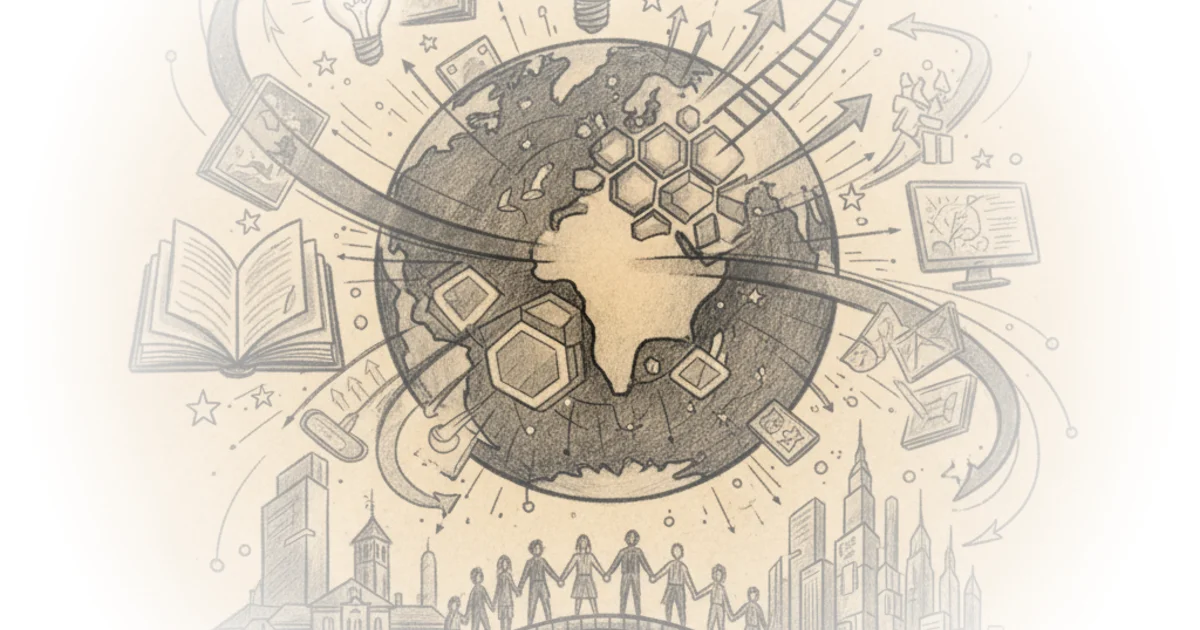
The author then pivots to the stark contrasts in global readiness. While Beijing rolls out mandatory AI courses for primary and secondary students to "boost sector's growth," the narrative takes a sober turn when addressing Sub-Saharan Africa. Chang writes that the region "currently lags behind other regions in AI readiness due to infrastructural challenges such as limited internet connectivity, unreliable electricity, and restricted access to hardware." Yet, there is a counter-narrative of opportunity: "Africa holds great potential, as many African countries are not bound by legacy systems, which allows them to adopt AI solutions more quickly." This framing is effective because it avoids the trap of viewing developing nations solely through a deficit lens, instead highlighting the "greenfield" advantage of skipping outdated technologies.
"Africa holds great potential, as many African countries are not bound by legacy systems, which allows them to adopt AI solutions more quickly."
Critics might note that the assumption that legacy-free adoption is inherently faster overlooks the massive capital investment required for the very infrastructure—electricity and broadband—that the article admits is currently lacking. The leap from "no legacy systems" to "rapid AI adoption" is not automatic; it requires resources that may not be immediately available.
The Human Element: Teachers, Parents, and Students
The coverage moves beyond policy to the messy reality of implementation, drawing heavily on the 2025 EDUCAUSE AI Landscape Study. Chang reports that "Teaching and learning is the functional area at the institution most focused on using AI," with a heavy emphasis on "academic integrity (74%)" and "coursework (65%)." The data reveals a shifting tide in institutional mindset: "A larger proportion of respondents to this year's survey agreed that 'we view AI as a strategic priority' compared with last year's respondents, at 57% and 49%, respectively."
Chang also explores the grassroots level, citing a Guardian piece on parents who "want him to be prepared" and are teaching their Gen Alpha children to use AI for "learning and bonding." However, the author balances this enthusiasm with the anxieties found in a Nature feature, where students are using tools for everything from exam prep to workload management. The tension is palpable: while some see creativity, others fear "cognitive offloading," a term used in the BBC coverage of Scottish universities where over 600 students were accused of AI misuse in a single year.
The piece highlights a critical divergence in teacher perspectives based on grade level. A study in the Education and Information Technologies Journal found that "Secondary school teachers were less open to AI chatbot use compared to elementary school teachers." Chang explains that high schoolers are more focused on "strategies for guiding students in AI use and detecting AI-generated work," whereas younger educators prioritize "basic AI literacy." This nuance is crucial; it suggests that the "one-size-fits-all" approach to AI integration is already failing before it begins.
"Secondary school teachers were less open to AI chatbot use compared to elementary school teachers."
A counterargument worth considering is whether the focus on "detecting AI-generated work" in high schools is a productive strategy at all. If the goal is preparation for the future workforce, perhaps the energy spent on policing usage should be redirected toward teaching ethical integration, a point the article touches on but doesn't fully resolve.
Beyond the Hype: Critical Perspectives
Chang does not shy away from the darker side of the narrative, dedicating significant space to research that challenges the techno-optimism. Citing a paper in the Journal of Applied Learning & Teaching, the author notes that the anticipated revolution has "not materialized," with concerns about "reduced critical thinking and unproven learning benefits." The research argues that AI is "not truly intelligent, objective, or autonomous but rather built on human labor and data extraction."
This section serves as a necessary reality check. Chang writes that the paper challenges the myth that AI fosters democracy, suggesting instead that it "exacerbates inequality, environmental degradation, and labor exploitation." The author effectively uses this to pivot toward a call for "critical AI education," urging that students must "understand the limitations of AI, including the potential for biases and inaccuracies." The webinar takeaways reinforce this, emphasizing the need to "promote the development of students' authentic voices, ensuring AI doesn't standardize or replace the diversity of perspectives."
The coverage concludes by noting that in England, schools are trying to "dispel 'doom and gloom'" by using AI for creative visualization, such as generating images from student writing or creating virtual historical figures. Yet, even here, the guardrails are strict: "Experts warn against over-reliance on AI for learning, emphasizing that fundamental literacy, numeracy, and critical thinking skills must be developed before students can effectively use AI tools."
"Don't believe the hype: AI myths and the need for a critical approach in higher education."
Bottom Line
Johnny Chang's piece succeeds by refusing to treat AI in education as a monolith, instead exposing the fractured reality where national ambition clashes with infrastructural limits and pedagogical anxiety. Its greatest strength is the inclusion of critical research that questions the very "hype" driving the global race, reminding readers that technology without a human-centered framework risks deepening existing divides. The biggest vulnerability remains the gap between high-level policy announcements and the day-to-day reality of teachers who are still trying to figure out how to grade an essay written by a machine.