Mark Koyama presents a startling reframing of faith: not as a mystical escape from the market, but as a sophisticated digital platform competing for attention and loyalty. This isn't just a book review; it's a challenge to how we understand the very mechanics of belief in a modern world. By treating religion through the lens of platform economics, Koyama suggests that the survival of ancient traditions depends on the same network effects that keep social media apps alive.
The Platform Perspective
Koyama begins by dismantling the standard economic view of religion as a simple "club good." While earlier theories by scholars like Larry Iannaccone explained why strict religions attract committed members, Koyama notes that this model fails to capture the supernatural core of faith. "Religions can be analyzed as platforms akin to Facebook or Amazon," he writes, capturing the essence of Seabright's thesis. This analogy is powerful because it shifts the focus from passive consumption to active participation. In this view, believers aren't just customers buying a service; they are the infrastructure itself. As Koyama observes, Seabright argues that religious members are "assets of the platform, and active in the delivery of such benefits to each other." This distinction is crucial. It explains why a religion can survive for millennia while a secular club might dissolve; the members are invested in the platform's longevity because their own identities are woven into its code.
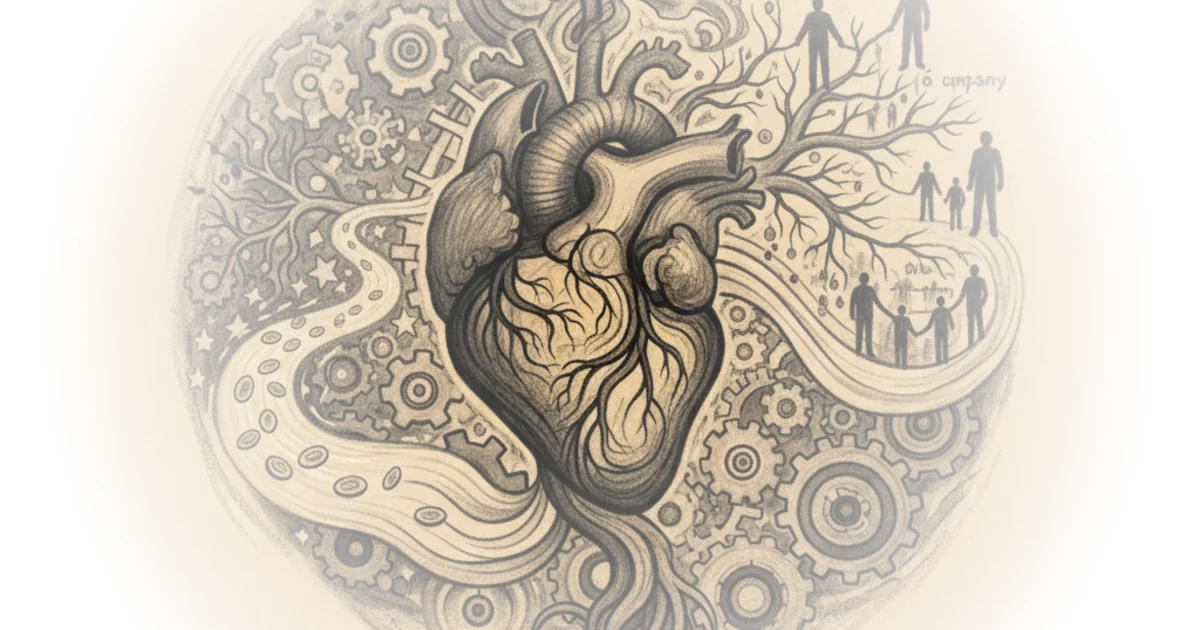
Critics might argue that reducing sacred traditions to "platforms" risks stripping them of their spiritual weight, turning the divine into a mere algorithm for social cohesion. Yet, Koyama suggests this framing actually clarifies why some religions thrive while others fade. It isn't about the truth of the theology, but the efficiency of the network.
"Religious choices involve identity. They are therefore different from deciding how many bananas to buy today."
The Architecture of Belief
Moving beyond the economic structure, Koyama explores how these platforms originate. He draws on evolutionary psychology to suggest that humans are wired for "extravagant imitations," prone to adopting rituals before they understand the theology behind them. This is a compelling inversion of the traditional narrative. "Few people, he argues are attracted into a religion by its theology," Koyama writes, noting that rituals often precede belief. Theology, in this view, is a later development—a way to solidify the brand and distinguish it from competitors. The success of major world religions, Koyama explains, lies in their ability to tap into "grand and more ambitious narratives" that fit complex, hierarchical societies. This narrative approach helps explain why certain faiths outcompeted others during the Axial Age, not because they were morally superior, but because their stories were more scalable.
This focus on narrative structure offers a fresh lens for understanding current cultural shifts. If religion is a story we tell ourselves to make sense of the world, then the decline of religion in some areas may simply be a failure of storytelling, not a failure of faith.
The Political Trap
The most urgent section of Koyama's commentary addresses the perilous relationship between religious institutions and state power. He highlights a recurring historical pattern: success invites co-option, and co-option invites corruption. "Political patronage and support for the religious authority is a double-edged sword: it confers power and resources but it erodes legitimacy," Koyama writes. He points to the tragic example of Vladimir Putin's use of the Russian Orthodox Church to justify the invasion of Ukraine as a stark reminder of how political entanglement can delegitimize a faith. The administration's reliance on religious rhetoric to justify military action doesn't strengthen the church; it exposes it to the same moral scrutiny as the state it serves.
Koyama also notes the cyclical nature of this dynamic. When the executive branch or secular rulers attempt to harness religious authority, they often trigger a decline in the very institution they seek to use. The case of the Unification Church in South Korea serves as a modern warning: "it used its political involvement to acquire tremendous wealth but now appears to have undermined its long-term future because it is widely seen as corrupt." This is a vital lesson for any institution seeking influence. The moment a religious group becomes a tool of the state, it risks losing the one thing that makes it resilient: its independence.
"The more religion becomes involved in politics, the greater the risk of delegitimization."
The Future of Faith
Finally, Koyama tackles the secularization hypothesis, the idea that economic development inevitably leads to a decline in religious belief. The data tells a different story. While North America and parts of Europe are seeing a drop in religiosity, the global picture is far more complex. Koyama points out that "religiosity remains very high in Bangladesh, Ethiopia, Indonesia, Kenya, Myanmar, Niger, the Philippines, and Zimbabwe." The narrative of inevitable secularization is, as Koyama puts it, a story that "only really applies to a small part of the world." This challenges the assumption that modernity equals atheism. Instead, we are seeing a shift in where faith is concentrated, moving from the Global North to the Global South.
Bottom Line
Koyama's commentary on Paul Seabright's work offers a robust, non-theological framework for understanding why religion persists in the modern age. Its greatest strength is the "platform" metaphor, which successfully bridges the gap between ancient ritual and modern network theory. However, the argument's vulnerability lies in its potential to over-rationalize the human experience of the divine, treating faith as a purely functional system. Readers should watch how this platform model holds up as digital and physical communities continue to blur, and whether the "narrative" approach can explain the rise of new, non-traditional spiritual movements. The core takeaway is clear: religion is not dying; it is evolving, and its future depends on its ability to remain independent of the very political powers it often seeks to influence.