The Puzzle of Altruism in Nature
If evolution is about survival of the fittest individual, why do so many animals risk their lives for others? Worker bees sting predators to protect the hive, even though that sting kills them. Female worker ants spend their entire lives serving the colony, even though they're sterile and can't reproduce. Wolves bring food to pack members who don't hunt. Squirrels emit alarm calls that warn others about approaching predators—even though the call draws attention to themselves.
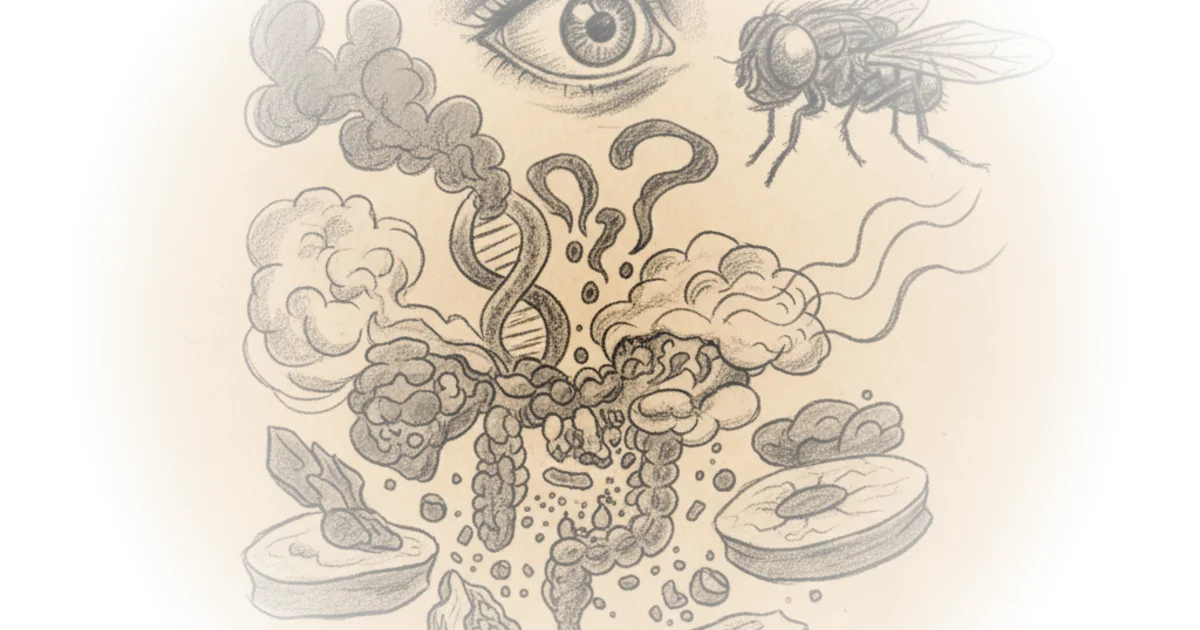
This is a puzzle Darwin himself struggled with. If natural selection favors selfish individuals who prioritize their own survival and reproduction, why do we observe so much altruism in nature?
The answer lies in understanding what actually drives evolution.
The Origin of Life
To understand this controversy, we need to travel back to the very beginning of Earth. Our planet's early history was dominated by simple molecules floating through a void—blobs that might have been carbon dioxide or cyanide compounds. These were simple, unstable, and abundant.
Every so often, these blobs would receive excess energy from sources like ultraviolet light or nearby heat. This energy allowed them to interact with each other. Most interactions led to nothing. But occasionally, by pure chance, they combined into more complicated compounds.
Most of these new combinations were unstable. They fell apart almost as quickly as they formed. Unstable blobs vanish. Stable ones endure. This is the law of stability—only the configurations that happen to be favorable in their environment survive.
But then something extraordinary happened. By accident, a shape formed with a special property: its component parts attracted similar molecules from the surrounding environment. Piece by piece, these molecules snapped into position next to the original shape. And then this new shape did the same thing—attracting its complements until another identical shape snapped into place.
Spontaneously, one shape became two. This was replication. One molecule or group of molecules had produced a copy of itself. The first replicator had been born.
How Natural Selection Works
This replicator wasn't alive in any meaningful sense. It had no intent or purpose. It was just a lifeless molecule. But once it arose—which, given hundreds of millions of years, becomes virtually inevitable—it could take simpler compounds from the environment and copy itself at a much faster pace.
During this conquest, one of its copies made an error. Perhaps a stray ray of UV light hit it during replication, or it used a building block it wasn't supposed to. The result was a new shape slightly different from its parent—mutated.
These mutations could be harmful, beneficial, or neutral. Harmful mutations made the copy less stable. Beneficial ones made it better at replicating. Neutral ones didn't change anything meaningful.
Now many species of replicators occupied the environment. They all needed the same limited resources. The environment became a battleground.
The question became: which traits would the environment favor?
What Traits Win
To answer this, researchers ran simulations assigning three key traits to each replicator: a replication rate (chance to copy itself), a death rate (chance to fall apart), and a mutation rate (chance to produce imperfect copies).
The results were consistent across thousands of simulations. The winning species consistently had high replication rates—being able to copy quickly paid off. They had low death rates—falling apart less often meant more copies survived. And they had low mutation rates—although mutations helped inject diversity, for any single species, fewer mutations meant more faithful copies.
In other words, natural selection favors traits that help replicators copy themselves. This is where the controversy lies: evolution isn't really about individuals surviving at all. It's about traits that enable replication being selected for.
The Real Controversy
This perspective challenges our intuitive understanding of evolution. We tend to think of natural selection as survival of the fittest individual—an eagle with the strongest talons, a cheetah that runs fastest. But that's not how it works at the fundamental level.
What actually happens is that replicators with traits helping them copy themselves survive and spread. These can be molecular traits like stability or replication rate. They can also be behavioral traits that help replicators—meaning organisms—survive and reproduce.
The reason worker bees sting to protect the hive makes sense under this framework: the colony carries the same genes as the individual worker. The altruistic behavior helps copies of those genes survive, even if the individual dies. Same with squirrel alarm calls—the genetic relatedness between warner and listener explains why evolution would select for this behavior.
Natural selection favors traits that help replicators copy themselves—not necessarily the strongest or fastest individuals.
The controversy isn't really about whether altruism exists in nature. It's about what drives natural selection at the most fundamental level. The answer seems to be: replication capacity, not individual strength.
Counterpoints
Critics might note that this framework, while powerful for explaining molecular evolution, doesn't fully account for complex social behaviors in higher animals. The simulation focuses on simplified traits like replication rate and death rate, but real organisms face far more complicated selection pressures—from social hierarchy, from learned behaviors, from cultural transmission.
A reasonable counterargument is that group selection, while rare, does occasionally occur in nature. Some evidence suggests that groups of related species can compete, and certain group-level traits—like hive behavior in bees—can evolve under specific conditions.
The biggest vulnerability in this argument is its scope: it explains molecular evolution beautifully, but extending it to all of biology requires more than the simulation provides.
Bottom Line
This piece makes a compelling case for understanding evolution at the replicator level rather than the individual level. The strongest part of the argument is how clearly it shows why poop smells bad—humans evolved to avoid a substance full of life-threatening bacteria, because anything that found the smell appealing would have gotten sick and died before reproducing.
The biggest vulnerability is that this framework explains molecular evolution best, but gets hazier when applied to complex animal behaviors. Still, for understanding what drives natural selection at its core, this is some of the clearest thinking available.