Greg Olear makes a startling claim: that Thomas Pynchon's 1966 paranoid thriller The Crying of Lot 49 is no longer just a literary artifact, but a prescient manual for understanding the current American political landscape. By reframing the novel's labyrinthine conspiracy as a mirror to the chaos of the executive branch and the "MAGA-verse," Olear argues that reality has finally outpaced fiction's capacity for absurdity. This is not a standard book review; it is a cultural diagnosis suggesting that the only way to process the last decade of institutional collapse is through the lens of high-modernist paranoia.
The Holy Trinity and the Problem of Legacy
Olear begins by establishing a personal canon, identifying Vladimir Nabokov, J.D. Salinger, and Thomas Pynchon as the "Father, Son, and Holy Ghost of literary fiction." He notes their technical brilliance while acknowledging the moral complexities that now shadow their legacies. "Salinger's obvious obsession with teenage girls, in print and in person, is hard to reconcile," Olear writes, adding that if the author were born two decades later, he might have been "among the disgraced men photographed in the company of Jeffrey Epstein."
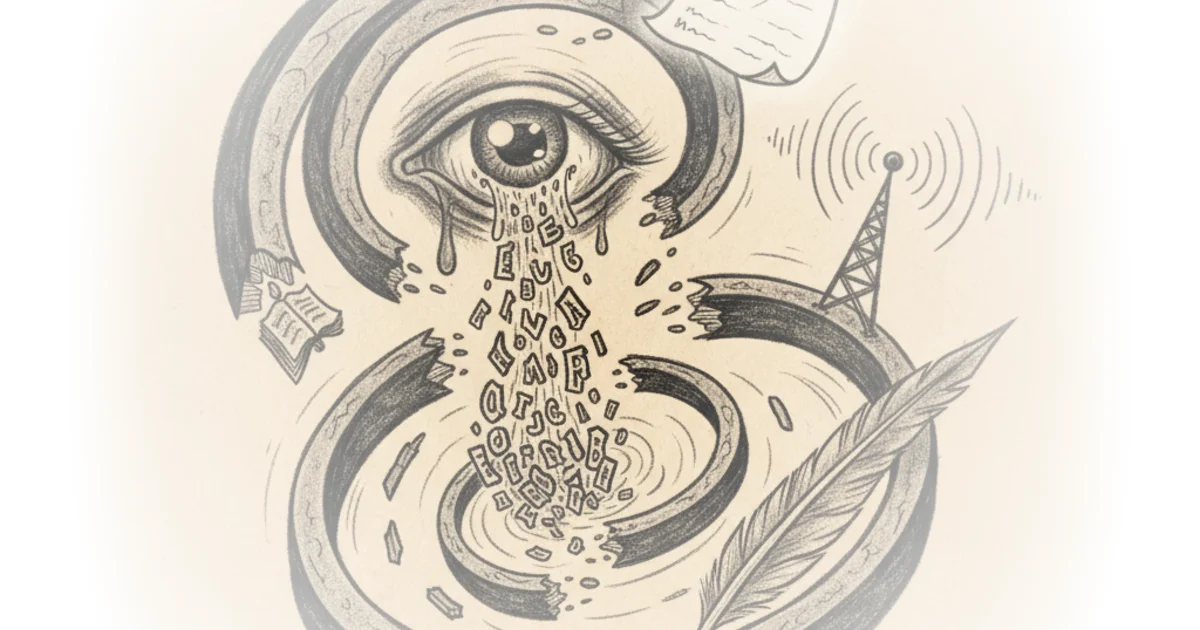
This framing is effective because it refuses to separate art from the artist's conduct, a necessary stance in the current cultural climate. However, Olear quickly pivots to Pynchon, the only survivor of this trio, whose reclusiveness has become a mythos in itself. The author admits that much of Pynchon's work feels impenetrable, confessing, "I've read his rollicking 1963 debut novel, V., twice, from cover to cover. I'm still not entirely sure what's going on." Yet, he finds clarity in the novella The Crying of Lot 49, which he has read more times than any other book save The Great Gatsby.
The piece draws a sharp line between the confusion of reading Pynchon and the confusion of living through the current administration's tenure. Olear suggests that the "paranoid adventure" of the novel's protagonist, Oedipa Maas, is no longer a metaphor for the 1960s counterculture but a description of the present moment. "One day, when my brain is not full of this Trump stuff, I will finish the damned thing and fully appreciate its genius," he jokes, before immediately undercutting the joke by detailing how the novel's themes of conspiracy and decay have become mundane reality.
Worst of all, we don't know how this ends. No outcome is off the table. Like, none.
From Stamps to Statecraft
The core of Olear's argument rests on the parallel between the novel's fictional underground postal system, W.A.S.T.E., and the real-world erosion of institutional trust. In the book, Oedipa discovers a muted postal horn symbol that suggests a rival communication network operating outside the official Thurn and Taxis monopoly. Olear connects this to the "proto-meme" culture of defaced stamps in the novel, noting, "A troll. A proto-meme, even." He argues that the absurdity of the plot—where a housewife uncovers a global conspiracy involving rival mail services—pales in comparison to the actual events of the last decade.
Olear lists a litany of real-world figures and events that feel more "Pynchonesque" than the fiction itself, from the names of high-ranking officials to the chaotic nature of the "MAGA-verse." He writes, "How many names in the MAGA-verse would feel right at home in the universe of Lot 49? Elon Musk, Rex Tillerson, Steve Mnuchin... even good guy Reality Winner." The author's point is that the boundary between the novel's "kooky details" and the news cycle has dissolved. The "terrible show now in its ninth season" he describes involves a former real estate mogul whose rise and potential return to power mirrors the novel's themes of a practical joker manipulating the system from the shadows.
Critics might argue that equating a complex literary work about entropy with a specific political administration risks reducing the novel's philosophical depth to mere partisan commentary. Yet, Olear anticipates this by grounding his comparison in the structural similarities: the "murky confusion of the offshore finance system" and the "secret societies" that permeate both the text and the headlines. He suggests that the "extreme care" required to discuss the novel's darker themes is unnecessary because the world has already provided the context.
The historical context of the novel's setting adds weight to Olear's analysis. Just as the book's protagonist grapples with the "second law of thermodynamics"—a concept related to Maxwell's demon, where order spontaneously turns to chaos—the current political climate feels like a deliberate unraveling of established norms. Olear notes that Pynchon, a former physics student, was fascinated by the "vain attempt to reverse the entropy of the universe." In the current era, the administration's actions often appear as a frantic, albeit successful, attempt to accelerate that entropy.
Either Oedipa in the orbiting ecstasy of a true paranoia, or a real Tristero.
The Epilogue of Chaos
Olear concludes by listing the specific, surreal events that define the current political reality, from the "secret state police" to the "lavish gifts from foreign entities including a jumbo jet." He juxtaposes these with the novel's plot, noting that The Crying of Lot 49 is "a children's book by comparison." The author's tone shifts from analytical to almost exhausted, reflecting the fatigue of a public that has witnessed the "insidious social media campaign" and the subsequent "attack on the Capitol."
The piece draws a chilling connection between the novel's references to "Nazi psychotherapists" and the real-world "intimacy with one of the two most notorious child sex traffickers of all time." Olear writes, "Lot 49 may well describe the murky confusion of the offshore finance system... Or the Epstein sex trafficking network itself." This comparison is the article's most provocative move, suggesting that the "conspiracy that keeps getting bigger and bigger" is not a fiction of the 1960s but a documented reality of the 21st century.
However, the argument relies heavily on the reader's acceptance of the premise that the current administration's actions are indistinguishable from a Pynchon plot. While the parallels are striking, the comparison risks oversimplifying the specific legal and institutional mechanisms at play in favor of a broader, more abstract narrative of chaos. Nevertheless, Olear's observation that "we don't know how this ends" remains the most potent takeaway. The uncertainty of the outcome is the defining feature of both the novel and the current political epoch.
Bottom Line
Greg Olear's commentary successfully argues that The Crying of Lot 49 has transcended its status as a cult classic to become an essential text for understanding the current erosion of truth and institutional stability. Its greatest strength is the unflinching comparison between the novel's absurdity and the reality of the executive branch's recent conduct, though it occasionally risks conflating literary metaphor with political indictment. The reader should watch for how this "paranoid" framework continues to shape public discourse as the political landscape remains in flux.