This isn't just another procedural court ruling; it's a direct challenge to the government's right to decide which voices are "reputable" enough to enter the room where laws are made. The piece from Reason argues that when the Utah Legislature denied credentials to an independent journalist simply because he left a major newspaper, they crossed a constitutional line that has been drawn since the Founding: the state cannot act as the arbiter of truth or ethics in public discourse.
The Forum and the Filter
The core of the legal battle centers on whether the Utah Capitol's media room is a special privilege for professionals or a limited public forum where access must be neutral. Reason reports that the court rejected the Legislature's attempt to dismiss the case, noting that "he plausibly alleged that the Legislature denied his application because of his news stories' viewpoints." This is a crucial distinction. The lower court had tried to shut it down by citing Smith v. Plati, arguing there is no general right to gather news from government sources. But as the piece explains, the appellate court saw through that: "Schott asserts neither a right to newsgathering nor a right of equal access to all information... Rather, he alleges the Legislature blocked his access to a government-created forum because of his viewpoint."
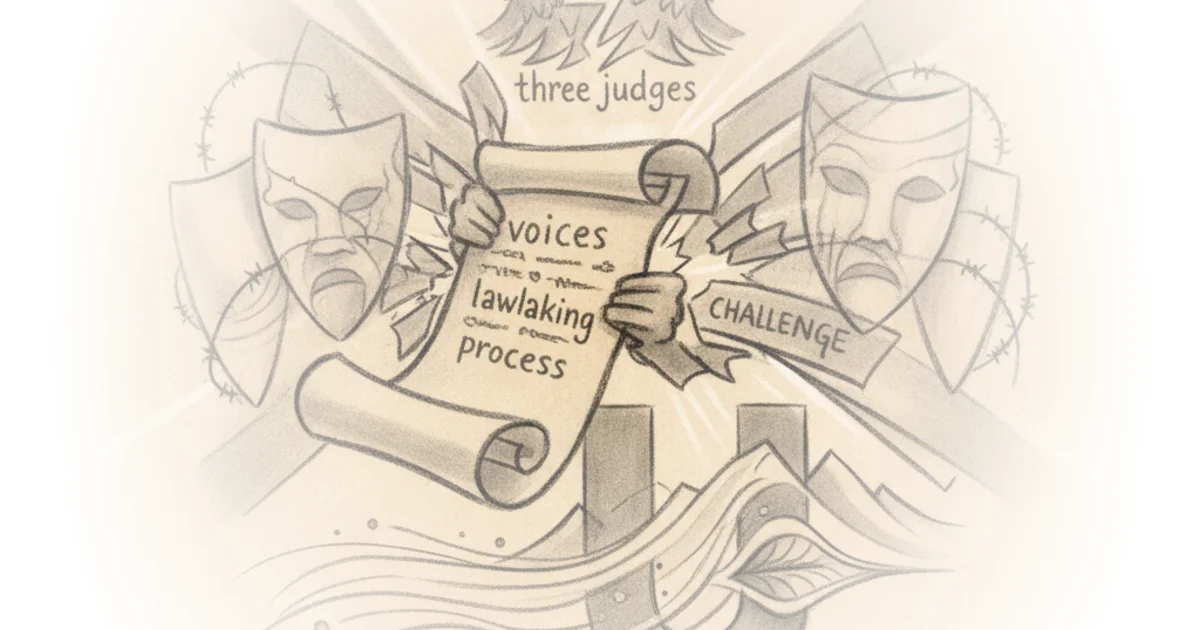
This reframing is vital. It shifts the debate from "does the press have special privileges?" (which they often don't) to "can the government pick winners and losers based on who they like?" The evidence cited suggests the Legislature didn't just apply a neutral rule; they reacted with visible hostility when Schott started an independent outlet that criticized them. As Reason notes, legislative officials expressed "distaste and contempt for his reporting," including a tweet mocking a post where Schott poked fun at staffers.
One of the prerogatives of American citizenship is the right to criticize public men and measures—and that means not only informed and responsible criticism but the freedom to speak foolishly and without moderation.
The piece highlights Judge Tymkovich's concurrence, which offers a scathing critique of the Legislature's "reputable" and "ethical" requirements. The argument here is that these terms are inherently viewpoint-based because they force the government to judge the content of speech to determine if it meets a moral standard. Reason points out that this mirrors the Supreme Court's ruling in Iancu v. Brunetti, which struck down bans on "immoral or scandalous" trademarks precisely because such standards allow officials to suppress ideas they dislike.
Critics might argue that legislatures need some mechanism to manage chaos and ensure security, especially with an influx of unvetted individuals. However, the piece counters this by noting that the policy didn't just require safety; it required adherence to a specific editorial model—corporate affiliation—that excludes independent voices while allowing similar blogs that happen to align with the majority's views.
The Historical Mirror
Perhaps the most compelling part of the commentary is its dive into history. The editors remind us that the First Amendment was not written for the modern "professional journalist" but for the printing press itself. Reason cites legal scholars who argue that at the time of the Founding, there were no professional journalists in the modern sense; instead, the Press Clause protected "every citizen's" right to publish.
The piece draws a direct line from Thomas Paine's Common Sense—a self-published pamphlet—to today's independent bloggers. "To confine freedom of the press to professional journalism... would require shrinking—'abridging'—the scope of the Clause," Reason argues. This historical context dismantles the Legislature's defense that they are simply regulating a professional guild. In 1789, the government didn't credential pamphleteers; it left the admission of reporters to the reporters themselves.
The article notes that even in the First Congress, when Representative Burke tried to remove journalists for misrepresenting debates, James Madison argued it was "improper to throw impediments in the way of such information." The precedent is clear: the government cannot decide who gets to speak based on their editorial stance.
The Legislature's policy thus 'distinguishes between two opposed sets of ideas: those aligned with conventional moral standards... and those hostile to them.'
Bottom Line
The strongest part of this argument is its refusal to let the government define "professionalism" as a proxy for political loyalty, grounding that stance in both modern precedent and Founding-era intent. Its biggest vulnerability lies in the practical enforcement: if independent media grows too large or chaotic, will courts eventually allow some form of reasonable access control? For now, though, this ruling sends a clear message: the state cannot gatekeep the press based on who pays your salary.
Watch for how the district court handles the factual questions on remand—specifically whether they can prove other independent outlets were treated differently without relying on subjective judgments about their "ethics." If the Legislature cannot distinguish between Schott and other credentialed bloggers without referencing his critical reporting, the policy will likely fall.