Tom van der Linden challenges a pervasive assumption in modern film criticism: that the loss of cinematic "realism" is simply a result of bad CGI or digital cameras. Instead, he argues that the problem is a fundamental shift in how images are composed and perceived, moving away from the rich, scanable environments of the past toward a shallow, two-dimensional aesthetic that disconnects the viewer from the world on screen.
The Architecture of Perception
The core of van der Linden's argument rests on the distinction between a movie being "real" and feeling "perceptually real." He posits that we accept fantastical elements like dinosaurs or aliens as real if the image triggers the same sensory mechanisms we use to navigate our actual environment. He cites film scholar Steven Prince to define this phenomenon, noting that "Such images display a nested hierarchy of cues which organize the display of light, color, texture, movement, and sound in ways that correspond with the viewer's own understanding of these phenomena in daily life." This is a crucial pivot; it moves the debate from technical specs to psychological immersion. The author suggests that when a film fails to engage our peripheral vision or depth perception, it breaks the spell, regardless of how high-resolution the pixels are.
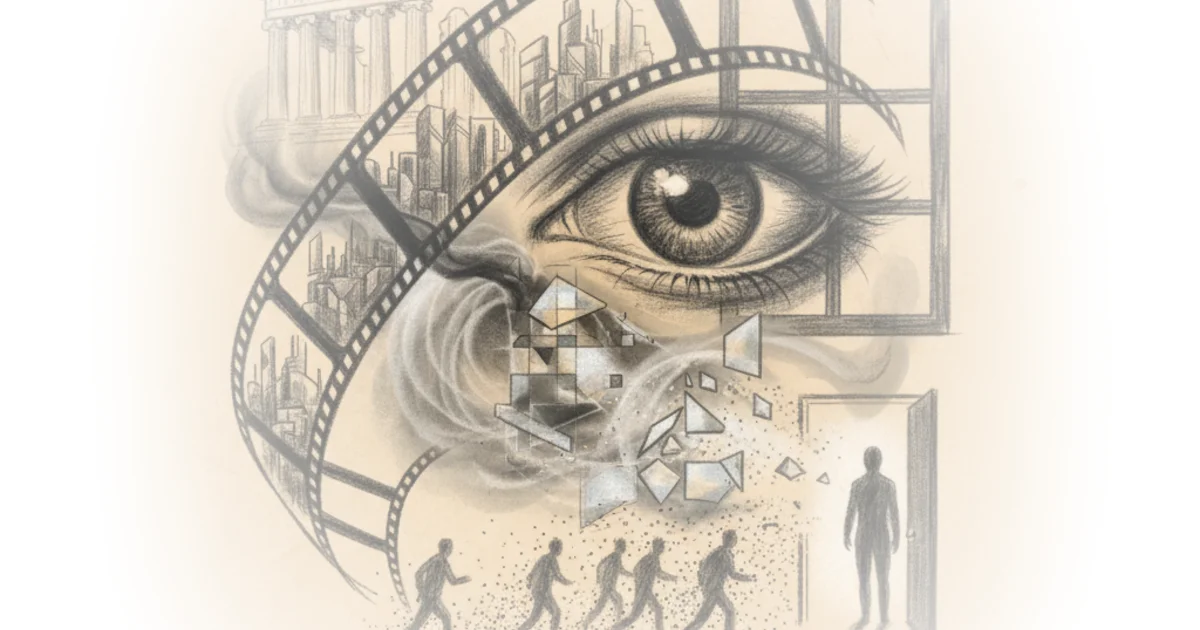
To illustrate this, van der Linden contrasts the deep focus and long shots of classic cinema with the modern reliance on medium close-ups and blurry backgrounds. He points out that older films invited the audience to "scan the frame for meaning in a way that was more analogous to the way we perceive affairs outside of the movie theater." This observation is compelling because it reframes the "cinematic look"—often praised by directors like Zack Snyder—as a potential barrier to immersion. By prioritizing the subject over the environment, modern films inadvertently flatten the world, making it feel like a backdrop rather than a place.
Simply put, according to the concept of perceptual realism, a movie feels real when it triggers the same mechanisms through which we also construct and navigate our own reality.
Critics might argue that the shift to shallow depth of field is an artistic choice intended to focus the audience's emotional attention on the character, not a failure of realism. However, van der Linden counters that when this technique becomes the default standard rather than a specific tool, it strips the world of its "latent substance," leaving the audience feeling detached from the narrative geography.
The Illusion of Choice and the Loss of Indexicality
The commentary deepens when van der Linden addresses the role of post-production. He argues that the ability to fix everything in the editing room has led to a lack of commitment on set. Filmmakers now shoot "bland" and "flat" footage, knowing they can add texture and lighting later. This approach erodes what philosopher Charles Sanders Peirce called "indexicality"—the direct physical connection between the image and the reality it captures. In traditional film, light physically hit the celluloid, creating an index of the moment. Digital sensors, by contrast, convert light into mutable data.
Van der Linden acknowledges that digital images can still feel real if they are constructed with care, citing Avatar: The Way of Water as a triumph of perceptual realism despite being entirely computer-generated. He notes that the film succeeds because it offers "a distinct perceptual relationship with the audience," where subjects are deeply integrated into their surroundings. Conversely, he critiques Quantum Mania for its "grabbag of what feels like AI hallucinations," where the lack of environmental detail makes the world feel plastic and fake. The argument here is that the medium matters less than the intentionality behind the image.
We shoot it bland. We shoot it boring. We light it flat. We don't commit.
This section highlights a significant vulnerability in the modern filmmaking process: the fear of making definitive choices. While van der Linden correctly identifies that this leads to visually uninteresting backgrounds, one could argue that the sheer volume of data in modern digital cinema allows for a different kind of immersion—one based on hyper-detail rather than the organic imperfection of film stock. Yet, the author's point stands that without the discipline to create a cohesive world, even the most advanced technology results in a hollow experience.
The Body as the Final Judge
Ultimately, van der Linden concludes that realism is a somatic experience, felt by the body as much as understood by the mind. Referencing film scholar Laura Marx, he suggests that film is "grasped not solely by an intellectual act, but by the complex perception of the body as a whole." This brings the argument full circle: the reason modern movies feel less real is that they no longer engage the viewer's physical senses. They are designed to be watched, not inhabited. The over-manipulation of imagery and the removal of environmental context create a barrier that the brain recognizes as artificial, even if the eye cannot immediately pinpoint the flaw.
It's the feeling of physicality in the final image that does.
Bottom Line
Tom van der Linden delivers a sophisticated critique that successfully shifts the conversation from "film vs. digital" to "engagement vs. detachment." His strongest insight is that perceptual realism relies on the viewer's ability to explore a frame as they would a real space, a quality increasingly lost in the era of shallow focus and post-production fixes. However, the argument risks oversimplifying the artistic intent behind modern cinematography, which often prioritizes emotional intimacy over environmental immersion. For busy readers, the takeaway is clear: the next time a blockbuster feels "fake," look not at the monsters, but at the empty space around them.