BobbyBroccoli delivers a chilling cautionary tale from a Canadian past that is rapidly becoming an American present, documenting a moment where a government conference nearly silenced a speaker for discussing the very real dangers of politicizing science. The piece's most striking element is not just the historical account of censorship under a previous administration, but the immediate, visceral anxiety of a scientist in the United States today fearing that their own career could vanish overnight due to ideological purity tests.
The Shadow of the Past
The narrative begins with a personal stake: a Canadian science communicator invited to speak at the Advanced Research Projects Agency for Energy (ARPA-E) summit in Washington, only to face a last-minute review of his presentation materials. BobbyBroccoli writes, "For a 24-hour period, right before I was supposed to fly down, I didn't know if I was going to be allowed to give the talk I wanted to give." This tension sets the stage for a broader argument about the fragility of scientific independence. The author chose to focus not on energy technology, but on a historical case study of the Harper administration in Canada, where science was systematically defunded and censored. As BobbyBroccoli puts it, "I wanted to talk about a case study involving the government and science. Specifically, I wanted to talk about the mass censorship and mass defunding of government scientists by Prime Minister Steven Harper in the early 2010s."
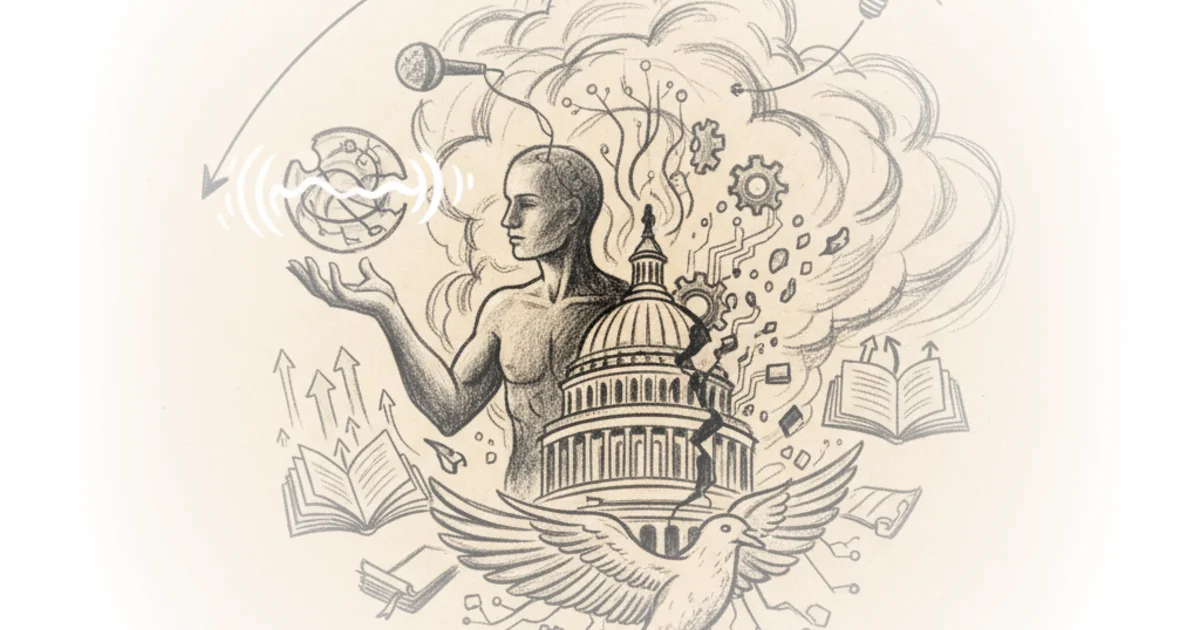
The choice to use the Canadian experience as a mirror for current US events is a bold rhetorical move. By detailing the "death of evidence" protests and the bureaucratic strangulation of government scientists, BobbyBroccoli illustrates how quickly a democratic society can erode its own fact-finding mechanisms. The author notes that under the previous Canadian leadership, journalists were told, "I'm available when media relations says I'm available," a euphemism for total control over scientific messaging. This historical parallel is effective because it moves the conversation from abstract political theory to concrete, documented tactics: delaying responses until deadlines pass, chaperoning scientists at conferences, and even inventing quotes. Critics might argue that the political systems of Canada and the US differ too significantly to draw a direct line, yet the author's evidence of bureaucratic overreach suggests the mechanisms of control are portable regardless of the specific form of government.
"You should be angry that it's happening, but you should be terrified that it's happening so fast."
The Acceleration of Fear
The commentary shifts from historical analysis to a stark assessment of the current climate within US scientific institutions. BobbyBroccoli argues that while the Canadian decline took years, the American version is unfolding in months, creating a unique sense of urgency. The author highlights specific, alarming directives, such as the National Science Foundation being directed to fire a majority of its staff and the National Institutes of Health advising researchers to remove mentions of mRNA from grant applications. "Worthwhile research is being defunded based on ideology, not merit," BobbyBroccoli asserts, framing the issue as a fundamental betrayal of the scientific method. The piece underscores the human cost, noting that students are dropping out of school because federal grants have been shut off completely.
The author's framing of the current situation as a "climate of fear" is particularly potent. The original hesitation to speak was rooted in a fear that slides might be screenshot and misconstrued as the agency's official stance, potentially attracting retaliation from oversight bodies. "Their original fear was that someone in the audience might take a picture of my slides and post them online without context," the author explains. This detail reveals a deeper institutional rot: the self-censorship required to protect one's job. The argument holds weight because it relies on the author's own experience of navigating these red lines, rather than just second-hand reporting. However, the piece leans heavily on the premise that all recent administrative changes are ideologically motivated, potentially overlooking legitimate budgetary constraints or strategic pivots that critics might argue are necessary for fiscal responsibility.
The Stakes for Democracy
Ultimately, the piece serves as a warning that the erosion of scientific integrity is not a side issue but a central threat to governance. BobbyBroccoli connects the dots between the cancellation of the long-form census in Canada—which destroyed valuable data on income and health outcomes—and the current US trend of defunding data collection. The author reminds the audience that the 2015 Canadian election was won, in part, because voters recognized that science was on the ballot. "It was one of the issues that influenced my vote in that election because I was at the time in my first or second year of university and it was going to affect probably my career," BobbyBroccoli reflects. This personal connection grounds the high-level policy critique in the reality of a young person's future.
The narrative concludes with the realization that the tools of suppression are being deployed with unprecedented speed. The author's description of the Harper era tactics—altering responses, threatening repercussions, and centralizing approval at the cabinet level—serves as a checklist for what is currently unfolding in Washington. The piece suggests that the speed of this decline is the most dangerous variable. "It took several years to get so bad in Canada. In the US, it's gotten worse in the span of just a few months," BobbyBroccoli warns. This acceleration leaves little time for the public to organize or for institutions to push back, making the silence of the scientific community a potentially fatal vulnerability.
Bottom Line
BobbyBroccoli's commentary is a powerful synthesis of personal narrative and historical analysis, effectively using the Canadian precedent to illuminate the precarious state of American science. Its greatest strength is the visceral documentation of the speed at which institutional norms are collapsing, turning a slow-burn crisis into an immediate emergency. The argument's only vulnerability lies in its binary framing of political action as purely ideological, which may alienate readers looking for nuance in budgetary or administrative decisions, but the core warning—that the machinery of censorship is already in motion—remains undeniable and urgent.