In an era where parent-teacher conferences often devolve into transactional grade reviews, Adrian Neibauer offers a radical reframe: these meetings are not about proving competence, but about assuming the best in everyone. By weaving together the psychology of care with the urgent crisis of digital distraction, Neibauer argues that the only way to save our children's literacy and well-being is to stop judging parents and start partnering with them.
The Third Date of Education
Neibauer opens with a striking metaphor that immediately shifts the emotional temperature of the conversation. "Fall parent conferences are, in many ways, like a third date," they write, noting that by November, the pleasantries of the first meeting are over and the real work begins. This framing is effective because it humanizes the often-anxious dynamic between educators and families. The author admits that early in their career, they were terrified of pushback, worried they needed to "prove myself as a capable educator." But experience, particularly the dual perspective of becoming a parent, transformed their approach.
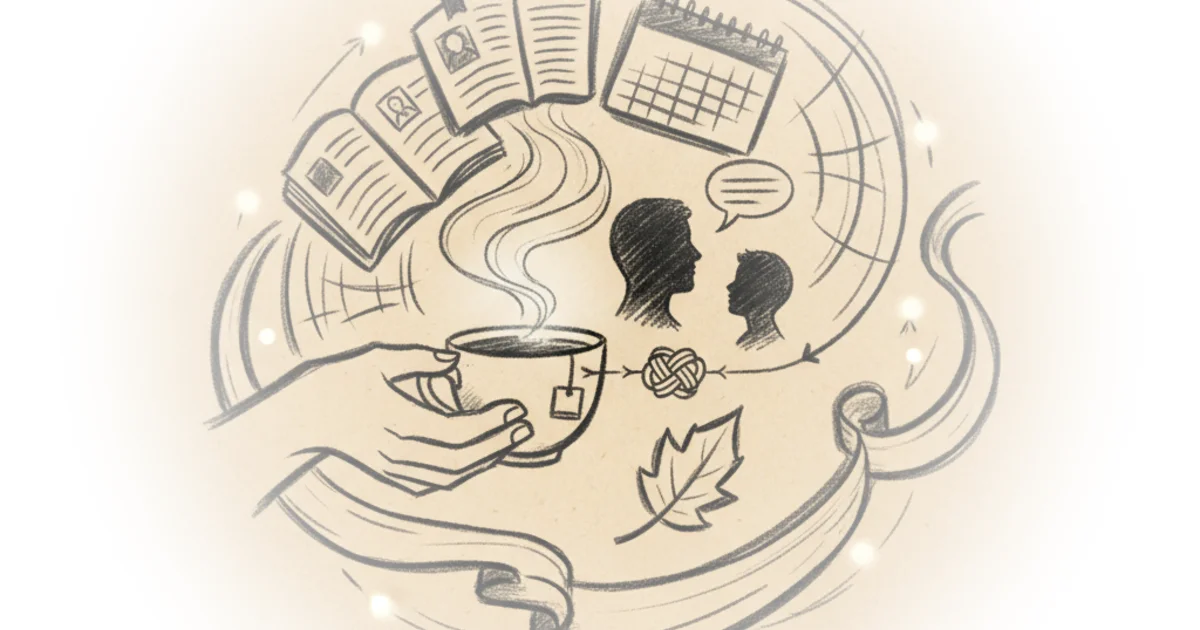
The core of Neibauer's argument is a deliberate pivot away from data and toward humanity. "I never start conferences with the report card," they state firmly. Instead, the first five minutes are reserved for questions like, "How is your child enjoying 5th Grade? Is your child happy to come to school?" This strategy is grounded in the understanding that "unhappy students (or unhealthy, stressed, overwhelmed, or those who have experienced trauma) struggle to learn; not because they can't learn, but because they are struggling in ways that make accessing learning challenging." This insight is crucial; it suggests that academic intervention is impossible without first establishing emotional safety.
Kids before grades. My primary job is to ensure that my students feel safe and welcome in my classroom. If not, I have very little chance of helping them persevere through challenging learning experiences.
Critics might argue that this approach risks being too soft, potentially allowing parents to deflect from serious academic concerns by focusing on feelings. However, Neibauer counters this by positioning themselves as a "warm demander," someone who "expect[s] a great deal of my students and convince[s] them daily that they are brilliant." The balance between high expectations and deep care is the piece's most compelling pedagogical stance.
The Burden of Judgment and the Digital Trap
The article then broadens its scope, connecting the micro-interaction of the conference to the macro-crisis of the attention economy. Neibauer draws heavily on the work of Dr. Brené Brown, specifically a thought experiment involving Episcopalian deacons. Brown asks the room: "Do you believe that people are doing the best they can?" When over half say no, she challenges them to imagine a deity telling them that even the person who irritates them most is doing their absolute best. Neibauer applies this directly to the classroom: "All I know is that my life is better when I assume that people are doing their best. It keeps me out of judgment and lets me focus on what is, and not what should or could be."
This assumption of good intent is presented as the antidote to the frustration teachers feel when parents seem to neglect their children's needs. The author acknowledges the difficulty of this, admitting, "As a young teacher, it was easy for me to judge my parents' decisions. If they would only just [FILL IN THE BLANK]." But as they matured, they realized, "we are all doing our best given our current resources." This is a powerful reframing that moves the conversation from blame to shared struggle.
The stakes of this struggle are high, particularly regarding literacy. Neibauer points to the work of Maryanne Wolf, whose research on "deep reading" reveals a terrifying trend: "Family literacy practices, reading for pleasure, and what Maryanne Wolf defines as 'deep reading'... have all dramatically decreased since the advent of smartphones." The statistics are sobering, with about a third of 12th graders in the US lacking basic reading skills. The author notes that the solution is not to shame families, but to recognize that "Skimming is now the new normal."
The solution isn't to shame parents and children, but to motivate and encourage healthier habits.
Neibauer leverages their own generational position as an "elder millennial" to bridge the gap. Having grown up with a "technology-free childhood," they admit that even they now "have to work at ignoring distractions in order to read literature deeply." This humility strengthens their credibility; they are not preaching from a pedestal but fighting the same battle. They reference the "post-literate society" feared by Aldous Huxley, where books aren't banned because no one wants to read them anymore, a chilling prospect that requires a collective effort to reverse.
A Partnership for the Future
Ultimately, the piece concludes that the path forward is through collaboration, not confrontation. Neibauer writes, "Learning is a team sport, and we still have two trimesters to develop healthy habits, both in the classroom and at home." The goal is to avoid the trap of "judgment serves no one here" and instead build a "loving, non-judgemental way to help each student reach their fullest potential." The author paraphrases the ethos of the fictional coach Ted Lasso: "success is not about the wins and losses; it's about helping these young fellows be the best versions of themselves on and off the field."
This final synthesis brings the emotional and intellectual threads together. By treating parents as allies who are also navigating a dopamine-driven world, the teacher creates a space where "motivation through encouragement is stronger than through fear of disappointment." The argument holds up because it addresses the root cause of the friction—mutual insecurity—and offers a practical, empathetic framework for resolving it.
Bottom Line
Adrian Neibauer's strongest move is reframing the parent-teacher conference from an audit of performance into a pact of care, successfully arguing that academic rigor cannot exist without emotional safety. The piece's only vulnerability is its reliance on the teacher's ability to consistently maintain this high emotional labor in a system that often prioritizes metrics over relationships, but the call for a "warm demander" approach provides a tangible, necessary path forward for educators navigating the digital age.