Dr. Cara Goodwin dismantles a pervasive holiday anxiety with a counterintuitive finding: the sheer volume of gifts is rarely the culprit behind spoiled children. In a landscape where parents fear that generosity breeds entitlement, she pivots the conversation from material excess to the structural integrity of family boundaries, offering a science-backed reprieve for those worried about their shopping lists.
The Myth of Material Overindulgence
Goodwin begins by categorizing "spoiling" into three distinct types, immediately narrowing the field of concern. She writes, "Researchers refer to spoiling a child as overindulgence and have identified three different types of overindulgence: Material overindulgence... Relational overindulgence... Behavioral overindulgence." This taxonomy is crucial because it separates the physical object from the parenting dynamic. While many parents assume that a mountain of toys equates to a mountain of bad behavior, Goodwin points out that the data tells a different story. She notes, "Research finds that relational or behavioral overindulgence is linked to worse outcomes for children than material overindulgence."
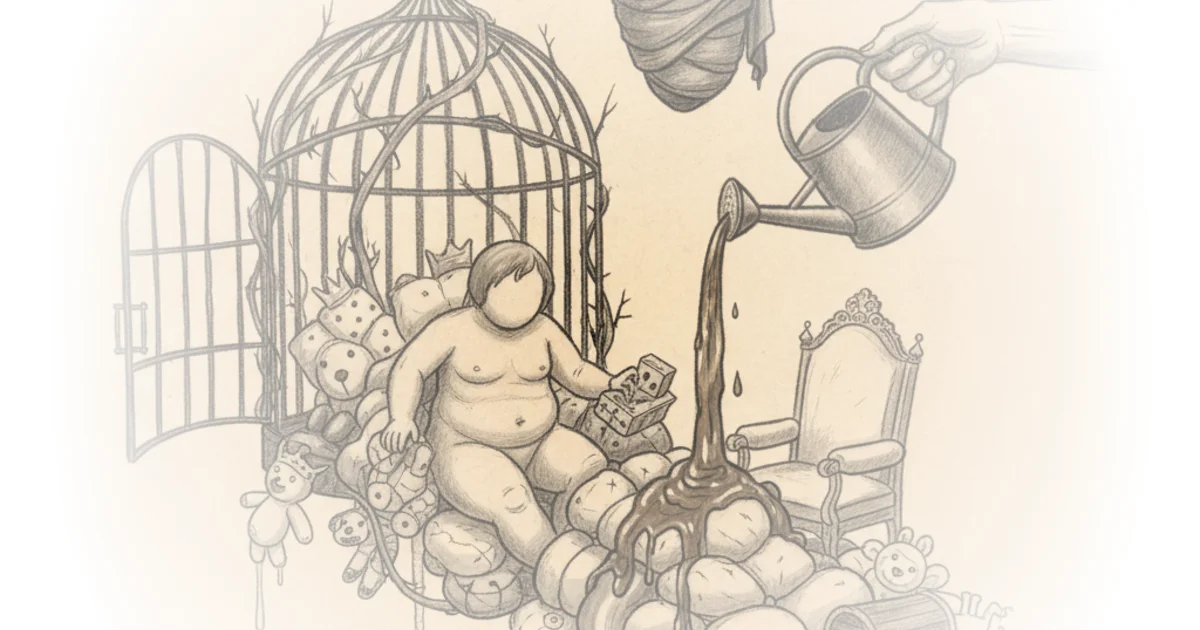
This distinction reframes the holiday stress. The argument suggests that a child surrounded by gifts but held to high behavioral standards is far better off than a child with few toys but no consequences. Goodwin highlights a specific study to bolster this, stating, "One study even found that material overindulgence from mothers was linked to less stress and depression in children (while maternal behavioral indulgence was linked to more anxiety and depression in children)." This is a striking reversal of common intuition. It implies that the emotional safety of a child is tied to the consistency of rules, not the scarcity of presents.
However, a counterargument worth considering is whether this research applies equally across all socioeconomic strata. If material overindulgence creates financial strain, the dynamic shifts. Goodwin acknowledges this caveat, noting that "Family stress, especially economic stress: If giving many gifts creates financial strain, children's life satisfaction may be lower." The nuance here is vital; the harm isn't the toy, but the household tension the toy generates.
The Real Driver: How We Give
The piece's most significant insight lies not in what we give, but how we frame the transaction. Goodwin argues that the danger zone is when gifts become currency for love or behavior management. She writes, "Research also finds that when parents use material items (such as toys) as rewards or punishments or as a way of expressing love, their children are more likely to become materialistic adults." This connects directly to the concept of delayed gratification, a topic often explored in developmental psychology where the ability to wait for a reward is a stronger predictor of future success than the reward itself.
The author emphasizes that well-intentioned parents can inadvertently teach the wrong lesson. "This even happens when parents are warm and supportive (aka well-intentioned parents)," she notes, which is a comforting yet challenging realization. It suggests that love should be expressed through presence, not packages. Goodwin warns, "The number of gifts alone that you give may not make children materialistic but how you give them really does seem to matter."
The boundaries and limits you put on your child may be more important than the number of gifts you give.
Critics might argue that in a consumerist society, completely decoupling gifts from rewards is nearly impossible, especially with cultural touchstones like Santa Claus. Goodwin anticipates this, advising parents to avoid using the "nice and naughty" list as a behavioral lever, suggesting that even the myth of Santa should not be weaponized for discipline.
A Framework for Reflection
To move from theory to practice, Goodwin introduces the "Test of Four," a tool developed by Jean Illsley Clarke. This framework forces parents to interrogate their own motivations rather than just the child's reaction. The questions are sharp: "Will doing or giving this benefit you, the parents, more than your child?" and "Will doing or giving this keep my child from learning what he or she needs to learn at this age?"
These questions shift the burden of reflection onto the adult, a necessary step in breaking cycles of overindulgence. Goodwin explains that indulgent parents often act out of their own history, noting, "Indulgent parents often had parents themselves who also gave them too much or alternatively had distant parents who didn't indulge them enough." This historical context adds depth to the advice, suggesting that breaking the cycle requires self-awareness as much as it requires setting rules.
The article also touches on the importance of communication, urging parents to "Have open conversations with your children about privilege, money, and gratitude." This aligns with research on financial literacy in families, showing that transparency about resources reduces the allure of materialism. Goodwin concludes that the perception of "too much" is subjective, writing, "Research finds that children and parents views of indulgences often differ and when children feel like it is 'too much' (even when their parents don't), this perception is related to lower life satisfaction for children."
Bottom Line
Goodwin's strongest contribution is the clear separation of material abundance from behavioral decay, effectively relieving parents of the guilt associated with generous holiday giving. The argument's vulnerability lies in its reliance on correlational data, which cannot definitively prove causation, but the practical framework provided offers a robust path forward. The takeaway is clear: maintain the rules, not the scarcity.