Adam Tooze cuts through the fog of German despair not by offering false hope, but by reframing the crisis as a failure of political imagination rather than an inevitable economic death spiral. While the prevailing narrative paints Germany as the "sick man of Europe," Tooze argues that the malaise is a self-fulfilling prophecy fueled by a rigid fiscal orthodoxy that ignores the country's profound demographic transformation. This is essential listening for anyone trying to understand why a manufacturing giant is suddenly paralyzed, and why the political center is crumbling under the weight of its own contradictions.
The Architecture of Polygloom
Tooze introduces the concept of "polygloom" to describe the current German mood, a state where disparate bad news compounds into a singular sense of doom. He writes, "The result is a sense of profound malaise, made worse by the threat of even worse things to come." This framing is crucial because it shifts the focus from specific failures—like a collapsing bridge or a struggling car manufacturer—to a psychological and structural paralysis. The argument suggests that the fear of the future is actively preventing the actions needed to secure it.
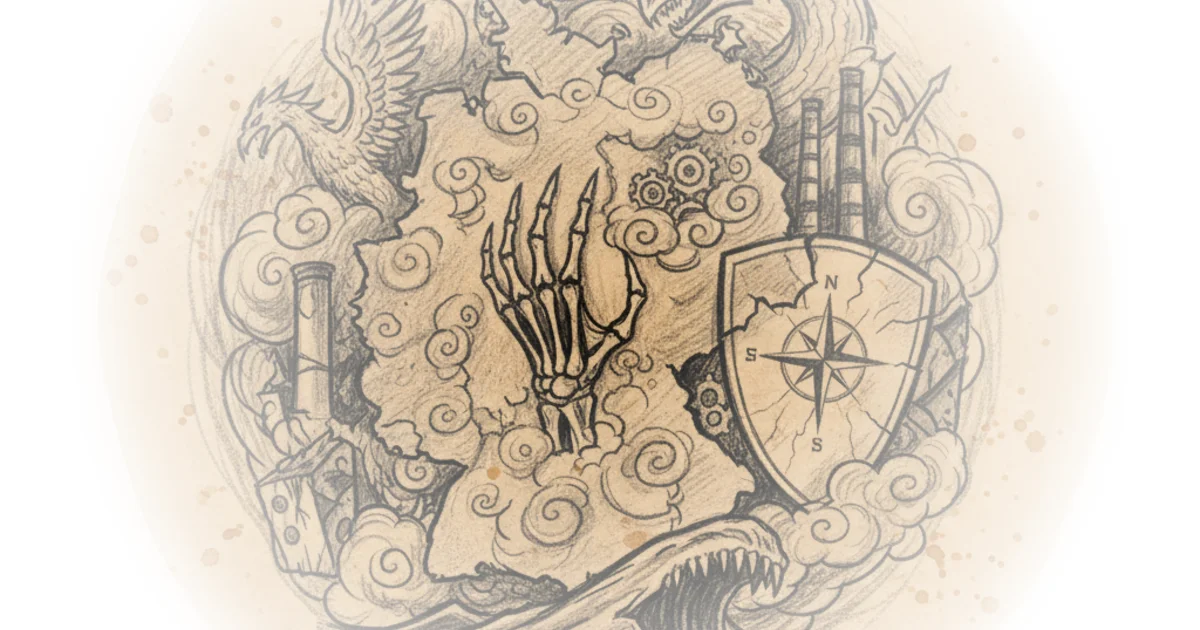
The author traces this anxiety back to the late 1990s, a period he describes as a "blocked society." He notes that the "blockage" then was driven by mass unemployment and a divergence from the neoliberal reforms sweeping the US and UK. Today, the blockage is different but equally paralyzing. Tooze points out that "the sense of an economic downward slide is summed up with the question: 'Can anything halt the decline of German industry?'" The answer, he implies, is obscured by a rigid adherence to the "debt brake," a constitutional amendment passed in 2009 that strictly limits government borrowing. This fiscal constraint, inherited from the Schroeder era and hardened by subsequent governments, now prevents the massive public investment required to modernize infrastructure and adapt to new geopolitical realities.
"The sources of Germany's insecurity may be diverse, but investment is a polysolution."
Critics might argue that loosening fiscal constraints in an economy already struggling with inflation could be reckless. However, Tooze counters this by highlighting that the current stagnation is largely a result of suppressed domestic demand caused by years of austerity, not just external market forces.
The Demographic Elephant in the Room
Perhaps the most striking element of Tooze's analysis is his refusal to treat the rise of the far-right Alternative for Germany (AfD) as merely a political aberration. Instead, he frames it as a symptom of a structural failure to integrate a rapidly changing population. He presents stark data: "In 2025, the German population currently stands at roughly 84.4 million people, of those, roughly 25 million are in one way or another people of migrant heritage." This demographic shift, he argues, has been met with "grudging and inadequate" investment from the state.
Tooze writes, "The AfD's answers are terrible. But the centrist parties have failed adequately to address those questions in their own terms." This is a devastating critique of the political establishment. He suggests that the AfD has successfully positioned itself as the only party acknowledging the radical changes in German society, even as it offers "populist xenophobic slop." The failure of the center to offer a constructive, generous policy response to migration has left a vacuum that the far-right is eager to fill. The author notes that the AfD's electorate is "profoundly pessimistic not just about their own personal circumstances, but about the outlook for German society as a whole."
The historical context here is vital. Just as the "Schroeder reforms" of the early 2000s split the German left and gave rise to Die Linke, the current failure to address social inequality and integration risks cementing the AfD's place in the political mainstream. Tooze warns that "Germany in the 2020s really is the 'sick man of Europe'" if it cannot reconcile its economic model with its new social reality.
Beyond the Fog: A Path Forward
Despite the grim diagnosis, Tooze refuses to surrender to the gloom. He pivots to a more optimistic reading of the economic data, citing analysis from Martin Sandbu. The argument is that Germany's industrial decline may not be a collapse, but a "reconfiguration of what industry means." Tooze explains, "The remarkably gloomy figures for German industrial production may, in fact, capture an ongoing shift on the part of Germany's industrial firms away from making things to delivering high-value services." This suggests that the economy is evolving, not dying, but the transition is being masked by outdated metrics and a lack of confidence.
However, the path forward requires a "wholesale political rebalancing." Tooze insists that "it is the only kind of investment that offers any immediate hope of addressing the threat from the political right." He calls for public investment to target the "most painful choke points and trade-offs, whether in education, housing or health care." This is not just about economic stimulus; it is about social cohesion. The author argues that without addressing the "human capital" needs of a diverse society, the political center will continue to erode.
"Germany desperately needs to be investing in its future, it needs equipment of all kinds. It needs infrastructure and it also needs to invest in human capital."
A counterargument worth considering is whether the current political leadership, described by Tooze as "anything but an inspiring vehicle for political hope," has the capacity to execute such a complex rebalancing. The reliance on a "cynical parliamentary maneuver" to unlock spending suggests a lack of genuine strategic vision. Yet, Tooze remains hopeful that "large-scale and sustained collective action" can still turn the tide, drawing on the precedent of European cooperation since 2008.
Bottom Line
Adam Tooze's most powerful contribution is linking Germany's economic stagnation directly to its failure to invest in social integration, arguing that the rise of the far-right is a predictable consequence of this neglect. The piece's greatest vulnerability lies in its optimism that a government described as uninspiring can suddenly pivot to a strategy of massive, targeted investment. The reader should watch for whether the new administration can move beyond "dog whistle" politics to deliver the structural reforms Tooze identifies as the only real solution to the nation's polygloom.