Michael Tracey uncovers a political paradox in Staten Island that defies standard polling logic: voters who despise the former governor are rallying behind him not out of affection, but out of sheer terror of a socialist alternative. This isn't a story about a political comeback; it's a case study in how the fear of the unknown can override deep-seated personal animosity. The piece offers a rare, ground-level view of a fractured electorate where the "devil you know" has become the only viable shield against a perceived existential threat.
The Anatomy of a Reluctant Alliance
Tracey's reporting centers on a specific voter archetype he dubs the "Begrudging Cuomo Voter," a group defined not by policy alignment but by strategic desperation. He captures this sentiment perfectly through the words of a woman in her forties who admits, "I don't like Cuomo at all, especially what he did with the nursing homes — putting COVID in there. Drives me crazy. I like Curtis a lot, but I don't think he can win in this Democratic city. So I'm going to vote for Cuomo, which is painful — paining me." This admission is the emotional core of the article; it highlights a pragmatic calculus where personal grievance is sacrificed for electoral survival. The author effectively illustrates that for these voters, the primary objective is not to elect a preferred leader, but to prevent a specific outcome.
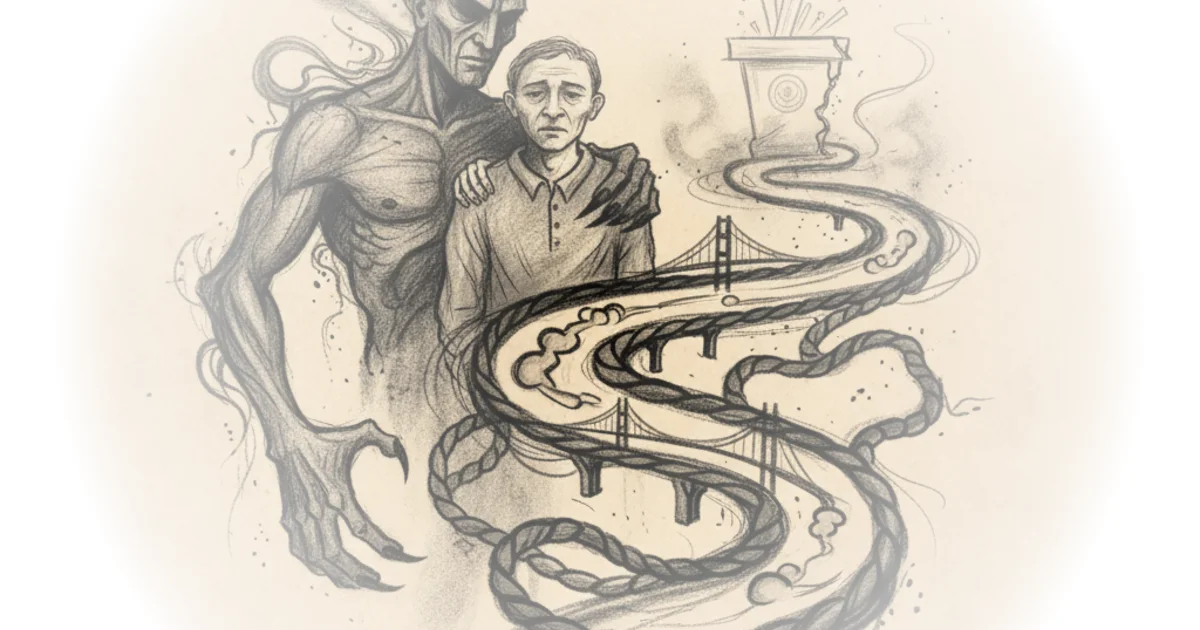
The narrative is further enriched by Tracey's observation of how local political culture, steeped in talk radio and personality-driven discourse, shapes these decisions. He notes that longtime radio personality Curtis Sliwa, a former WABC staple, has mastered a specific cadence that resonates with the borough's residents, yet his candidacy is viewed as mathematically impossible by many. As Tracey writes, "The devil you know, you can make a deal. The devil you don't, you don't know whether you can make a deal." This framing suggests that the electorate views the current administration's candidate as a manageable variable, whereas the challenger represents an unpredictable force. A counterargument worth considering is that this "lesser of two evils" logic might actually depress turnout or lead to a fractured vote, potentially handing the election to the very candidate these voters fear most.
"I just flip out every time I see him, I don't want to hear him. The way he speaks, his personality." — Marian Kryshak, 80, Staten Island voter
The Shadow of the Guardian Angels and Ranked-Choice Dynamics
Tracey weaves in the complex history of New York City's political machinery, implicitly touching on the legacy of the Guardian Angels and the shifting tides of ranked-choice voting. He recounts a voter named Mariel who questions the legitimacy of Sliwa's "military training," a clear reference to his stewardship of the Guardian Angels quasi-vigilante organization, while simultaneously expressing sympathy for the former governor regarding sexual harassment allegations. "I don't think he was treated fairly," she claims, despite identifying as a Republican. This juxtaposition reveals how deeply personal narratives and historical grievances can override partisan labels. The article suggests that in a multi-candidate field, voters are forced to navigate a minefield of past actions and future fears, often landing on the most familiar figure regardless of their moral reservations.
The piece also captures the intense anxiety surrounding the challenger, Zohran Mamdani, with voters projecting their worst fears onto his platform. One voter, Maria Senise, articulates this dread plainly: "I pray that Mamdani don't get in, because he's gonna tax me to the hilt, he's gonna tax the white neighborhoods. He's gonna be the worst thing that ever happened to the city." Tracey uses this quote to underscore the racial and economic anxieties driving the "begrudging" coalition. While the author presents these fears as the primary motivator, critics might note that such rhetoric often oversimplifies complex policy proposals and relies on demographic stereotypes rather than concrete legislative analysis. The intensity of this reaction, however, is undeniable and serves as the engine for the current political realignment.
The Limits of the "Devil You Know" Strategy
As the narrative progresses, Tracey acknowledges the fragility of this coalition. He notes that while rumors abound that the former governor could secure a plurality in this Republican stronghold, the volatility of the electorate makes any prediction difficult. "It's been a long while since any NYC Mayoral Election was this competitive," he observes, contrasting the current race with the "snooze-fests" of previous cycles. The author's choice to highlight the sheer unpredictability of the race serves as a warning to strategists who might assume a stable base. The presence of a swing voter like Treasure Thomas, who is deciding between the challenger and Sliwa, further complicates the picture, suggesting that the "begrudging" vote is not a monolith.
The article concludes with a sobering realization: the enthusiasm gap is massive. Tracey encounters only one genuinely enthusiastic supporter for the challenger, a woman who sees him as "somebody new," while the rest of the borough is driven by fear. This dynamic creates a high-stakes environment where the administration's candidate is running on a platform of negative utility—winning because the alternative is deemed unacceptable. As Tracey puts it, "That's my only option — not that I want to." This resignation is the defining characteristic of the current political moment in Staten Island.
Bottom Line
Tracey's most compelling contribution is his identification of a voter base that is actively repelled by the candidate they are supporting, yet feels compelled to do so by the threat of a socialist agenda. The piece's greatest strength lies in its unflinching portrayal of this cognitive dissonance, but it risks underestimating the potential for voter apathy to undermine this reluctant coalition. Readers should watch to see if this "begrudging" support holds up on Election Day or if the sheer lack of enthusiasm proves fatal to the administration's candidate.