This piece cuts through a decade of cultural fatigue by refusing to treat gender as a monolith or a social construct alone. Michael Huemer argues that the real crisis isn't masculinity itself, but rather the failure to distinguish between traits that build society and those that destroy it. For busy readers navigating polarized debates, this is a necessary pivot: it suggests we stop asking if men should be "less masculine" and start asking how to channel inherent biological drives into pro-social outcomes.
Redefining the Terms
Huemer begins by dismantling the semantic confusion surrounding the phrase "toxic masculinity." He notes that critics often misinterpret the term as an attack on all male behavior, a misunderstanding he finds illogical. "Toxic is a slightly odd word choice," Michael Huemer writes, "as the bad kind of masculinity really is not very similar to a poison. But the word sounds better than 'bad' in this context." He reframes the conversation entirely: just as one can eat a toxic burrito without implying all food is poisonous, society must distinguish between healthy and unhealthy expressions of gender. This distinction is crucial because it allows for the existence of "healthy masculinity" rather than forcing men to abandon their nature entirely.
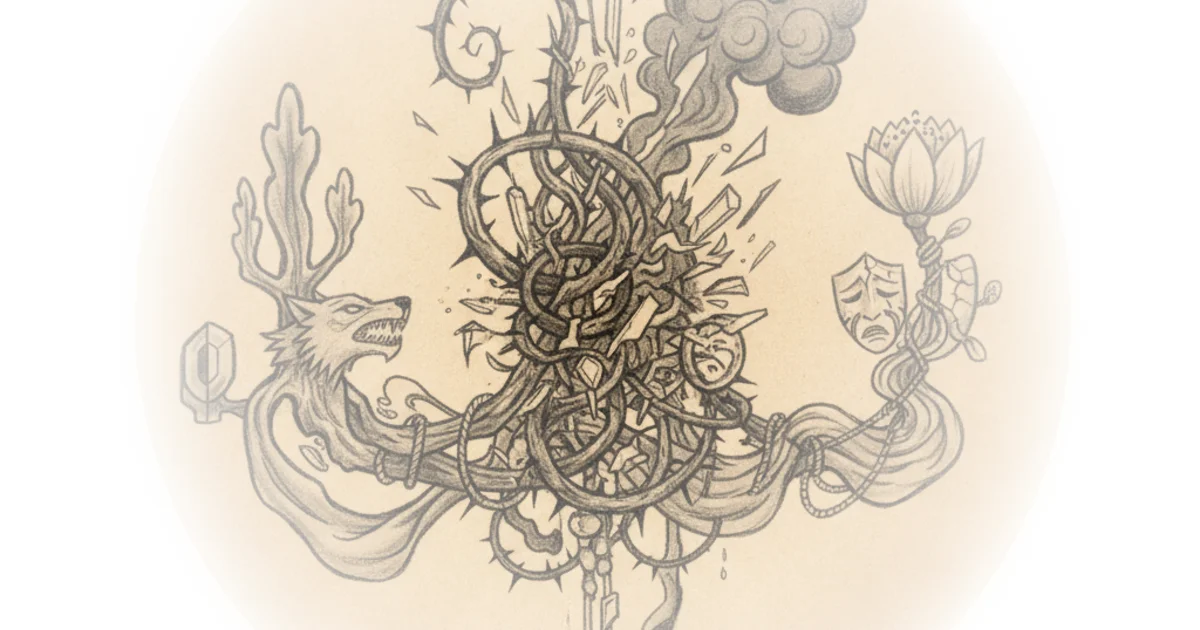
The author then critiques the prevailing definition of "healthy masculinity," which often lists traits like emotional vulnerability and self-care. Huemer argues that while these are virtues, labeling them as specifically "masculine" erases the very concept of gender difference. He asks a pointed rhetorical question: "Would anyone compose a list of 'healthy feminine' traits that actually read like masculine traits?" The implication is clear; if we strip away the distinct psychological profiles of men and women, we lose the ability to understand why certain behaviors feel natural or unnatural to specific groups. This aligns with evolutionary psychology perspectives, such as Simon Baron-Cohen's empathizing–systemising theory, which posits that on average, male brains are more tuned toward systemizing while female brains lean toward empathizing—a biological baseline that culture modifies but does not erase.
"Healthy masculinity is defined in terms of emotional awareness... What's wrong with this? It erases the distinction between masculinity and femininity."
Critics might argue that defining gender strictly by statistical averages ignores the vast diversity within each sex, potentially alienating men who are naturally empathetic or women who are naturally aggressive. Huemer anticipates this, acknowledging that "not every man has the stereotypical masculine traits," yet insists that the general psychological differences are too significant to ignore in policy and social discourse.
The Biological Baseline
To ground his argument, Michael Huemer turns to cross-cultural data regarding aggression and drive. He asserts that while some gender differences are culturally variable—such as the rate of gender dysphoria, which has shifted over time—the core divergence in aggression is consistent. "Across cultures, males are higher in aggression... Males have a higher sex drive and a greater desire for more partners," he states, attributing these traits primarily to biology rather than culture. This biological reality, he argues, explains why "toxic" behaviors often manifest as unchecked physical or non-physical aggression.
The historical context here is stark. Huemer illustrates the cost of unchecked masculine competition by citing Genghis Khan, noting that his aggressive dominance led to the death of 5–10% of the world's population at the time. "This kind of masculine behavior can increase one's own reproductive success, despite causing huge overall harms to society," he writes. This is a sobering reminder that traits which might have been adaptive in primitive hierarchies can be catastrophic in modern, interconnected societies. The argument suggests that the goal isn't to eliminate male aggression, but to redirect it from interpersonal violence toward constructive competition, such as business or innovation.
A counterargument worth considering is whether focusing on biological determinism risks justifying harmful behaviors as "natural" and therefore unchangeable. However, Huemer is careful to note that culture can "dampen or strengthen those natural tendencies," suggesting that while the impulse may be innate, its expression is a matter of societal choice.
Channeling Aggression into Virtue
The core of Huemer's proposal lies in redefining healthy masculinity not as the suppression of male traits, but as their pro-social application. He identifies specific virtues that align with traditional male psychology: emotional control, ambition, straightforwardness, and strength of character. "Emotional control: especially remaining calm in the face of pressure so that one can do what needs to be done," he writes, referencing the Apollo 13 mission where astronauts remained perfectly collected during a crisis.
He champions "straightforwardness" as a masculine communication style that aids genuine connection and reduces deception, citing the direct prose of Ernest Hemingway or David Stove. Furthermore, he reclaims the concept of competition, arguing that healthy masculinity involves competing openly rather than through manipulation. He illustrates this with a quote from the character Malcolm Reynolds in Firefly, who promises to kill an opponent only if they are awake and armed—a code of honor that prioritizes transparency over treachery.
"Ambition can be either harmful or beneficial, depending on what goal one sets oneself on... and depending on what means one takes."
This framing is effective because it offers a path forward for men who feel alienated by calls to simply "be softer." Instead of asking men to become women, Huemer suggests they should refine their innate drive for dominance into moral courage. He notes that in modern society, physical courage is less relevant, but "moral courage remains necessary," whether it's a whistleblower exposing corruption or an individual speaking unpopular truths against the pressure of the moment.
The Mirror Image: Toxic and Healthy Femininity
Huemer applies the same rigorous logic to femininity, challenging the notion that "toxic femininity" is merely about conforming to stereotypes to please men. He argues that trying to attract a partner is not inherently toxic; rather, toxicity arises when feminine traits are used anti-socially. "Toxic femininity consists of anti-social feminine traits... This could include things like engaging in malicious gossip, or manipulating people," he writes, invoking the character Cersei Lannister as an archetype of this destructive behavior.
Conversely, he defines healthy femininity through nurturing and empathy, traits that strengthen interpersonal relationships. "Healthy femininity strengthens interpersonal relationships by providing emotional support and gently inviting intimacy," Michael Huemer concludes. He posits that these are not burdensome stereotypes but genuine virtues that benefit society when channeled correctly. This perspective challenges the modern tendency to view all traditional gender roles as oppressive, suggesting instead that we need to "reassure them that it's also okay to perform those roles."
Bottom Line
Huemer's strongest contribution is his refusal to treat gender traits as inherently good or bad, insisting instead on a framework where biological predispositions are channeled toward pro-social ends. His argument is vulnerable only if one rejects the premise of significant average biological differences between sexes; however, for readers willing to accept that data, he offers a pragmatic roadmap for integrating traditional virtues into modern life without succumbing to toxicity. The next step for society isn't to erase gender roles, but to refine them so that male aggression and female empathy serve the collective good rather than undermining it.