The Hated One makes a provocative, counterintuitive claim that piracy is not merely a victimless crime, but a necessary act of civil disobedience against a legal framework designed to strip consumers of ownership. While the piece is framed as a defense of illegal downloading, its true value lies in exposing how copyright law has been weaponized to enforce subscription models on physical goods, from farm tractors to smartphones. For busy professionals navigating an increasingly digital economy, this is not just about saving money on movies; it is a critical analysis of who actually owns the technology you rely on every day.
The Illusion of Theft
The piece begins by dismantling the standard moral argument against piracy. The author argues that the traditional definition of theft does not apply to digital copying because the original remains with the creator. "Theft is a zero sum game. You steal from somebody and they no longer have it," The Hated One writes. "Piracy is not that. When you pirate, you copy an idea, but the author still has the original." This distinction is legally precise, even if the author pushes it to a rhetorical extreme. By separating the concept of "theft" from "copyright infringement," the author forces the reader to confront the reality that breaking copyright law is a civil or statutory violation, not a moral equivalent to stealing a physical object.
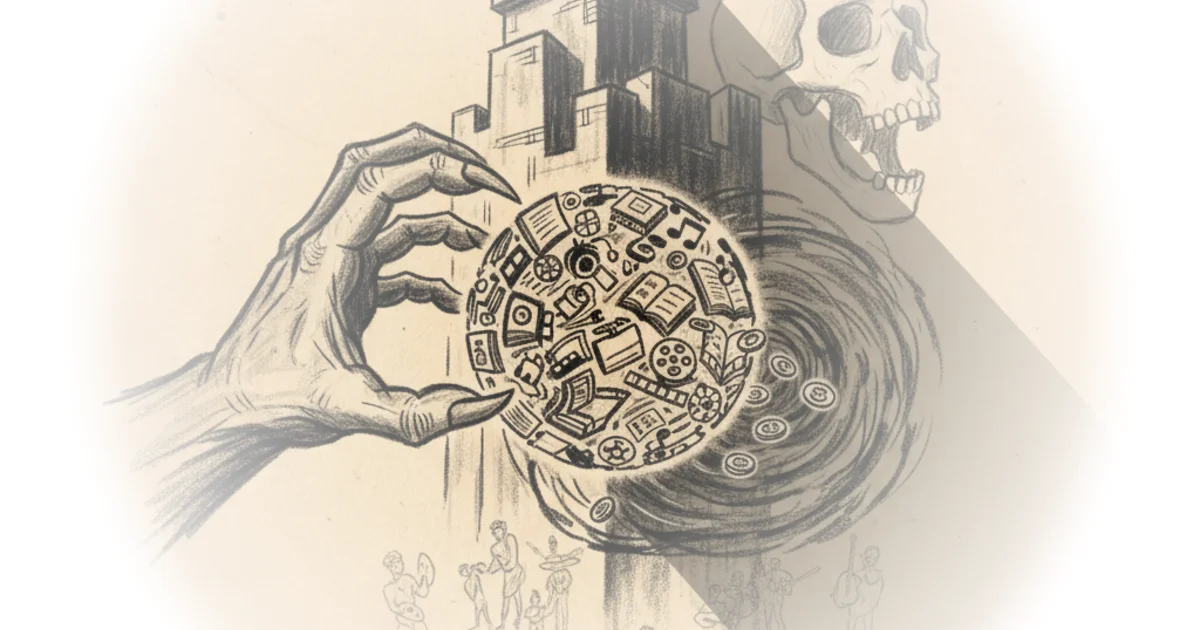
However, the author quickly pivots from legal technicalities to a broader critique of corporate power. The argument suggests that the real harm comes not from lost sales, but from the erosion of consumer rights. "Copyright is literally the biggest conspiracy in the entire world and the neighboring galaxy," The Hated One asserts. This hyperbolic framing serves to highlight the sheer scale of the issue, though it risks alienating readers who prefer a more measured tone. The core of the argument is that copyright has been hijacked by conglomerates to extend their control far beyond the original intent of protecting artists.
"If buying isn't owning, piracy isn't stealing. That's a meme that undersells the reality. In truth, piracy wouldn't be stealing even if buying were owning."
The Death of Ownership
The commentary becomes most compelling when it moves from media to hardware. The Hated One details how software locks embedded in physical products prevent owners from repairing or modifying what they have purchased. The author points out that "your car is a computer on wheels" and that features like heating seats or better acceleration are often paywalled behind software locks. This is a crucial observation for anyone who has struggled with modern appliance repair. The piece argues that "companies don't just make money when you buy things from them anymore... The biggest revenue pit that thus far has been largely untapped was the ability to repair your own stuff."
The author illustrates this with the case of John Deere, noting that "farmers who couldn't wait for the overpriced John Deere authorized repair would be hacking their own equipment in order to fix it themselves." This framing effectively shifts the narrative from "pirates stealing software" to "farmers committing a crime to save their livelihood." It highlights a stark contradiction in the law: bypassing a digital lock to fix a $500,000 tractor is treated as a criminal offense. A counterargument worth considering is that manufacturers argue these locks are necessary for safety and liability, a point the author dismisses but which remains a significant part of the legal debate.
The piece also touches on the agricultural sector, where "farmers that even attempt to copy or modify seeds by crossbreeding will be sued by agrochemical companies for pirating their intellectual property." This example underscores the author's thesis that copyright and patent laws have expanded to cover biological and mechanical systems in ways that stifle innovation and autonomy.
Surveillance and Free Speech
Beyond ownership, the author argues that piracy serves as a vital tool for privacy and free speech. The Hated One posits that legitimate streaming services and platforms collect extensive user data, stating, "You aren't just paying with money. You are submitting a record of your whole digital footprint to the company to invade and monetize." In contrast, the author claims that using trusted communities and VPNs offers "unrestrained access to any media" without the surveillance infrastructure of major tech giants.
The argument extends to censorship, noting that copyright claims are often used as a shortcut to silence dissent. "If you offend somebody and they want to silence your speech, it may be difficult even in countries with anti-free speech laws," The Hated One writes. "None of that is necessary if you can shut it down with a copyright strike because most copyright claims are automated on most platforms." The author cites examples ranging from the Turkish government using YouTube's system to silence critics to police officers playing music to prevent recordings of brutality. These examples are powerful, though they rely on the assumption that piracy is the only viable alternative to censored content, which may not always be true.
"If you want to protect free speech by spreading these copyright materials, you are committing piracy. Hope you feel bad about that. You should always obey the law when the government bans a song or a video game in your country to protect your feelings because the only way to get to censored media is through piracy."
Bottom Line
The Hated One's strongest contribution is the reframing of piracy from a moral failing to a structural necessity in a world where ownership is increasingly illusory. The piece effectively connects disparate issues—repair rights, privacy, and free speech—under the umbrella of copyright overreach. However, the argument's biggest vulnerability is its absolutist stance; it offers no middle ground for legitimate compensation of creators or the complexities of enforcing safety standards in hardware. Readers should watch for the ongoing legislative battles over the "right to repair" and digital ownership, as these are the real-world arenas where the abstract arguments in this piece will be decided.