Musa al-Gharbi dismantles the popular narrative that universities are factories for radical indoctrination, arguing instead that the real issue is a systemic selection bias that filters out dissenters before they even enter the symbolic professions. By leveraging a massive database of 27.6 million syllabi, al-Gharbi exposes a startling reality: the very texts blamed for "woke" culture are statistically invisible in the classroom, and the scholars cited by culture warriors often explicitly reject the views attributed to them. This is not just a correction of facts; it is a fundamental reframing of the culture war from a battle over ideas to a crisis of institutional gatekeeping.
The Myth of the Radical Syllabus
The prevailing story in public discourse suggests that students arrive at college as blank slates, only to be warped by armchair radicals and overbearing administrators. al-Gharbi challenges this by pointing out that students arrive on campus already oriented toward "safetyism and censorship," having internalized these views long before stepping onto a lecture hall floor. He writes, "Students arrived on campus already oriented towards safetyism and censorship. Their sense of entitlement was already quite strong: they expected staff and faculty to cater to their personal preferences and expectations and readily 'called the manager' when institutions didn't automatically and rapidly bend to their will."
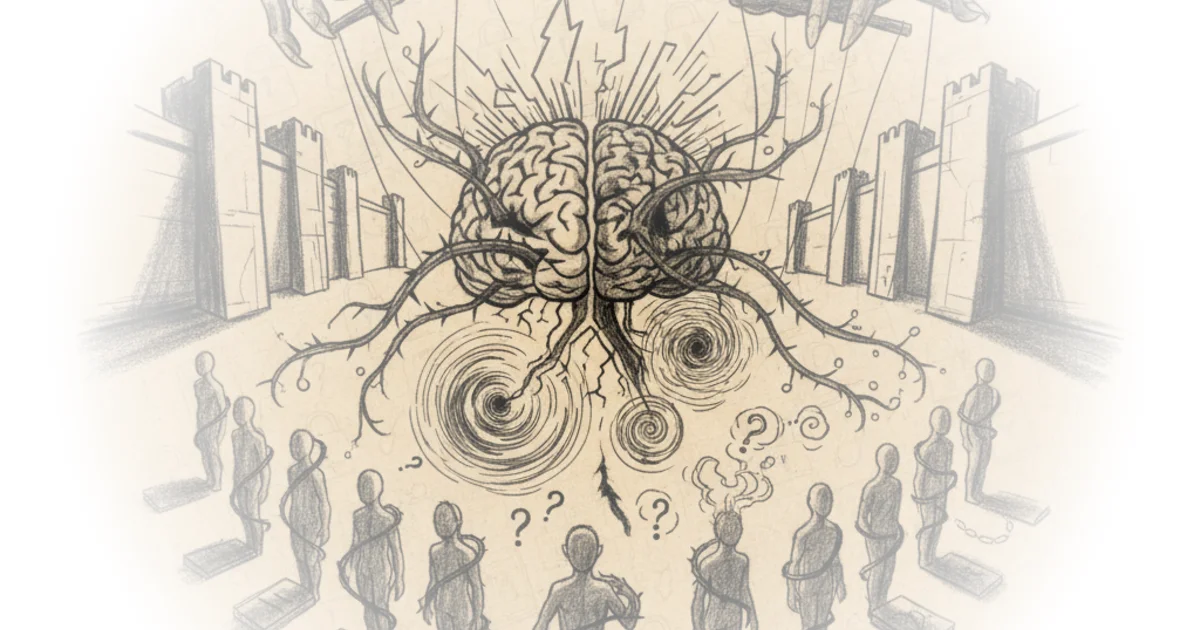
This observation shifts the blame from the university as an agent of change to the university as a mirror of broader societal enculturation. However, al-Gharbi goes further, arguing that the accusation of mass indoctrination collapses under the weight of data. He notes that the idea that students are being radicalized by reading Herbert Marcuse is a fantasy. Citing the Open Syllabus project, he reveals that Marcuse's famous essay on "repressive tolerance" appeared in only 149 out of 13.8 million syllabi with full readings. "Statistically speaking, the essay is basically never assigned," al-Gharbi writes, noting it appeared in "one one-thousandth of one percent of all syllabi in the dataset."
The implication is stark: the culture war is being fought over ghosts. Critics might argue that syllabi data doesn't capture the informal influence of campus culture or faculty office hours, but the sheer volume of data al-Gharbi marshals makes the "indoctrination" thesis look increasingly like a projection of fear rather than a description of reality. As he bluntly puts it, "Indoctrinate students? I can't even get them to read the syllabus!"
Indoctrinate students? I can't even get them to read the syllabus!
The Irony of Misattributed Theory
Perhaps the most damaging part of al-Gharbi's analysis is the demonstration that the "woke" positions currently dominating elite culture are often the exact opposite of what the foundational theorists actually wrote. He argues that right-leaning critics are so eager to debunk these ideas that they haven't bothered to read the source material, leading to a bizarre situation where they are refuting arguments that the original authors already dismantled.
Take Karl Marx, for instance. While modern activists are often accused of seeking "equality of outcomes," al-Gharbi points out that "Karl Marx wrote whole treatises denouncing 'equality of outcomes' as an absurd political goal that could only be plausibly pursued by morally and logistically intolerable means." Similarly, Michel Foucault, often cited as the patron saint of identity politics, would have despised the "sacralization of minority groups" and the bureaucratic regulation of sex. "To the extent that people support tightly governing and punishing sexual interactions, they are not showing you that they've read, internalized and agree with Foucault, they're telling the opposite," al-Gharbi writes.
This creates a vacuum of genuine intellectual engagement. The author suggests that most students are not there to engage with radical theory but to secure a credential. "Most students are not at university because they're deeply interested in ideas for their own sake. They're in college to secure a piece of paper that will allow them to get good jobs," he explains. Consequently, the "woke" views they hold are not the result of deep study but of a superficial adoption of trends, often without understanding the nuance or the refutations embedded in the texts themselves.
Gatekeeping, Not Indoctrination
If universities aren't indoctrinating students, what are they doing? al-Gharbi posits that the problem lies in the institutional selection process. Universities act as gatekeepers for the "symbolic professions," filtering for specific dispositions that are incompatible with true pluralism. "Universities do, in fact, play a big role in driving unfortunate dynamics within the symbolic professions," he argues, not because they teach radical ideas, but because they "serve an important gatekeeping role for deciding who gets to become a symbolic capitalist (and who does not)."
The attributes that higher ed institutions select for—risk aversion, conformity to specific moral narratives, and a lack of tolerance for dissent—are cultivated to ensure survival within the system. This selection bias creates an echo chamber where only certain types of thinkers are promoted, regardless of the actual content of their education. As al-Gharbi notes, "Neither 'woke' symbolic capitalists nor their right-aligned and anti-woke critics have actually read much, if anything, from the scholars they're evoking." This mutual ignorance fuels a debate where both sides are fighting over caricatures rather than engaging with the actual intellectual landscape.
To the extent that people champion equality of outcomes, this isn't a sign they've been converted by Marx, it's a sign that they don't know about or disagree with Marx's position on this issue.
Bottom Line
al-Gharbi's most compelling contribution is the empirical demolition of the "radical syllabus" myth, forcing a conversation about the actual mechanisms of cultural change: institutional selection and credentialism rather than classroom indoctrination. The argument's greatest vulnerability, however, is its potential to understate the power of peer-to-peer socialization and the informal curriculum of elite campuses, which may exert influence far beyond the assigned reading list. Readers should watch for how institutions respond to this data; if the problem is indeed gatekeeping, the solution requires structural reform of hiring and promotion practices, not just a change in reading lists.