The system that makes us sick is also selling us the cure — and that's the problem.
Wes Cecil argues that America's obesity crisis isn't a failure of individual willpower but a systemic collapse: processed foods, isolation, stress, and sleeplessness have overwhelmed our bodies' natural signals. Now the same forces that created the problem are profiting from solutions that don't actually solve it — while pharmaceutical companies rake in tens of billions selling weight loss drugs that mask the underlying issues.
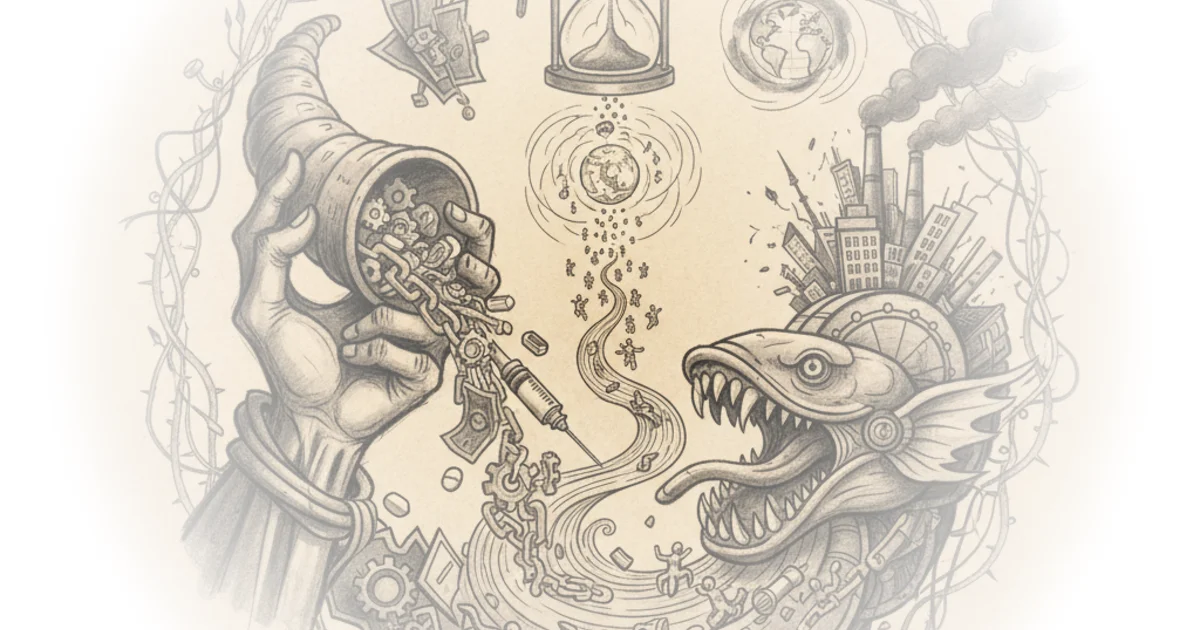
The Scale of the Crisis
The United States faces a health emergency that isn't being treated as one. Over 40% of American adults are obese; over 70% are overweight or obese. These numbers aren't holding steady — they're climbing.
This isn't a collection of individual failures. When nearly three-quarters of a population shares the same problem, something else is happening. The late capitalist framework insists these are personal issues: individuals responsible for their choices, their discipline, their willpower. This framing serves a purpose — it prevents systemic critique.
What Actually Determines Health
Medical research has identified the real drivers of health outcomes:
Loneliness and social isolation rank as the single greatest risk factor — worse for you than smoking two packs of cigarettes daily. Chronic stress from your environment compounds this. Sleep disruption ties closely to isolation and stress. Only after these comes exercise and diet.
Yet public conversation focuses almost exclusively on diet and exercise. The bigger issues — isolation, stress, sleep — are rarely discussed as health concerns. They're harder to monetize.
The American lifestyle reinforces these problems: sedentary work, long commutes, screen time dominance. This isn't a personal choice; it's a designed environment that people didn't create but must survive in.
How Food Was Engineered Against Us
The food system itself works against the body's ability to know when it has eaten enough.
Highly processed foods dominate the American diet — nearly 60% of daily calories come from these products. They lack fiber, which is how the body measures satiety. Sugar, particularly corn syrup, overwhelms our natural calibration systems. The gut sends no signal that fullness has been reached. People eat more, feel hungry still, and the cycle continues.
This isn't accidental. Food manufacturers understand exactly how their products affect human biology. The result: 40% obesity rates, 70% overweight — and no individual willpower fix in sight.
The Ozempic Solution
Enter Ozempic and Wegovy — drugs originally developed for diabetes treatment that showed remarkable weight loss side effects during trials. Pharmaceutical companies pivoted instantly.
The numbers are staggering: 10% of all American adults already take these medications, with usage climbing toward 30% of the population. Among older Americans (55-70), one in five uses them — and they've only been on the market about a year and a half. Tens of billions in profits have flowed to manufacturers.
The drug works by telling the body it's full constantly — an inverse solution to the processed food problem. If food can't signal fullness, take a drug that forces the signal. The result: people don't want to eat anymore.
Critics might note that weight loss itself does improve certain health outcomes. Reducing obesity reduces diabetes risk, heart disease, joint problems. These are real benefits.
But the approach treats symptoms rather than causes. It doesn't address why people overeat in the first place — the engineered foods, the isolation, the stress, the sleeplessness. The drug makes money while the underlying conditions persist.
"It's a solution that generates enormous profits and makes people feel like something is happening — while absolutely nothing changes."
Bottom Line
Cecil's strongest argument is the systemic lens: health problems require systemic answers, not pharmaceutical ones. The vulnerability lies in execution — arguing against weight loss drugs feels like arguing against progress when legitimate health benefits exist. But his larger point holds: a society that engineered the crisis and now profits from its bandaid solutions has a deeper problem than any pill can fix.