Freddie deBoer delivers a review that transcends the standard memoir critique, transforming a personal account of familial tragedy into a profound meditation on the chaotic, unresolvable nature of grief. Rather than offering a tidy moral or a roadmap for healing, deBoer argues that the true power of Stephen Policoff's A Ribbon For Your Hair lies in its refusal to provide closure, capturing the "grubby and unsatisfying" reality of mourning that society often tries to sanitize.
The Architecture of Unbearable Loss
DeBoer immediately establishes the stakes, noting that objectivity is impossible given his deep personal connection to the subjects, yet he leverages this intimacy to reveal a universal truth about suffering. He writes, "Policoff has written three novels, including 2022's Dangerous Blues, a book I really enjoyed and reviewed positively here," before pivoting to the memoir's devastating core: "A Ribbon For Your Hair: Loss, More Loss, and How We (Sort of) Went On is a memoir, and a very hard one to read." This framing is crucial; it signals to the reader that the text is not a polished literary exercise but a raw documentation of a "true story of unbearable loss." The author's decision to foreground the relationship between the reviewer and the subject adds a layer of credibility, suggesting that the emotional weight described is not hyperbole but a lived reality.
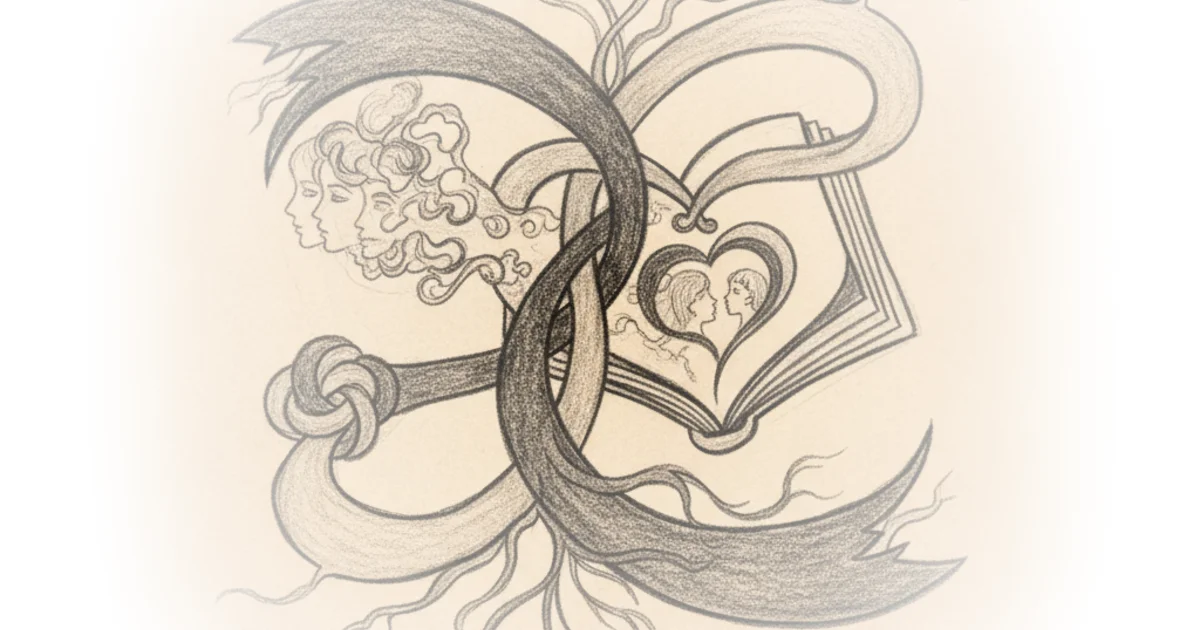
The narrative arc deBoer outlines is one of relentless attrition. He details how Policoff and his wife Kate adopted Anna from China in 1995, a journey that mirrors the broader history of American adoption from China, which saw a significant surge in the mid-1990s as families sought to provide homes for children in orphanages. However, the joy of adoption quickly collided with medical horror. DeBoer paraphrases the slow, agonizing diagnosis of Niemann-Pick type C, a lysosomal disorder where cells fail to move cholesterol and fats, leading to fatal neurological decline. He highlights the specific cruelty of the disease's progression, quoting Policoff's observation that "Promising is a very frustrating word when your child is dying." This quote cuts through the usual medical euphemisms, exposing the hollow nature of hope when faced with a terminal prognosis. The commentary here is sharp: it forces the reader to confront the helplessness of parents watching a child deteriorate despite every effort to intervene.
"Promising is a very frustrating word when your child is dying."
The Absurdity of Tragedy
DeBoer's most distinctive contribution is his analysis of how Policoff balances the horrific with the mundane, using dark humor and absurdity to prevent the narrative from becoming purely grim. He notes that the book is "very straightforward in its conventions as a memoir, unadorned and prosaic," yet filled with "minor indignities" that feel random and unfair. DeBoer writes, "There are elements of this book that play out like a Seinfeld episode, the various absurdities of life and dying," citing the bizarre instance where Anna, a Chinese Catholic, ends up at a school for Orthodox Jewish children due to a tangle of disability laws and neighborhood access. This observation is vital; it suggests that life does not pause for tragedy, and the continuation of bureaucratic absurdity amidst personal catastrophe is a form of psychological survival. By weaving in these "slightly off-kilter observations," Policoff avoids the trap of sentimentality, offering instead a portrait of a life that is "mournful but not bleak."
The review also tackles the institutional failures that compounded the family's suffering. DeBoer describes the "false allegations of child abuse" that Policoff faced, a harrowing detail where doctors and strangers misinterpreted the symptoms of a genetic disorder as signs of parental violence. He writes, "It's a pretty cruel fate to be cleared of child abuse allegations only thanks to the knowledge that your child has a fatal illness." This section serves as a stark critique of how medical and social systems often lack the nuance to understand rare conditions, punishing families with suspicion rather than support. A counterargument might suggest that medical professionals are trained to prioritize child safety, making such accusations a necessary, if painful, precaution. However, deBoer's account underscores the devastating emotional toll of being doubted when one is already drowning in grief.
The Confusion of Grief
The core of deBoer's argument rests on the idea that grief is fundamentally a state of confusion rather than a linear journey toward recovery. He challenges the cultural narrative that mourning should lead to a "silver cloud" or a "great lesson," asserting instead that "mourning is, fundamentally, a type of confusion." DeBoer writes, "We mourn in a state of bafflement. Grief has a way of befuddling us, which is inconvenient, given that we want our grief-stricken moments to mean something." This insight resonates deeply, particularly in a culture obsessed with "moving on" and finding meaning in tragedy. The author validates the experience of those who feel "unstuck in time," floating without direction, yet still compelled to continue. He notes that the book's subtitle, "How We (Sort of) Went On," is the most honest description of survival, rejecting the notion of a full return to normalcy.
Critics might argue that this perspective on grief is too passive, potentially discouraging active therapeutic engagement. Yet, deBoer's point is not to discourage healing but to reframe it: healing is not about erasing the past or finding a neat resolution, but about learning to live with the "tangle of our petty misunderstandings." The review concludes by highlighting the emotional impact of the chapter titled "Mother and Child Reunion," a phrase that deBoer notes "just breaks your heart." This final image encapsulates the book's power: it does not offer a solution to death, but it offers a companion in the confusion.
Bottom Line
DeBoer's review succeeds by refusing to offer the comfort of a moral lesson, instead presenting grief as a chaotic, confusing, and enduring state that defies resolution. Its greatest strength is the honest portrayal of the "grubby" reality of loss, while its potential vulnerability lies in its unrelenting focus on the lack of closure, which may feel unsatisfying to readers seeking a narrative of triumph. This is a necessary read for anyone navigating the uncharted waters of profound loss, reminding us that "sort of going on" is often the only victory available.