"Zichen Wang introduces a work that does something rare in political theory: it treats ancient Chinese philosophy not as a museum exhibit, but as a living, breathing toolkit for solving modern crises. The most striking claim here is that the debates of the Warring States period are not just history, but the active operating system for today's policy decisions in Beijing."
The Living Archive
Wang frames Daniel Bell's new book as a necessary corrective to Western myopia. The author writes, "China's most original, diverse, and fascinating political debates took place more than two millennia ago, but they have profoundly shaped Chinese political thinking and practice ever since and, remarkably, their influence on the country's leaders is only growing today." This is a crucial pivot. It suggests that to understand the current geopolitical landscape, one cannot simply look at economic data or military budgets; one must understand the philosophical DNA that drives them.
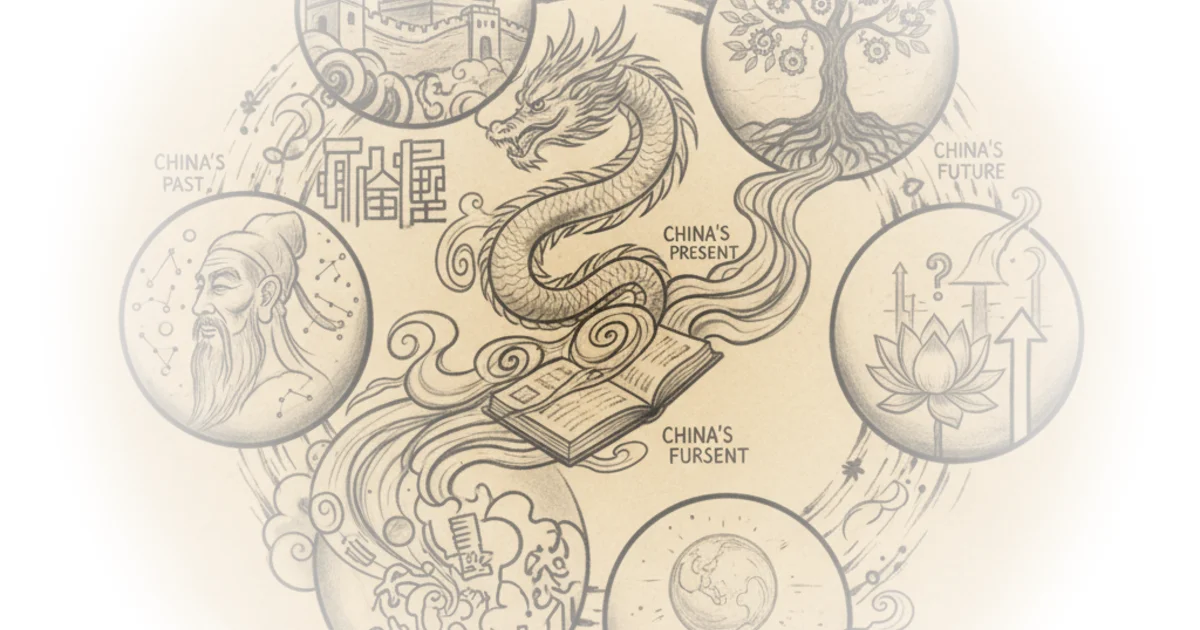
The book's structure is its greatest strength. Rather than a dry academic survey, Bell constructs "vivid imaginative dialogues" where descendants of ancient thinkers debate modern issues. Wang notes that these debates cover "perennial issues as war, corruption, government involvement in family life, and whether the state should subsidize culture." By placing these figures in contemporary settings, the text transforms abstract concepts into urgent policy questions.
"The dialogue form also has the advantage of showing the diversity of political thought in ancient China in an accessible and entertaining manner for the modern reader."
This approach is particularly effective because it mirrors the historical reality of the pre-Qin era. As Wang explains, before China's unification in 221 BCE, thinkers "roamed from state to state, argued with each other, and tried to persuade rulers to follow their ideas." This historical context is vital. It reminds the reader that Chinese political thought was born from competition and debate, not static dogma. The reference to the Warring States period (ca. 770-221 BCE) is not just a date; it is the origin story of a system where survival depended on the best argument.
The Clash of Systems
The commentary shines when it details the specific philosophical conflicts Bell stages. The first dialogue pits Confucianism against Daoism on the issue of family law. Wang writes, "Kong allows for the possibility that the law can set constraints on freedom in order to promote harmonious ties between family members... Zhuang appears to be more skeptical." This isn't just about filial piety; it's a debate on the role of the state in private morality.
The second dialogue tackles corruption, a perennial challenge for the executive branch in any large bureaucracy. Here, the Legalist tradition, represented by Han Feizi's descendant, argues for "harsh legal punishments that make public officials fearful." In contrast, the Confucian Xunzi's descendant argues that "only social rituals that make participants feel part of a community can succeed."
This tension between Legalism and Confucianism is the engine of Chinese governance. Wang points out that while the Legalist approach relies on fear and rigid enforcement, the Confucian approach relies on moral cultivation. The author observes, "The dialogue is heated and emotional, with the student seeming to call for the physical elimination of his teacher, but it ends with a banquet." This detail is profound. It suggests that even in the most bitter ideological clashes, the ultimate goal is social cohesion, not total destruction. Critics might note that this idealized "banquet" ending glosses over the brutal reality of how these systems have historically been enforced, but the philosophical point remains: the debate is ongoing.
The Economics of Culture
The third dialogue moves to resource allocation, specifically whether a community should fund a musical arts center or basic material needs. Wang introduces the Mohist perspective through Mr. Mo, who argues that "the community should spend scarce resources on supplying the material needs of the common people rather than funding musical arts." This is a stark utilitarian argument that challenges the Western assumption that culture is a universal good.
Conversely, Ms. Yue, representing the tradition of the Record of Music, argues that "music is necessary for human flourishing" and forms the "foundation for communal bonds." Wang writes, "Music provides joy and forms the foundation for communal bonds that allow for policies that help the poor to be implemented without much resistance."
"Ancient political thought, exemplified by the classical Chinese perspectives in Bell's luminary dialogues, matters because it grapples with questions about human society—loyalty, power, culture, and justice—that remain urgent for rethinking the political today."
This section is particularly relevant for modern policymakers. It forces a question that is often ignored in technocratic circles: is efficiency the only metric of success? The Mohist focus on material welfare resonates with modern debates on poverty alleviation, while the Confucian/Music focus on cultural cohesion speaks to the need for social stability. The author effectively uses these ancient voices to show that the trade-off between "bread and circuses" is not a modern dilemma but an ancient one.
The Relevance of the Past
Wang emphasizes that these debates are not merely academic exercises. "Those seeking deeper knowledge of Chinese politics need to have a solid understanding of political theories from the pre-Qin period because they still serve as important reference points for Chinese intellectuals and political officials today." This is the book's central thesis: the past is the present.
The author notes that while modern theories like socialism and democracy have shaped China, the "background assumptions and ideals" come from these ancient texts. The revival of these traditions in official discourse is not a return to the past, but a repurposing of it for the future. Wang writes, "The dialogues bring complex philosophical debates to life and are brimming with wisdom and profound insight."
Critics might argue that relying on ancient texts to explain modern authoritarianism risks romanticizing a system that has caused immense suffering. However, Wang's framing is careful. The goal is not to endorse the systems, but to understand the logic behind them. As the author puts it, "My aim is not to take sides in these debates but to be charitable and fair-minded to all sides."
Bottom Line
Wang's commentary on Bell's work successfully argues that ignoring ancient Chinese political thought leaves a massive gap in understanding the current global order. The strongest element is the use of the dialogue format to make dense philosophy accessible and urgent. The biggest vulnerability is the risk of over-romanticizing the "harmony" of these ancient debates, which often masked brutal power struggles. The reader should watch for how these philosophical frameworks are applied to future crises, particularly regarding international relations and domestic social control.