The Hated One doesn't just warn about privacy erosion; they frame mandatory age verification as the final nail in the coffin of the open web, arguing that the push to "protect children" is actually a Trojan horse for total surveillance. While the rhetoric is fiery, the piece offers a crucial technical distinction that most mainstream debates miss: the difference between a simple "yes/no" age check and the current demand for uploading government IDs to third-party databases. This is not a hypothetical future; the author details how laws in the UK, EU, and US are already forcing platforms to purge content or gate it behind identity checks, turning the internet into a permission-based authoritarian state.
The Architecture of Control
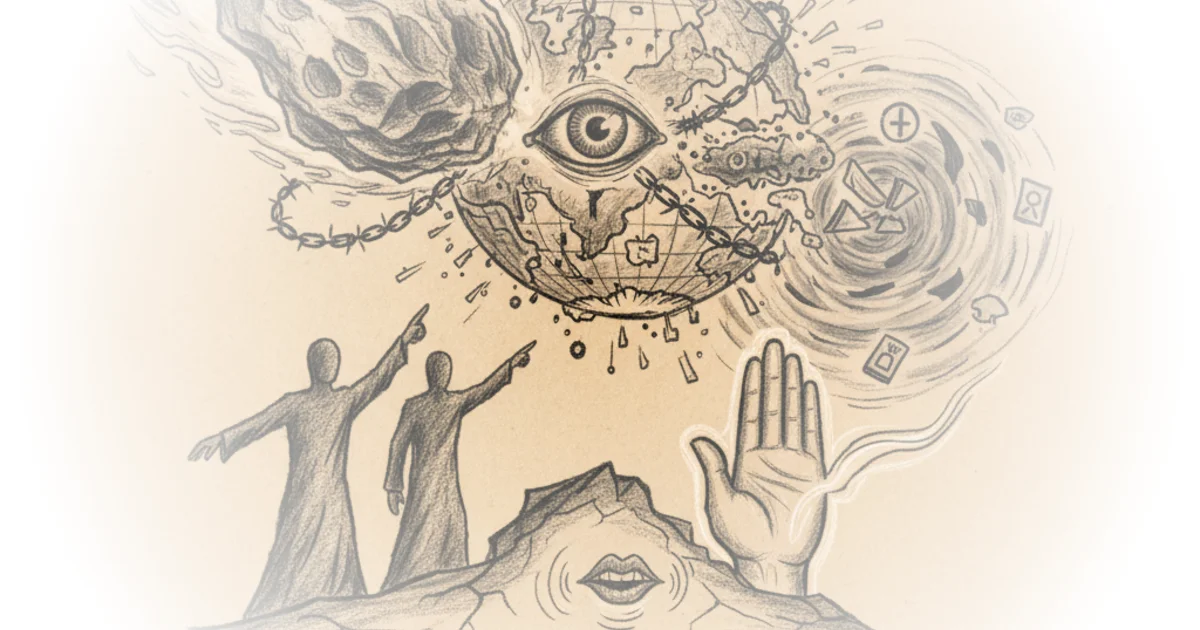
The core of the argument rests on the slippery slope from protecting minors to censoring legal adult content. The Hated One writes, "Unmass internet ID verification is hurling towards us with the speed and force of a planet killing asteroid." This hyperbolic imagery sets the stakes immediately, but the evidence provided grounds the fear in reality. The author points out that the scope of these laws has already expanded far beyond pornography. "YouTube Music wouldn't let a user play a 35-year-old Nirvana song unless they uploaded their photo ID to the platform," they note, illustrating how quickly the definition of "unsafe" content can balloon to include historical footage or music videos. This framing is effective because it moves the threat from the abstract to the mundane, showing that a simple click of "I am over 18" is no longer sufficient.
Critics might argue that some level of verification is necessary to comply with child safety laws, but the author dismantles this by highlighting the lack of privacy-preserving alternatives. The Hated One argues, "If this weren't about surveillance, it would have been built completely differently." They explain that technology exists to verify age without revealing identity, yet current systems deliberately require full ID uploads. "In either case, you have no guarantees that your photo ID will be separated from whatever you are consuming," the author warns, creating a permanent record of every book, song, and movie accessed. This is the piece's most chilling point: the infrastructure being built today is designed for data retention, not just age checking.
If we accept that these age verification services won't store information about what specific video, book, or game you want to access, they'll still have an identifiable profile of your internet records.
The Censorship Mechanism
The commentary shifts to the inevitable consequence of these laws: the effective censorship of legal speech. The Hated One contends that the vague definition of "legal but harmful" content will force platforms to over-censor to avoid massive fines. "Wikipedia won't be able to comply because plenty of their pages contain articles and media that might fall into the harmful category," they write, predicting that historical events and discussions on sexuality will be buried or removed. This is a powerful observation because it highlights how the burden of compliance falls on the speaker, not the regulator. The author notes that this leads to a new vocabulary of euphemisms, calling it "an insult to the human experience."
The piece also addresses the failure of current workarounds. While many users turn to Virtual Private Networks (VPNs) to bypass these restrictions, the author warns that this is a temporary fix. "Soon, there won't be a country you can choose to VPN from because they'll all have the same rules," The Hated One predicts, suggesting that the global nature of the internet is being homogenized under these authoritarian standards. This section is particularly strong in its refusal to offer false hope, acknowledging that technical evasion is not a long-term solution against state-level enforcement.
The Call to Action
Finally, the author moves from analysis to a direct call for civil disobedience. Rejecting the idea that voting or consumer choices are enough, The Hated One asserts, "Our problem is civil obedience." They urge readers to organize, strike, and boycott, drawing inspiration from historical civil rights movements. "These laws are so authoritarian, they rival even the laws of China and Russia, and they're coming to our cherished democracies," they write, framing the issue as an existential threat to democratic norms. While the tone is confrontational, the logic follows that if the system is designed to be unchangeable through normal channels, extraordinary measures become necessary.
Critics might find the call for civil disobedience too radical for a democratic society, arguing that it undermines the rule of law. However, the author counters that the laws themselves are fundamentally "antihuman" and that polite engagement has failed. The piece concludes that the only way to stop the "architecture of control" is to actively resist it before the infrastructure becomes irreversible.
Bottom Line
The strongest part of this argument is its technical clarity on why current age verification methods are inherently invasive, distinguishing between what is possible with privacy-preserving tech and what is actually being implemented. Its biggest vulnerability lies in its apocalyptic tone, which may alienate moderate readers who believe some form of regulation is necessary, even if flawed. Readers should watch for how the "legal but harmful" definition evolves in upcoming court cases, as that will determine whether the internet becomes a gated community or remains a public square.