In a landscape often dominated by geopolitical headlines and casualty counts, this piece by Paula Forbes for Stained Page News offers a rare, grounding perspective: the resilience of a culture is measured not just in territory held, but in recipes preserved. Through an intimate interview with cookbook author Anna Voloshyna, the coverage reframes the war in Ukraine not as a distant conflict, but as an active assault on the very ingredients, flavors, and culinary traditions that define a nation's identity. This is not merely a food story; it is a testament to how gastronomy becomes a form of resistance when a homeland is under siege.
The Architecture of a Culinary Identity
Forbes structures the narrative around Voloshyna's journey from an immigrant food stylist to a chronicler of a nation at war, highlighting how the author dismantled the monolithic view of Eastern European cuisine. The piece argues that the global perception of Ukrainian food has long been overshadowed by its Russian neighbor, a misconception Voloshyna actively fought before the current conflict even began. "Ukrainian wasn't hottest cuisine, people felt nothing was happening there, and didn't believe it would be a best-seller," Voloshyna recalls of her early pitch meetings. Forbes uses this historical context to set the stage for the book's significance, noting that Voloshyna had to prove she was "the whole package"—writer, photographer, and test cook—to convince publishers to take a risk on a cuisine they deemed niche.
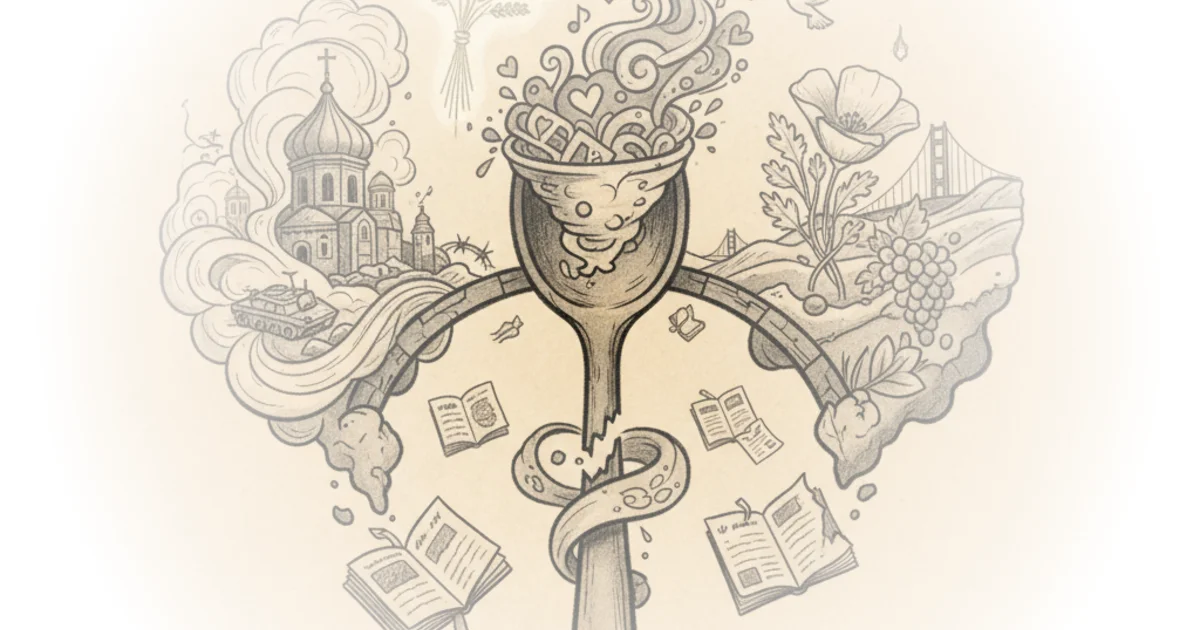
The reporting shines when it details the specific, regional diversity of the food, moving beyond the stereotype of a single, cold beet soup. Forbes writes, "In Ukraine, 99% of people think of it as a hot dish," a distinction that underscores the depth of local knowledge often lost in translation. By paraphrasing Voloshyna's explanation of green borscht made with sorrel and spinach versus the beet-heavy versions, the commentary illustrates how the cookbook serves as an educational tool, correcting centuries of cultural erasure. This framing is effective because it treats the cuisine with the same complexity and regional nuance as French or Italian food, elevating it from a "comfort food" category to a sophisticated culinary tradition.
"My book was done before the war broke out... It's name is a toast, like 'cheers' in English."
Gastronomy as Resistance in a War Zone
The narrative shifts dramatically when Forbes documents Voloshyna's recent return to Ukraine, transforming the piece from a culinary profile into a harrowing account of life under fire. The author does not shy away from the violence; instead, she weaves the sounds of war directly into the description of the food. Voloshyna describes cooking a feast for soldiers in Druzhaivka, mere kilometers from the front lines in Bakhmut, while sirens wailed and bombs fell. "I decided to make them a feast, so I brought stuff from every corner of Ukraine to show I care about them and comfort them," she tells the interviewer. Forbes captures the gravity of this moment, noting that the meal included honey from Lviv, pickles from Kyiv, and Crimean beef stew—a dish that now carries the weight of a lost territory since the annexation.
This section of the coverage is particularly powerful because it highlights the human cost of the conflict through the lens of supply chains and ingredients. The destruction is not abstract; it is the poisoning of rivers and the loss of fresh water. Voloshyna notes, "Russia blew up one of our biggest dams in May. A ton of fish died, even more got poisoned, and we lost 70% of our fresh water supply. Now people are very careful about eating local fish." Forbes uses this detail to pivot from the romanticism of food to the stark reality of survival. The argument here is that the war is actively dismantling the ecological basis of the cuisine, making the act of cooking a defiant preservation of memory.
Critics might argue that focusing on food in the midst of a humanitarian crisis risks trivializing the suffering, but the piece avoids this trap by centering the voices of those who are cooking and eating amidst the danger. The narrative makes it clear that for Voloshyna and the chefs she meets, cooking is not a hobby; it is a lifeline. "I felt I was at home, and then came home," Voloshyna says of the experience, a line that Forbes presents as the emotional core of the story. The juxtaposition of the soldiers' signed flag with the act of preparing a meal creates a poignant image of dignity maintained in the face of dehumanization.
A Renaissance of Culture
The final third of the piece focuses on the "renaissance of our gastronomic culture" that Voloshyna observed during her trip. Forbes reports on how the war has accelerated a rejection of Russian influence, leading to a surge in interest in authentic Ukrainian traditions. Voloshyna describes meeting bakers in Lviv who bake through the night without electricity and chefs hosting pop-ups during air raid sirens. "I went to experience new chefs to connect with... I saw how incredible it was," she says. The commentary here suggests that the conflict, while devastating, has inadvertently catalyzed a cultural awakening, forcing a nation to reclaim and redefine its identity through its food.
The piece concludes by looking forward to Voloshyna's next project, Preserving Ukraine, which aims to document these stories. Forbes notes that the proposal has become "much deeper, more important" after the trip. This evolution mirrors the journey of the nation itself: what began as a collection of recipes has transformed into a historical record of survival. The coverage effectively positions the cookbook not as a static object, but as a living document of a people refusing to be erased.
Bottom Line
Paula Forbes's coverage succeeds by refusing to treat food as a mere backdrop to the war, instead presenting it as a central front in the battle for Ukrainian identity. The strongest element is the seamless integration of culinary detail with the brutal reality of the conflict, particularly the section on the ecological damage to the food supply. The piece's vulnerability lies in its reliance on a single, privileged perspective; while Voloshyna's story is powerful, the voices of those who have fled or perished are necessarily absent. Yet, as a testament to the resilience of culture under fire, this commentary on the coverage stands as a vital reminder that to destroy a people's food is to attack their soul, and to preserve it is an act of profound defiance.