Alison Roman transforms a fleeting seasonal ingredient into a meditation on the messy, contradictory joy of new parenthood, arguing that the urgency of the harvest mirrors the fleeting nature of early childhood. In a piece that could easily have been a simple recipe drop, Roman anchors the culinary in the deeply personal, suggesting that the act of baking is less about perfection and more about preserving a specific, vanishing moment in time.
The Emotional Harvest
Roman opens not with flour or sugar, but with the raw, unvarnished reality of her own life transition. She writes, "the thorn is I've officially stopped brst fding (breast feeding) and retired The Pump, and so I feel both free and a little depressed." This immediate admission of conflicting emotions sets a tone that elevates the entire piece; it refuses to sanitize the experience of motherhood into a series of Instagram-ready milestones. By juxtaposing this vulnerability with the arrival of solid foods for her son, she frames the kitchen as a space of healing and discovery rather than just utility.
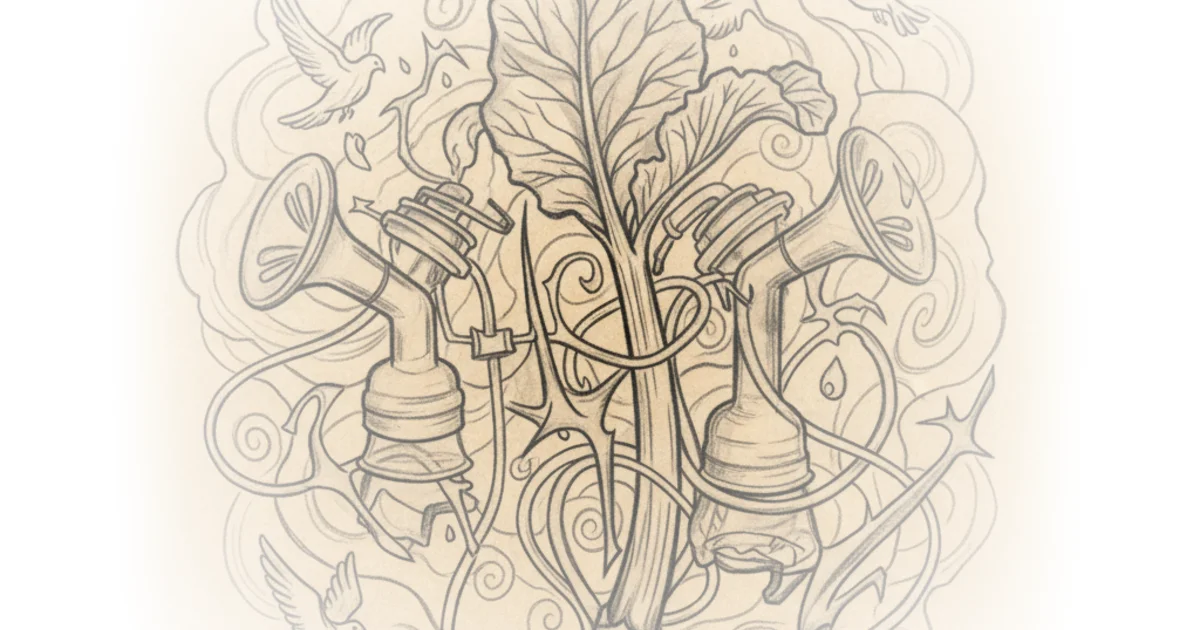
The author's description of her son's first tastes is particularly striking. As Alison Roman puts it, "giving a tiny baby food and new flavors for the first time is as wonderful as I had dreamed it would be." She notes that his current favorites include a lemon slice and "masticated blueberry," a detail that grounds the abstract concept of parenthood in a very specific, sensory reality. This framing is effective because it invites the reader to witness the small, profound shifts in a child's development, making the subsequent recipe feel like a shared ritual rather than a set of instructions.
"I can not and will never get over how something so gorgeous just grows wild and we get to eat it."
The Pastry Chef's Perspective
When shifting to the culinary analysis, Roman draws on her professional history to explain why rhubarb demands a specific kind of attention. She recalls her past failures in the pastry kitchen, noting that she "tried repeatedly to turn it into sorbet or ice cream maintaining the vibrant pink color without relying on something like hibiscus or beets to keep it pink and failed several times." This admission of failure serves a dual purpose: it establishes her authority while simultaneously demystifying the ingredient. It suggests that even experts struggle with rhubarb's unique chemistry, validating the home cook's potential struggles.
Instead of fighting the ingredient, Roman argues for working with its natural properties. She describes slow-roasting the vegetable with vanilla and sugar until it becomes "as soft as custard, swimming in a self-made syrup that's tart, vanilla-flecked and peony-pink." The imagery here is lush and deliberate, moving the reader from the mechanics of baking to the sensory experience of eating. She suggests that the best approach is often the simplest: "Eat the rhubarb and drizzle the syrup over yogurt and granola (safe but good) or a nice scoop of ice cream in a small bowl while getting into bed (sexy?)." This parenthetical "sexy?" adds a touch of dry humor, acknowledging the private, indulgent nature of the treat.
Critics might note that Roman's reliance on high-end ingredients like masticated blueberries or specific pastry techniques could alienate readers with limited resources or time. However, she quickly pivots to a more accessible solution, offering an olive oil cake that utilizes "most things you already have." This practical turn ensures the piece remains grounded, acknowledging that not everyone can slow-roast fruit for hours but everyone can bake a quick cake.
The Texture of Memory
The piece concludes by connecting the physical texture of the cake to the author's personal history, creating a bridge between the ingredient and the human experience. Roman observes that the "thin strips of rhubarb, which do remind me of my 78 striped button-downs, really shine brightest when baked on top of a round cake." This comparison is unexpected and vivid, using a wardrobe detail to evoke a sense of nostalgia and identity. It reinforces her central thesis: that food is a vessel for memory.
She emphasizes the practical longevity of the olive oil cake, describing it as a "dense crumb, almost pound-cake in texture, exceedingly moist thanks to: 1. Olive oil 2. Yogurt 3. So much rhubarb." The list format here breaks the lyrical flow just enough to provide clear, actionable advice, reminding the reader that the cake is meant to be "kept on your counter all week long." This utility contrasts beautifully with the ephemeral nature of the rhubarb season itself.
Bottom Line
Roman's strongest move is her refusal to separate the recipe from the life that surrounds it, creating a narrative where the cake is a tangible response to the emotional complexities of motherhood. The piece's vulnerability lies in its assumption that the reader shares a similar appreciation for the intersection of domestic labor and emotional processing, but for those who do, it offers a rare and resonant connection. Readers should watch for how this specific framing of seasonal cooking as emotional preservation might influence their own approach to the fleeting nature of the year's harvest.