Wayfare delivers a narrative that defies genre expectations, weaving a speculative Western adventure into the fabric of early Latter-day Saint history to explore the tension between faith and historical scrutiny. Rather than offering a dry theological treatise or a standard biography, the piece constructs a visceral journey where the protagonist, Timothy, grapples with the physical weight of ancient artifacts while haunted by their spiritual ambiguity.
The Weight of History
The article opens not in a dusty archive, but on a London street corner, immediately establishing a tone of imminent danger. Wayfare reports, "Every morning for a week, they sat on a bench across the street from our hotel on the Strand... feigning nonchalance as they waited for us to leave." This framing transforms the acquisition of religious texts into a high-stakes heist, suggesting that the preservation of these antiquities was always fraught with conflict. The narrative leans heavily on the duality of its protagonists: an immortal narrator who refuses violence and "The Kid," whose protection is rooted in a fierce, almost paternal devotion.
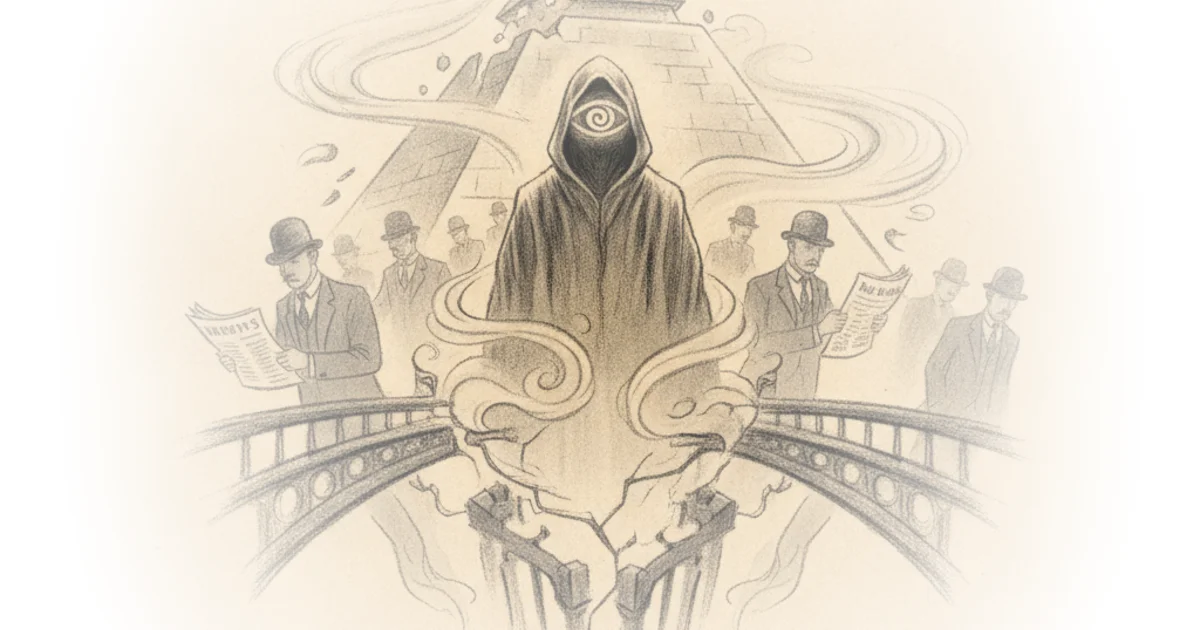
The piece argues that the true threat to the mission isn't just physical danger, but the erosion of faith when confronted with inconvenient facts. When Timothy meets Samuel Birch at the British Museum, the scholar's reaction is telling. Birch notes, "these mummies are simply not that old... they are nearer in age to our Lord and Saviour than to Joseph or Moses." This moment serves as the story's pivot point. The editors use this historical correction—acknowledging that the artifacts date to the Ptolemaic period rather than the time of Abraham—to highlight a profound vulnerability: what happens when the physical evidence does not match the spiritual promise?
"The Prophet told me that bit of counsel was always the hardest for him to follow. He was something of a showoff himself. He loved telling what he knew."
This admission, recounted by Timothy regarding Joseph Smith, adds a layer of human complexity often missing from hagiographies. It suggests that the drive to translate and understand these texts was born as much from curiosity and ego as it was from divine mandate. The narrative acknowledges that even the Prophet "wanted to get more" but ultimately faced limits, stating, "It's remarkable that we got as much of Abraham's record as we did." This reframes the historical failure to fully decipher the scrolls not as a defeat, but as a mysterious element of the human condition.
Critics might argue that fictionalizing these interactions risks trivializing sacred history by turning theological debates into action-adventure tropes. However, the piece avoids this trap by grounding the violence in a protective necessity rather than glory. When the Kid smashes pottery to reveal a window, the text notes, "Pots and jars, almost as old as recorded time, shattered on the hardwood floor." This destruction of ancient history to save the living characters underscores the story's central theme: the present moment often demands the sacrifice of the past.
The Journey Home
The narrative arc moves from London to the Mediterranean, using the setting of Marseilles and the docks to emphasize the global scale of this small group's mission. Wayfare describes the scene as a "babel of French, Italian, German, Greek, and Arabic," creating a sensory backdrop that contrasts with the quiet intimacy of Timothy and The Kid's conversation. The Kid's observation that some locals look like Jesus serves as a reminder of the universal human search for the divine, even in the most mundane or gritty settings.
The editors weave in historical context without bogging down the story, referencing the Italian tomb raider Antonio Lebolo and his connection to Napoleon's men. This detail connects the American religious experience to the broader European colonial excavation of Egypt, a theme echoed by the companion deep dives on artists like Edward Lear who documented these same ruins. The piece suggests that the mummies are not just religious artifacts but commodities caught in a global trade of antiquities.
As they prepare to return the items to the sand in the Valley of the Nobles, the story confronts the ultimate irony: the characters must destroy their own mission's physical proof to preserve its spiritual truth. The Kid summarizes this sentiment perfectly: "Some people think they know everything, but we're all just scratchin' the surface of what there is to know." This humility stands in stark contrast to Birch's academic certainty.
The narrative concludes on a note of unresolved tension. As they are followed through the streets by Chandler's men, the Kid stalls for time, leading them into a "maze of streets and alleys" lined with "gamblers, whores, and streetcorner mystics." The story cuts off just as danger closes in, leaving the reader to wonder if the return of the antiquities is a redemption or a final surrender.
Bottom Line
Wayfare's "The revenant" succeeds by refusing to choose between faith and history, instead presenting them as two forces that must constantly negotiate with one another. Its strongest element is the characterization of Timothy, whose "divine resilience" is tested not by bullets but by the realization that his sacred objects may be far younger than he believed. The piece's biggest vulnerability lies in its reliance on a fictionalized account to resolve real historical questions, a risk it manages by focusing on the emotional truth of the characters rather than the factual accuracy of the timeline.
For readers seeking a deeper understanding of how faith communities grapple with archaeological evidence, this narrative offers a compelling, if speculative, lens through which to view the enduring mystery of the Joseph Smith papyri.