Jeffrey Kaplan shatters the most persistent myth in higher education: that reading every assigned word is the only path to success. Drawing on his own trajectory from a summa cum laude graduate of elite institutions to a philosophy professor, he argues that the academic world operates on a hidden set of codes regarding how much text students are actually expected to consume. This is not advice on cutting corners; it is a strategic manual for efficiency in an era of information overload.
The Hidden Curriculum of Reading
Kaplan begins by dismantling the standard faculty line that students must read everything. He writes, "I wasn't going to tell you that I had written a version of this video lecture where I was just going to give you the standard line that college faculty like myself tend to give students which is that you have to read all the reading for all of your courses." Instead, he reveals a more pragmatic reality: different disciplines demand different levels of engagement. In philosophy, where texts are dense and foundational, he insists that students "must read every single word of them often multiple times." Yet, in history courses assigned entire books, the expectation shifts dramatically.
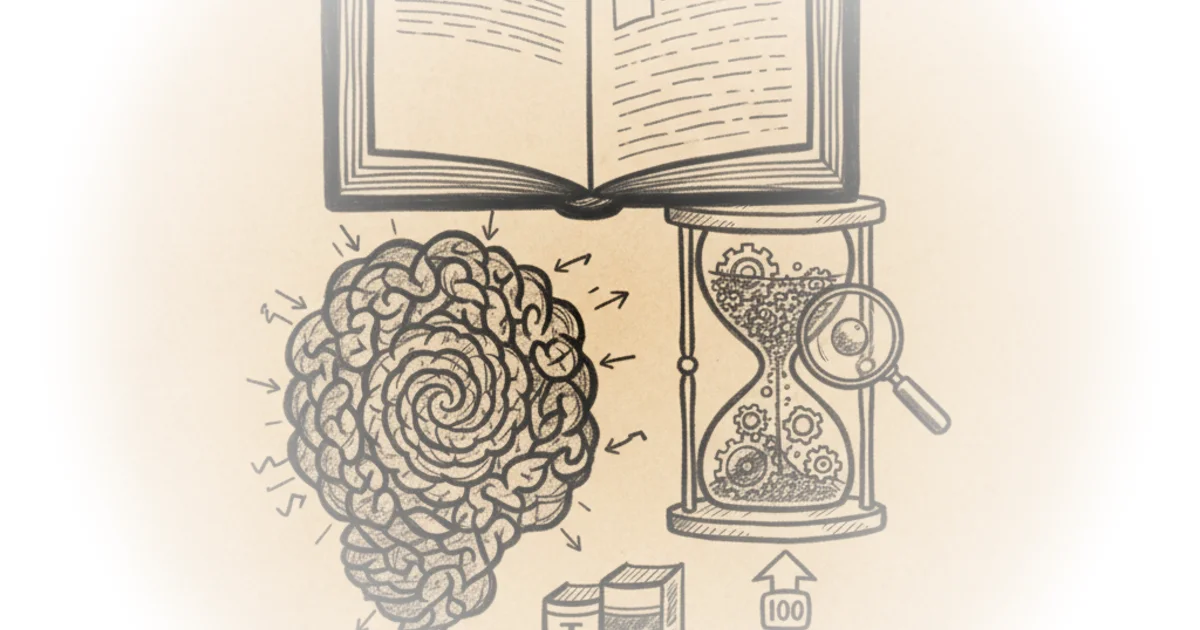
The author outlines a specific strategy for history: "You read the introduction, you pick one chapter in the book to read also a chapter somewhere in the middle that you find interesting, you skim all the rest of and then you read the conclusion." This approach is designed not to skip learning, but to build a framework. By skimming first, a student gains a "vague sense for the topic," allowing them to identify which specific sections the professor will emphasize during lecture. As Kaplan explains, the goal is to recognize during class, "Oh there was a whole chapter about this thing he's talking about... and then after class... you read that whole chapter."
This reframing of skimming from a lazy act to a strategic reconnaissance mission is the piece's most valuable insight. It acknowledges that time is finite and that deep reading requires context. However, critics might argue that this method relies heavily on the student's ability to accurately predict which parts of a text are most relevant, a skill that novices often lack without explicit guidance.
You're just sort of expected to pick it up on your own and I think that that is like unacceptable.
The Textbook Trap
The commentary takes a sharp turn when addressing science and social science courses. Kaplan challenges the common professorial assertion that textbooks are optional if one listens closely in lecture. He argues that faculty often "overestimate their own ability to explain things well to students," noting that a textbook has undergone multiple drafts and editorial review, whereas a lecture is often delivered "on the fly."
He posits that professors, having taught the material for decades, have forgotten the cognitive struggle of a novice. "If it's the first time for you and you don't already basically know all of this stuff then having having read it once in the textbook and then having it reinforced again in the lecture that's it's not just helpful that's basically necessary," Kaplan asserts. This dual exposure—written and oral—is presented as the only reliable way to absorb complex new material.
Furthermore, Kaplan points to a practical, high-stakes reason to read: the exams. He warns that if an exam is sourced from the publisher rather than the professor, the phrasing in the lecture may not match the test. He offers a diagnostic test for students: if a professor dismisses a textbook contradiction by calling the author a "fool," the exam is likely professor-made; if they defer to the text, the publisher's questions will dominate. This is a crucial piece of tactical advice that transforms the textbook from a passive resource into a primary source of truth.
The Efficiency of Preparation
Despite the nuanced advice on how much to read, Kaplan returns to a fundamental principle: preparation makes the process easier and more rewarding. He writes, "You want to do all or almost all of the doing the reading before every lecture is the main thing that will make your college courses easier and your time and effort in those courses more efficient." The logic is sound; arriving at a lecture with a baseline of knowledge allows a student to absorb more from the one hour of class time, rather than scrambling to teach themselves the material days before an exam.
He also highlights an often-overlooked benefit of preparation: engagement. "If you do the reading beforehand and then go to lecture you're going to understand all that lecture and then you're just going to understand what's going on in the course instead of if you don't do the reading you get much less out of lecture," he notes. This preparation allows students to see the "interesting stuff" even in a "mediocre lecture," turning a potentially dry semester into a stimulating intellectual journey.
Bottom Line
Jeffrey Kaplan's argument is a necessary correction to the binary thinking that plagues undergraduate education: that one must either read everything perfectly or read nothing at all. His strongest contribution is the validation of strategic skimming as a professional skill rather than a failure of diligence. The piece's only vulnerability lies in its assumption that students can independently discern the "codes" of different disciplines without the very transparency Kaplan demands from faculty. Ultimately, this is a guide not for doing less work, but for working smarter by aligning effort with the specific demands of the subject matter.