Kings and Generals uncovers a chilling historical thread: how the trauma of the 1915 Armenian genocide was weaponized by Cold War geopolitics to birth a transnational militant movement. This is not just a history of revenge; it is a case study in how state actors manipulate nationalist grievances to destabilize rivals, turning a diaspora's grief into a proxy war. The piece forces us to confront the uncomfortable reality that the Armenian Secret Army for the Liberation of Armenia (ASALA) was as much a product of Soviet imperial strategy as it was of Armenian desperation.
The Anatomy of a Grievance
The narrative begins by grounding the reader in the catastrophic collapse of the Ottoman Empire, where the Armenian population faced systematic destruction. Kings and Generals writes, "From 1914, Anatolia and Eastern Turkey descended into brutal violence as the forces of the Ottoman Empire launched a campaign against the population of more than a million Western Armenians living under its rule." The author effectively uses the testimony of journalist Gabriel Gavin to illustrate the sheer scale of the tragedy, noting that the legacy of this period "shaped the entire region, creating a massive Armenian diaspora wherever desperate people could find safety."
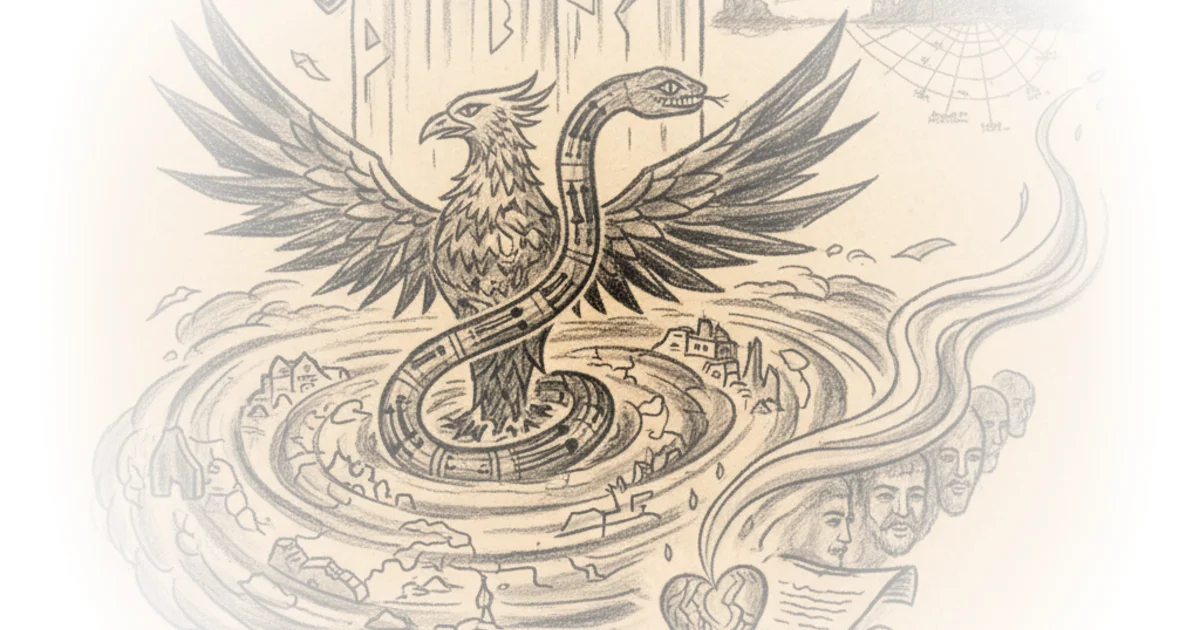
This historical context is crucial because it establishes the emotional fuel for the later militant movement. The piece details the early, state-sanctioned retribution known as Operation Nemesis, where the Armenian Revolutionary Federation assassinated former Ottoman leaders to enforce a death sentence the international community failed to deliver. However, the commentary rightly points out that this era of direct retribution faded as the Soviet Union absorbed the Armenian homeland. The author argues that the true resurgence of violence came not from the Soviet republic itself, but from the diaspora, which felt abandoned by traditional leadership.
"50 years after the genocide, Armenians felt considerable impatience with traditional leadership groups such as the ARF, who had been unable to advance recognition of the genocide, let alone advance national liberation for Armenians remaining in Turkey and the USSR."
This observation is the piece's most insightful pivot. It suggests that ASALA was born from a vacuum of political efficacy. When the established political channels failed to secure recognition or justice, the diaspora turned to the language of decolonization and armed struggle that defined the 1960s and 70s. Critics might argue that this framing risks justifying terrorism as a legitimate political tool, yet Kings and Generals maintains a critical distance by highlighting the group's explicit Marxist-Leninist ideology and its willingness to target civilians.
The Cold War Proxy
The most striking element of the coverage is its analysis of how the Soviet Union cynically exploited Armenian nationalism for its own expansionist goals. The author details how, in 1945, the USSR denounced its neutrality treaty with Turkey and demanded the return of historically Armenian lands. Historian Ronald Gregor Suny is quoted to devastating effect: "This was a particularly egregious example of Soviet imperialism and the cynical use of nationalism for expansionist purposes rather than an effort to satisfy the aspirations of the Armenian people."
Kings and Generals makes a compelling case that the Soviet Union's interest in the "Armenian question" evaporated the moment the United States signaled it would support Turkey as a bulwark against communism. The narrative then shifts to the post-Stalin era, where a thaw in Soviet domestic policy allowed for a resurgence of Armenian identity within the republic, yet international recognition remained elusive. This stagnation created the perfect conditions for a more radical group to emerge from the diaspora, particularly in Lebanon, a hotbed of Cold War proxy conflicts.
The formation of ASALA in 1975 is presented as the convergence of these forces: a group driven by the "three Rs"—recognition, reparations, and restoration—but enabled by a global network of state sponsors. The author notes that the group's founder, Hagop Hagopian, drew inspiration from the Palestinian struggle, believing that "armed struggle could bring international visibility to the Armenian cause." This connection to the Popular Front for the Liberation of Palestine provided ASALA with the training and resources to launch sophisticated attacks across Europe and the Middle East.
"Under the ideological tension of the cold war, the US believed that terrorist attacks symbolized the revolutionary fights against US imperialism."
This quote encapsulates the geopolitical blindness that allowed groups like ASALA to flourish. The piece suggests that the CIA suspected, though could not always prove, that the KGB was providing secret training and using allies like Bulgaria and Syria to mask direct involvement. While the author acknowledges the lack of "firm evidence" regarding direct Soviet command, the circumstantial case built on the group's timing, targets, and ideological alignment is persuasive. It paints a picture of a terrorist organization that was, in many ways, a shadow army in the broader struggle for influence in the Middle East.
The Limits of Violence
Despite the group's ability to conduct high-profile assassinations and bombings, including the seizure of the Turkish consulate in Paris and the bombing of Ankara airport, the commentary concludes that ASALA ultimately failed to achieve its strategic goals. Turkey did not succumb to the pressure, and the international community largely refused to recognize the group's demands. The author notes that Turkey successfully lobbied against UN resolutions that might have validated the narrative of genocide, while simultaneously seeking US assistance to combat what they termed "Armenian terrorism."
The piece ends on a somber note regarding the legacy of this violence. While ASALA succeeded in keeping the memory of the genocide alive in the global consciousness, it did so at the cost of alienating potential allies and reinforcing the very isolation it sought to break. The author implies that the group's reliance on state sponsors ultimately made it a pawn in a game it could not win, as the geopolitical winds shifted and the Cold War dynamics that fueled its rise began to dissolve.
Bottom Line
Kings and Generals delivers a masterful analysis of how historical trauma can be hijacked by great power competition, transforming a quest for justice into a tool of geopolitical destabilization. The strongest part of the argument is its unflinching examination of Soviet cynicism, which reframes ASALA not merely as a terrorist group, but as a symptom of a fractured international order. The piece's biggest vulnerability is the inherent difficulty in separating the genuine grievances of the Armenian people from the calculated manipulations of state actors, a tension that remains unresolved in the historical record. Readers should watch for how modern conflicts continue to exploit similar narratives of historical injustice to justify contemporary violence.