Rohin Francis, a practicing physician and scientist, dismantles a dangerous assumption that surfaced during the pandemic: the idea that biology, not society, explains why Black and minority ethnic communities have suffered disproportionately from the virus. While many scrambled to find genetic explanations for disparate death rates, Francis argues that the real culprit is a systemic failure to recognize how deprivation, overcrowding, and occupational hazard intersect with race. This is not a story about viral susceptibility; it is a forensic audit of how medicine itself has been complicit in racial bias for centuries.
The Myth of Biological Difference
Francis opens by confronting the immediate, instinctive reaction of the scientific community when faced with unequal outcomes. "People are racist but viruses can't be right," he notes, highlighting the absurdity of assuming a virus would discriminate while humans do not. He observes that when Black and South Asian populations began dying in higher numbers, the medical establishment's first impulse was to search for genetic polymorphisms. "Scientists and doctors... are just as susceptible to being racist as police," Francis writes, pointing out that this bias is often unconscious, rooted in medical training that treats race as a biological category rather than a social one.
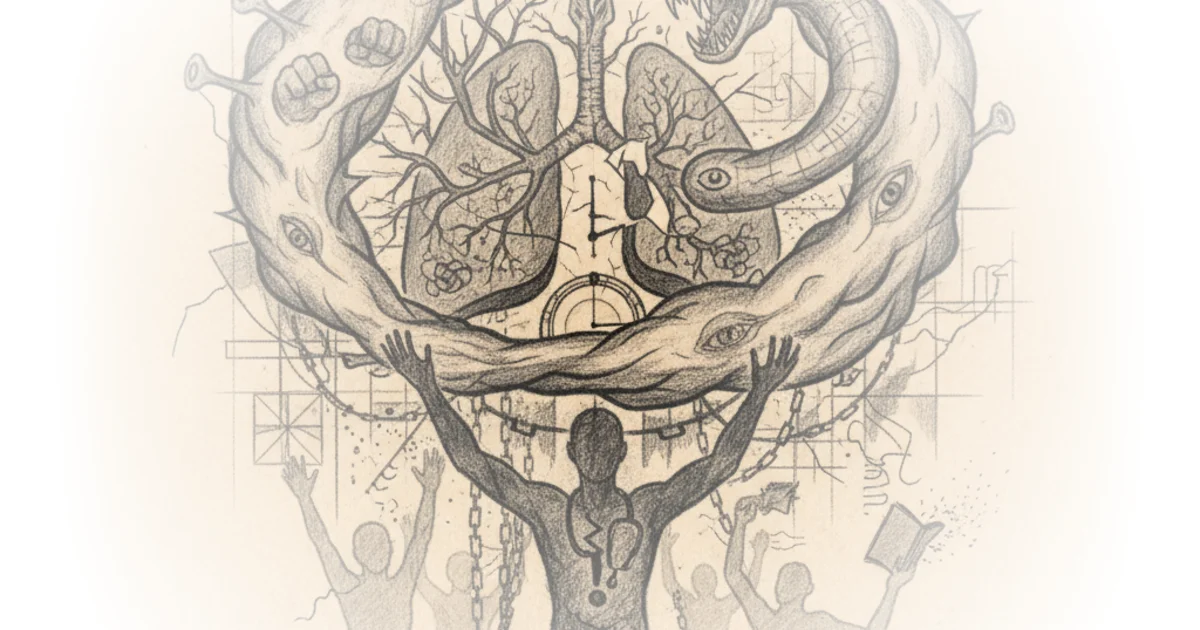
The author systematically debunks the notion that race correlates with significant genetic variance. He explains that skin color is merely a fraction of a percentage of human difference, noting that "there is more variation in melanin expression in Africa than in the rest of the world combined." By taking two random individuals from the African continent, one would likely find them more genetically disparate than any two people from different continents. Yet, medical textbooks continue to categorize diverse populations under a single "Black" label, prescribing different medications based on flawed assumptions. "Medical textbooks will simply pass them all as black tick and thus they are all they are to receive different blood pressure medication to everybody else," Francis observes. This reliance on pseudo-science creates a generation of doctors operating with "erroneous bias," treating social constructs as biological facts.
Critics might argue that acknowledging biological differences is necessary for personalized medicine, but Francis counters that the genetic differences we see between people "correlate very poorly with race." The danger lies in mistaking social categories for biological ones, leading to misdiagnosis and inappropriate treatment protocols.
The Social Determinants of Death
Once the biological myth is dispelled, Francis pivots to the stark reality of social determinants. The data from the UK's Office of National Statistics revealed that once Black and South Asian patients were actually admitted to the hospital, their outcomes were not significantly worse than white patients. The disparity occurred before they ever reached the hospital doors. "The reason was much simpler than a needle in a haystack genetic polymorphism it was deprivation and the kinds of lives that black people lead," Francis argues.
He details how minority groups are over-represented in front-line jobs—taxi drivers, supermarket clerks, and, most critically, care workers—who cannot self-isolate. Francis highlights a specific injustice within the healthcare system itself: "Doctors and nurses in hospitals... have been given adequate PPE almost all the time but the lowest paid workers... have been given pointless plastic aprons and flimsy masks." These care workers, often from former British colonies, form the backbone of the National Health Service yet are the most vulnerable. In the US, the situation is even more dire, where health outcomes like maternal mortality for African Americans are worse than in many developing nations. "Black people receive a different level of care compared to white patients," Francis notes, citing studies that show Black patients are less likely to receive appropriate cardiac medications, bypass surgery, or pain management, even when controlling for insurance and income.
"Science and medicine have always been and continue to be structurally racist systems through which discrimination and mistreatment is inflicted upon black people."
This structural analysis is the piece's most powerful element. It moves the conversation from individual prejudice to institutional design, showing how the very systems meant to heal are often the vehicles of harm.
The Call to Be Anti-Racist
Francis challenges the scientific community to move beyond passive non-racism. He critiques the tendency of science communicators and researchers to claim they are "woke" while failing to diversify their own networks. "Try this for yourself how many of the channels or accounts that you follow are black," he asks, admitting his own shortcomings in this area. He argues that diversity in the workforce is not enough if minorities remain underrepresented in senior positions and over-represented in less desirable roles. Citing Angela Davis, he insists that "it is not enough to be non racist you have to be anti-racist."
He extends this critique to non-white communities, noting that Asian communities are "just as guilty of racism against black people as anybody else." The solution, he posits, requires active effort: "defeating racism isn't a passive process it's something that requires active effort." This includes reading, donating, and engaging in genuine introspection. He references Ibram X. Kendi's definition: "being anti-racist doesn't mean that you're never racist it means that you can recognize and battle racism in yourself as hard as you battle it in others."
A counterargument worth considering is whether focusing on individual bias within science distracts from the need for massive policy reform. However, Francis suggests that without addressing the subconscious biases of the people designing and implementing policy, structural change will remain elusive.
Bottom Line
Francis's argument is a necessary correction to the narrative that the pandemic's racial disparities are a biological inevitability. His strongest contribution is the rigorous dismantling of the genetic fallacy, replacing it with a clear-eyed view of how poverty and occupational hazard drive mortality. The piece's vulnerability lies in its broad scope, which risks overwhelming the reader with the sheer scale of the problem, but its call to action—shifting from non-racism to anti-racism—provides a clear, albeit difficult, path forward. For busy professionals in medicine and science, this is a mandate to audit their own assumptions before they audit their data.