London Centric's Michael Macleod exposes a quiet but aggressive shift in how London's hospitality industry is pricing meals, revealing that the new 'admin fees' and 'brand charges' are not just accounting quirks but deliberate strategies to bypass worker protections. This isn't merely about rising costs; it is a structural attempt to decouple customer generosity from the wages of the staff who earn it, all while the industry grapples with a commercial property market that Macleod suggests is in a state of denial.
The Architecture of Evasion
Macleod opens with a stark example of this new financial reality at L'Antica Pizzeria, where a 12.5% 'admin charge' appears on the bill, looking identical to a service charge but legally distinct because it does not have to go to the staff. "No matter what senior management call it, customers will assume that this charge is a tip that should go to workers but it won't," writes Macleod, quoting Bryan Simpson of the Unite union. This observation cuts to the heart of the issue: the deception relies on consumer habit. Diners expect a service charge to reward the waiter, but the administration is rebranding that expectation into a general overhead cost.
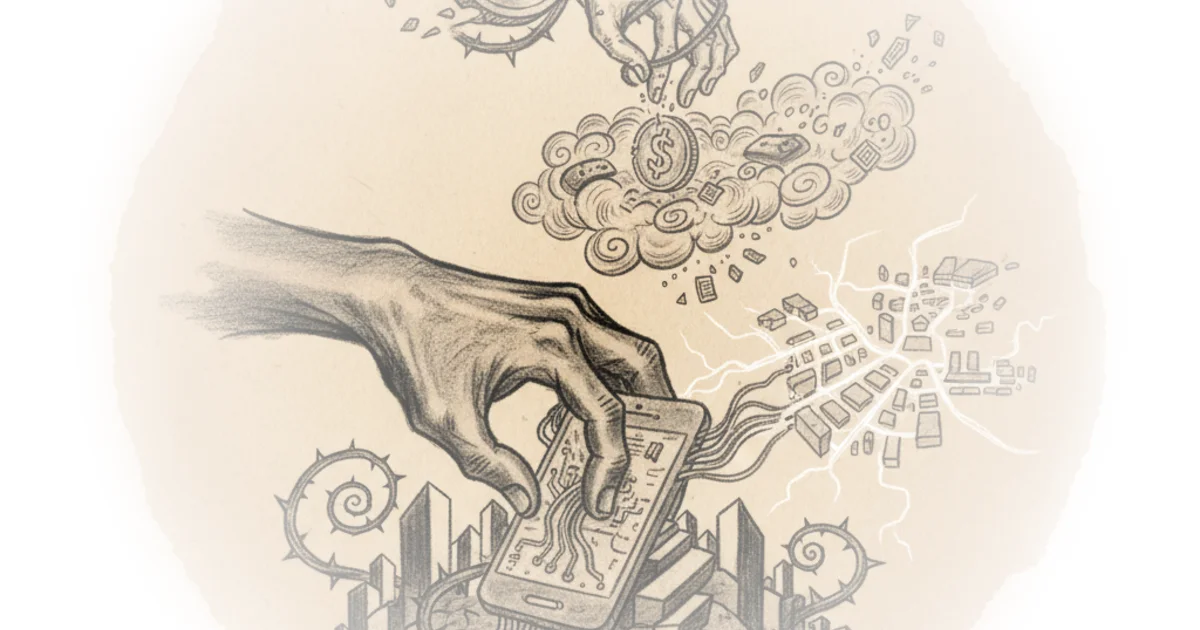
The author details a litany of similar tactics across the capital, from Harrods' £1 cover charge to the 'ambience fee' at Bacchanalia. Macleod argues that these are not isolated incidents but a coordinated response to the Tipping Act 2023. "Prior to last year's tipping laws, operators thought nothing of dipping into the service charge pot to make ends meet, but that's now verboten," he notes, explaining that the legislation forced owners to find new revenue streams rather than subsidizing operations with staff tips. The framing here is sharp; it positions the new fees not as a necessary evil for survival, but as a cynical workaround for a law that was eight years in the making.
The decision of far too many restaurants and bars to effectively deny workers tips by cynically changing the service charge to an 'admin fee' or 'brand charge' in order to circumvent well established fair tips legislation is one of the most blatant examples of tips theft that we've come across.
Critics might argue that the hospitality sector is facing unprecedented pressure from inflation and labor costs, making these fees a pragmatic necessity rather than malice. Macleod acknowledges this economic squeeze, quoting Matt Paice of Chishuru who notes that "costs are soaring and wages are soaring, but no one wants to increase menu prices for fear of scaring customers away." However, the piece effectively counters the 'pragmatism' argument by highlighting that some operators, like Mandy Yin of Sambol Shiok, are choosing to reduce portion sizes instead of adding hidden fees, proving that alternatives exist.
The Ghost in the Machine: Property and Snails
The commentary takes a surreal turn as Macleod pivots to the broader economic context, linking these dining fees to a deeper rot in London's commercial real estate sector. The article investigates 'snail farms' occupying office buildings, a bizarre phenomenon that Macleod identifies as a potential cover for tax avoidance and a symptom of collapsing property values. He reveals that Iraqi businessman Namir El-Akabi, who made a fortune on contracts following the 2003 invasion of Iraq, is now using his Winchester House property for mollusc breeding.
Macleod weaves in a counter-narrative from free market commentator Matt Kilcoyne, who suggests the snail farms are a distraction from a more terrifying truth: "These are landlords desperately trying to avoid admitting their properties have collapsed in value... The problem grows larger while everyone pretends it's about tax avoidance rather than the slow-motion repricing of a commercial property sector that fundamentally changed in 2020." This connection is the piece's most ambitious leap, suggesting that the 'admin fee' on your dinner bill and the snails in an office block are both symptoms of a system trying to hide its insolvency.
The author also touches on the human cost of this opacity, noting that chef Isaac McHale of The Clove Club cannot source live snails because the supplier is likely a front for tax evasion. "I didn't think this was a tax scam, I thought it was a little job that a farmer had tried and abandoned," McHale tells Macleod. This anecdote grounds the abstract financial maneuvering in a tangible loss for a small business owner, reinforcing the idea that the entire ecosystem is being compromised by bad actors.
These are landlords desperately trying to avoid admitting their properties have collapsed in value... The problem grows larger while everyone pretends it's about tax avoidance rather than the slow-motion repricing of a commercial property sector that fundamentally changed in 2020.
Bottom Line
Macleod's strongest argument lies in connecting the micro-aggression of a hidden 'admin fee' to the macro-failure of London's commercial property market, suggesting that the industry is masking a crisis through deceptive billing practices. The piece's greatest vulnerability is its reliance on a few high-profile examples of tax avoidance to paint a picture of systemic collapse, though the snail farm investigation provides a compelling, if unusual, entry point. Readers should watch for how the government responds to these 'admin fees,' as the current legislation may be too narrow to catch these new forms of wage theft.