In an era obsessed with the "new," Japanese architect Tsuyoshi Tane makes a startling claim: the only way to build a viable future is to dig up the past. Louisiana Channel captures Tane not merely as a designer of buildings, but as an archaeologist of human memory, arguing that modern planning has dangerously severed our connection to the specific soul of a place. For busy professionals navigating a world of generic, mass-produced spaces, this perspective offers a vital correction to the relentless drive for efficiency and novelty.
The Archaeology of Place
Tane challenges the dominant modernist assumption that a construction site is a blank slate. "Our age or our generation has been educated from this modern way of thinking as when the product arrive there is a sight plan site plan is white you have a tabalasa of the frame of the boundary and inside you can do anything," Louisiana Channel writes. This "tabula rasa" approach, Tane argues, ignores the invisible layers of history that define a location's identity. Instead, he proposes an "archaeological research" method where the architect acts like a digger in the desert, searching for "staircase, sometimes walls, sometimes that never been written our history."
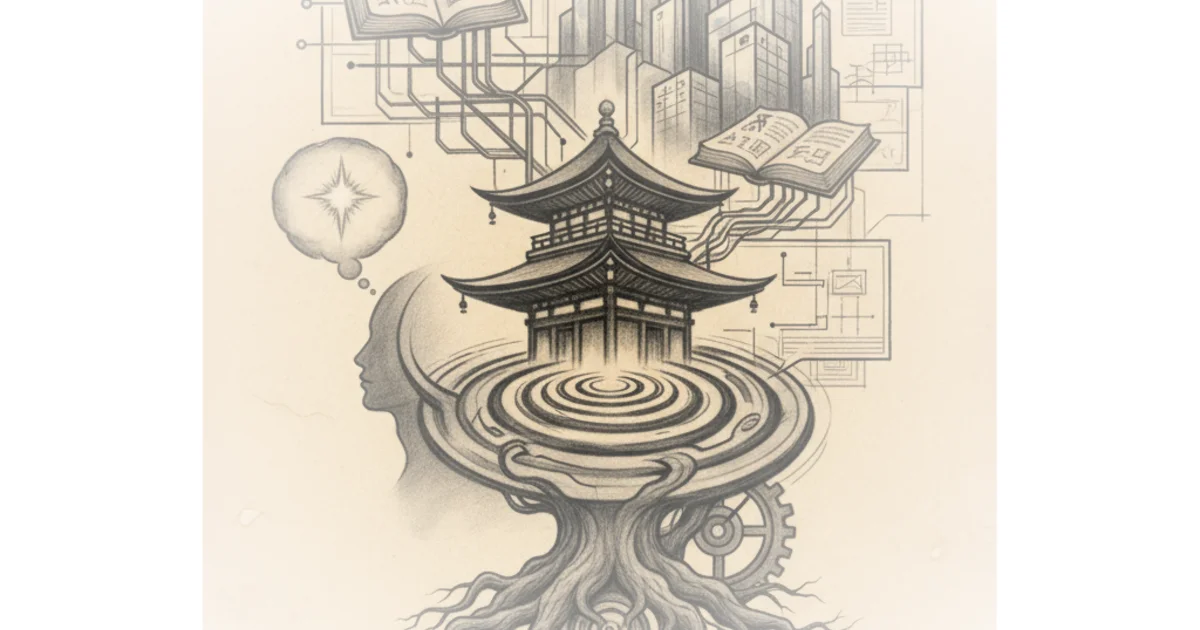
This methodology reframes architecture from an act of imposition to an act of discovery. By asking "what place wants to be," Tane suggests that the building should emerge from the site's accumulated stories rather than a top-down corporate mandate. This lands because it addresses a pervasive modern malaise: the feeling of being in a space that could be anywhere. Critics might note that this approach is resource-intensive and difficult to scale in a world demanding rapid urbanization, yet Tane insists that speed often comes at the cost of meaning.
Place exist only one place and cannot be replaced. Therefore place is only one place exist in our planet. The space is about infinity.
Space Versus Place
The core of Tane's argument rests on a sharp distinction between "space" and "place." He observes that the 20th century was defined by the production of infinite, repeatable "space"—airports, factories, supermarkets—while losing the singular, irreplaceable "place." "In 20th century we built a lot of spaces but we lost a lot of place," Louisiana Channel puts it. Tane posits that while space can be multiplied and divided, place is defined by its "singularity" and its deep connection to collective memory.
This distinction is crucial for anyone tired of the sterile, homogenized environments of global capitalism. Tane argues that true architecture must bridge the gap between the abstract concept of space and the emotional reality of place. "We know about the place and we know about the space but we don't know in between where the place become the space or where the space in the place," he admits, highlighting the ambiguity that architects must navigate. By focusing on the "collective memory" that accumulates across generations, Tane suggests that buildings can become vessels for human dignity rather than just containers for function.
The Loop of Memory
Perhaps Tane's most profound insight is his redefinition of the future itself. He rejects the linear progression of "new" replacing "old," proposing instead a continuous loop where memory and future are inextricably linked. "We have been kind of desire to tempt to create always new future and new future brings new but new future sometime getting old and we forget," Louisiana Channel writes. Tane argues that a truly sustainable future is a "memorable future," one that integrates the past so deeply it becomes a living part of the present.
This approach challenges the tech-driven obsession with disruption. Tane suggests that materials and objects hold their own memories, and that "memory can be structure" and "memory it it's about emotion too." By treating architecture as a form of "archaeology of the future," he offers a vision where buildings are not just shelters but active participants in the ongoing story of human life. While some might argue that looking backward is a retreat from innovation, Tane's work demonstrates that deep historical understanding is actually the most radical form of forward-thinking.
Bottom Line
Tane's argument is a powerful antidote to the rootlessness of modern development, successfully reframing architecture as an act of recovering lost human connections. Its greatest vulnerability lies in the practical difficulty of applying this slow, research-heavy methodology to the urgent, profit-driven demands of contemporary urban planning. However, the core insight remains undeniable: if we want a future worth remembering, we must first learn to listen to the past.
We cannot imagine even 10 years later. So we think to go backwards even 100 years ago to see the past to see what happened our life what has been built upon our life before modern time and to learn and to look at the life of the people.