Most public health strategies treat wildlife as a threat to be managed or ignored, but this piece from Works in Progress makes a startling case for the opposite: we should be vaccinating wild animals. It argues that the most effective way to protect human civilization is not by building higher walls against nature, but by inoculating it.
The Shift from Defense to Prevention
The article opens with a vivid historical pivot point. In the 1930s, devices like the "Coyote Getter" were designed solely to kill predators using cyanide. Decades later, researchers repurposed these lethal mechanisms not to eliminate coyotes, but to immunize them. Works in Progress notes that this shift represents a fundamental change in how we view the wild: "Wild animal vaccines are remarkable for many reasons, but the most remarkable might be that they exist at all." The piece argues that while civilization typically reserves medical intervention for humans and pets, the wild is usually treated as a place of extraction or defense.
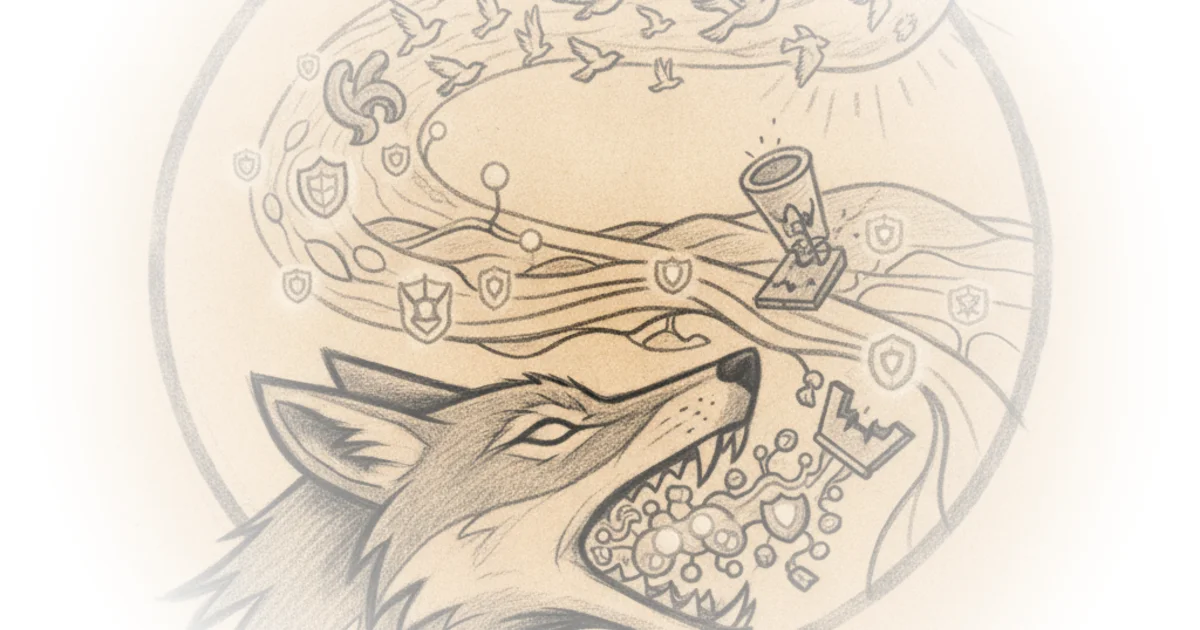
This reframing is crucial because the stakes are incredibly high. Approximately 60 percent of infectious diseases in humans are zoonotic, jumping from animals to people. The editors remind us that "Ebola came from fruit bats; HIV from chimpanzees; SARS from horseshoe bats and civets." By focusing on spillover events after they occur, we are playing a losing game of whack-a-mole. The core argument is that preventing disease at its source in wild populations offers superior protection compared to reacting to outbreaks once they reach human communities.
"Preventing human illness is not the only reason to vaccinate wild animals. Many recent programs have been motivated by conservation... There is also budding recognition that these programs are valuable on welfare grounds, sparing animals from pain and suffering."
The Rabies Blueprint
The piece anchors its argument in the success story of rabies. Historically, laws mandating dog vaccinations drove human deaths in the United States down from 74 in 1921 to single digits by the 1960s. However, as domestic cases vanished, wildlife became the reservoir. The article details how the virus began spreading through raccoons, skunks, and foxes across North America and Europe.
Early attempts to stop this spread involved culling or sterilizing animals, methods that often proved counterproductive by increasing animal movement and human contact. Works in Progress reports that "cruel methods like culling and sterilizing rabies-carrying wild animal species had shown limited success... These efforts may even have been counterproductive." The breakthrough came not from killing, but from a logistical innovation: oral vaccination.
The narrative highlights the ingenuity required to deliver medicine to animals that cannot be herded into clinics. Researchers moved away from spring-loaded needle traps and poison darts toward bait. In Europe, Swiss veterinarian Franz Steck pioneered the use of chicken heads as vaccine carriers in 1978. The piece notes a clever tracking mechanism: "The heads also contained tetracycline... which incorporates into bone and teeth and glows fluorescent yellow under ultraviolet light." This allowed scientists to verify consumption without capturing the animals.
Critics might question whether such massive aerial distribution of food-based baits could disrupt local ecosystems or attract non-target species. However, the data suggests the strategy is sound. In Texas, the oral rabies vaccination program for coyotes saved an estimated $4 to $13 in human treatment costs for every dollar spent, while halting the spread of the disease toward major cities like San Antonio.
Shielding Biodiversity and Human Economies
Beyond human health, the article expands the scope to conservation. It points out that habitat destruction and climate change have exacerbated disease transmission among wildlife, a phenomenon known as spillback. The text cites devastating examples: chytridiomycosis has driven 90 amphibian species extinct in the last fifty years, and white-nose syndrome has killed over six million North American bats since 2007.
The economic argument here is compelling. Bats are not just ecological curiosities; they are agricultural workhorses. The US Geological Survey estimates that bat populations contribute billions of dollars annually to the US economy by consuming pests. "Without their voracious consumption of agricultural pests and mosquitoes, crop yields could fall," the piece warns.
The commentary highlights a recent milestone: in September 2025, Australia approved the world's first chlamydia vaccine for koalas. Unlike raccoons or foxes, koalas cannot be baited with food, so researchers developed a trap-and-vaccinate method. The results were significant, with mortality decreasing by around 65 percent. Peter Timms, the microbiologist leading this effort, demonstrated that targeted intervention could reverse population declines.
"The better solution is to control the disease at its source, in the wild."
Bottom Line
Works in Progress successfully reframes wildlife vaccination from a niche conservationist concern into a critical pillar of global public health and economic stability. Its strongest asset is the historical evidence showing that oral vaccines can eradicate diseases like rabies from vast wild populations where culling failed. The piece's vulnerability lies in the logistical complexity of scaling these efforts to non-bait-able species, but the trajectory is clear: our future safety depends on extending the shield of medicine beyond our borders and into the wild.