Devin Stone doesn't just report on the release of the Epstein files; he dissects the theater of transparency performed by the very administration that promised to expose the truth. The piece is notable not for revealing new names, but for documenting how the Department of Justice, under pressure, released a curated selection of documents while seemingly ignoring the statute's core mandate to uncover financial trails and internal prosecutorial decisions.
The Promise and the Palindrome
Stone opens by highlighting the stark contrast between the campaign rhetoric and the bureaucratic reality. He notes that on the campaign trail, the president vowed, "Yeah. Yeah, I would" declassify the files, a promise Attorney General Pam Bondi initially seemed to honor by claiming the list was "sitting on my desk right now to review." Yet, the execution was a masterclass in evasion. Stone observes that the administration "handed them binders labeled the Epstein files phase 1" to influencers, only for those binders to contain "virtually nothing that wasn't already in the public record."
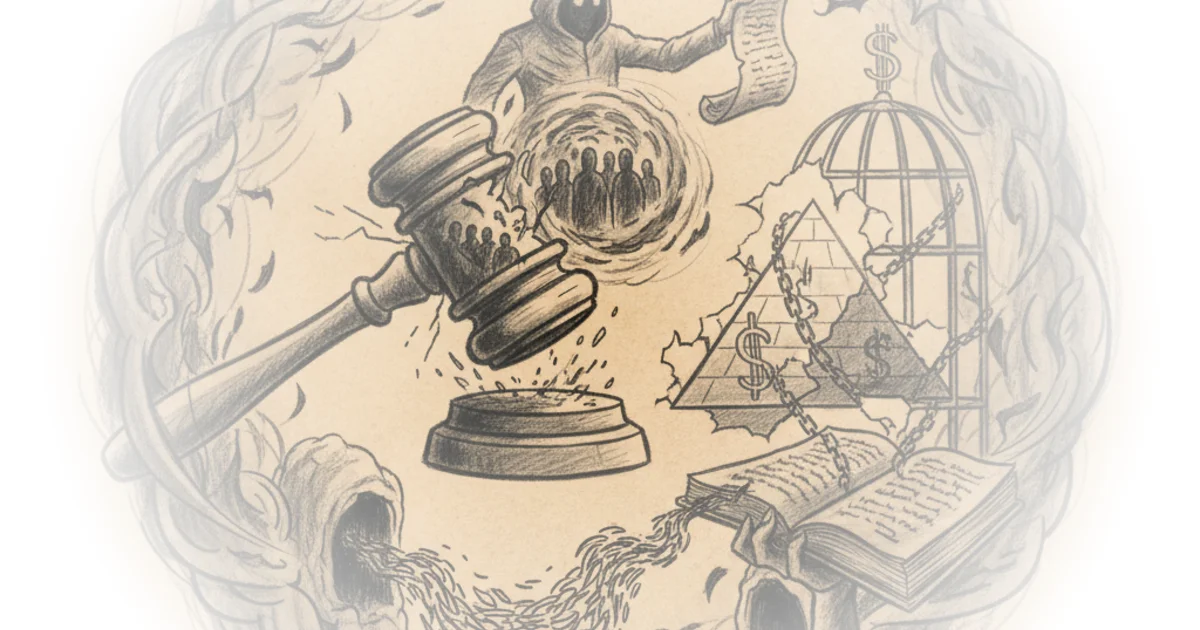
This framing is effective because it exposes the gap between political performance and legal compliance. The author argues that the Department of Justice is now in contempt of the Epstein Files Transparency Act, which required a full release within 30 days. Instead, the DOJ released "less than 1% of the documents," focusing heavily on photos of Bill Clinton while redacting or omitting the very financial records the law demanded.
"The client list, which was supposedly on her desk in February, didn't exist. There was no proof that Epstein had blackmailed anyone. and no one else would be charged."
Stone's analysis of the redactions is particularly sharp. He points out the inconsistency in the government's approach: they claimed child sex abuse material (CSAM) was too sensitive to release, yet they failed to protect the privacy of at least one victim, Jane Doe, whose name appeared in the released documents. This contradiction undermines the government's stated justification for withholding information.
Critics might argue that the sheer volume of sensitive material requires time for careful review, but Stone counters that the delay coincides with a shift in political strategy. The administration, once demanding the files, now seems to be using them to score political points against Democrats while shielding allies. As Stone puts it, "If the shoe was on the other foot, MAGA World would be screaming it from the rooftops."
The Missing Money Trail
The most damning part of Stone's commentary focuses on what is conspicuously absent: the financial records. The law explicitly required the release of "financial records and all internal prosecutorial documents," yet the DOJ has largely ignored this. Stone writes, "In the main, if you want to know how Epstein made so much money, you are out of luck."
This omission is critical because it shields the powerful figures who entrusted their assets to Epstein. Stone highlights the cases of Les Wexner and Leon Black, noting that the lack of financial disclosure "shields the very powerful men who entrusted him with their assets." The author suggests this is not an oversight but a deliberate choice, especially given that the House Oversight Committee is now issuing subpoenas for these very executives.
"It's clear that law enforcement did take this seriously, but Epstein had powerful friends, and in 2008, he got a cushy plea deal that allowed him to essentially sleep at the jail for a few months and then be on his way."
Stone's comparison of the 2008 plea deal to the current inaction is a powerful rhetorical move. It connects past failures to present ones, suggesting a continuous pattern of protecting the elite. He notes that the DOJ released transcripts of Ghislaine Maxwell's interviews where she claimed innocence regarding the president, despite emails suggesting otherwise. This selective release serves to create a narrative of vindication for some while obscuring the broader network of complicity.
Bottom Line
Stone's strongest argument is that the current administration is violating the spirit and letter of the law they signed, using the release of files as a political tool rather than a pursuit of justice. The piece's biggest vulnerability is its reliance on the assumption that the missing financial records are intentionally hidden rather than simply difficult to compile, though the evidence of selective redaction supports the author's skepticism. Readers should watch for the House Oversight Committee's subpoenas, which may finally force the financial disclosures the DOJ has refused to provide.
The Department of Justice is not just failing to release the files; it is actively curating a version of the truth that protects the powerful while pretending to be transparent.