More Perfect Union delivers a visceral, ground-level account of the East Palestine disaster that cuts through the sterile language of official press releases to reveal a community in crisis. While national figures pose for cameras, the coverage exposes a chilling reality: a multi-billion dollar corporation is managing its own cleanup while residents suffer unexplained illnesses and face a future of uncertain health risks. This is not just a story about a train wreck; it is a stark examination of what happens when corporate profit is prioritized over human safety and when the institutions meant to protect citizens fail to act with urgency.
The Human Cost of a "Controlled" Disaster
The piece opens with the raw testimony of locals, stripping away the abstraction of "hazardous materials" to focus on the immediate physical toll. More Perfect Union writes, "Sometimes a disaster is so overwhelming that it shocks people out of their political corners and brings really big problems into Focus." This framing is crucial; it suggests that the tragedy has bypassed ideological divides to reveal a universal failure of accountability. The author highlights the disconnect between the official narrative of safety and the lived experience of residents like Luke Glaven, who describes the scene as a "spectacle" that felt "bigger than we're going to even ever imagine."
The coverage meticulously details the immediate aftermath, noting that just two days after the derailment, a government and company-sponsored test declared the air and water safe, leading to the lifting of evacuation orders. Yet, the author points out the glaring contradiction: "minutes later the trains were back on the tracks." This rapid return to normalcy, juxtaposed with the lingering health fears, underscores a systemic tendency to prioritize economic continuity over precaution. As More Perfect Union notes, "What gets lost in so much of that coverage is that the people here still have a ton of unanswered questions."
"They think they can just throw a bunch of Science words around and then just expect us not to question it."
The argument gains strength when it exposes the conflict of interest inherent in the initial response. The author reveals that the testing used to justify the safety of the water supply was conducted by a third-party contractor hired directly by Norfolk Southern, in a manner that did not comply with Environmental Protection Agency standards. This is a critical point: the entity responsible for the disaster was effectively charged with investigating its own impact. More Perfect Union asks the pivotal question, "Why would you let them clean up their own mess?" The implication is clear: without independent oversight, the data is suspect, and the reassurance is hollow.
Institutional Failure and the Illusion of Safety
The commentary shifts to the broader institutional dynamics, critiquing the role of the Environmental Protection Agency and the federal government. While the EPA has stepped in to monitor the cleanup, the author notes that Norfolk Southern still leads the day-to-day operations. The piece argues that this arrangement is insufficient, citing the EPA's "spotty track record of showing up rushing to say everything's fine then leaving people without the support they really need." The comparison to the Flint water crisis is particularly potent, suggesting a pattern of neglect that extends beyond a single corporate entity.
More Perfect Union highlights the disconnect between official assurances and scientific reality. "Recently the EPA said that their own testing shared that the air and water near the crash was completely safe but Texas A&M researchers using the same data found elevated levels of nine pollutants that could be linked to Serious long-term health risks." This discrepancy is not a minor detail; it is the core of the community's distrust. The author emphasizes that the long-term health effects, particularly from dioxins formed by burning vinyl chloride, are unknown and could take years to manifest. "No one knows it's going to be years and years and years before we really understand the full cost," explains Emily Jeffers, a senior attorney, a quote that captures the terrifying uncertainty facing the residents.
Critics might note that the EPA's current mandate is to ensure the company pays for the cleanup, and that the agency is legally constrained in how it can intervene immediately. However, the author's point stands that the lack of transparency and the reliance on corporate data have eroded public trust to a point where even official statements are met with skepticism. The piece argues that the government's failure to be "blatantly honest" about the unknowns has compounded the trauma.
The Economics of Catastrophe
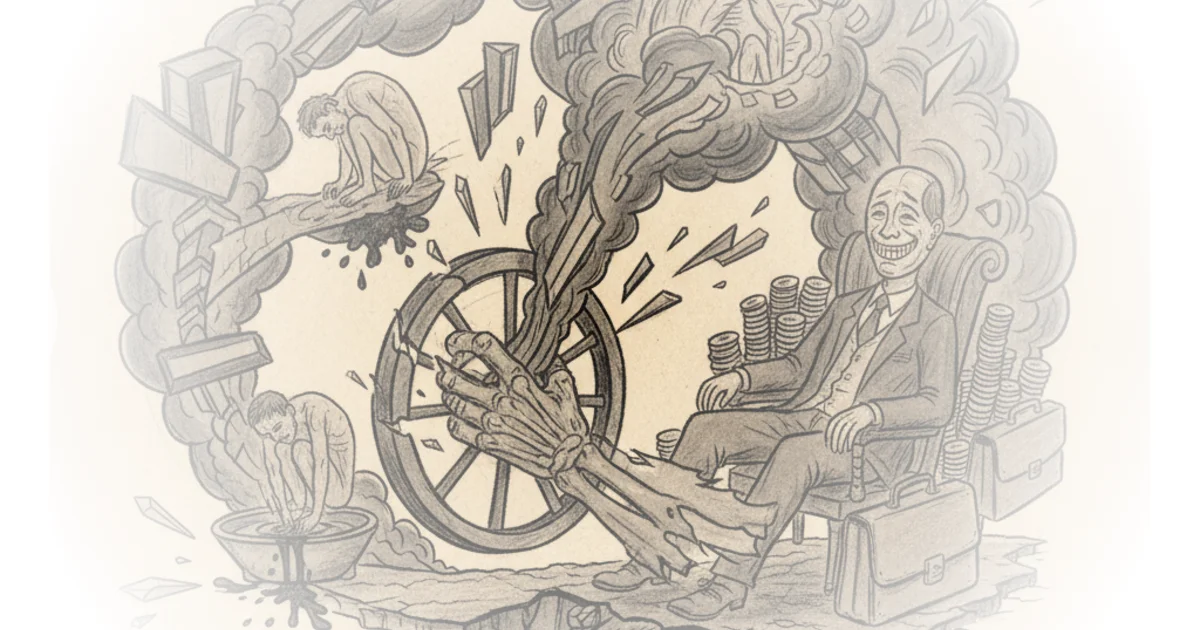
Perhaps the most damning section of the coverage is its analysis of the corporate calculus behind the disaster. More Perfect Union argues that for a company like Norfolk Southern, such events are not anomalies but anticipated costs of doing business. The author points out that the company is owned by major financial institutions like JP Morgan and BlackRock, and that investors are viewing the disaster as a buying opportunity. "That company is counting on people to return back to normal and to not speak up about it," the author writes, capturing the cynical expectation that the community will eventually fatigue and accept the status quo.
The piece draws a parallel to a 2005 disaster in South Carolina, where Norfolk Southern paid relatively small fines compared to the harm inflicted. "The company was ultimately forced to pay 4 million in fines to the federal government and over 10 million in Settlements a far cry from what was needed to cover the actual harm inflicted on that Community." This historical context reinforces the argument that the current penalties are unlikely to deter future negligence. The author contrasts the CEO's $8 million salary and 8,000-square-foot mansion with the residents' struggle, asking, "How do you measure profits and stock prices against the value of people's lives?"
"This is just the cost of doing business."
The emotional weight of the piece comes from the residents' realization that their safety is secondary to the bottom line. One resident pleads, "I can't hit you with my pocketbook. I can't touch you with anything other than my heart." This sentiment highlights the power imbalance: the community has no leverage against a $55 billion corporation, and the legal system offers only a slow, uncertain path to justice. The author suggests that the only hope lies in the community's refusal to be silenced, noting that the disaster has "shocked people out of their political corners" and forced them to question how business is done.
Bottom Line
More Perfect Union's coverage is a powerful indictment of a system that allows corporations to manage their own disasters while communities bear the physical and emotional scars. The strongest part of the argument is its exposure of the conflict of interest in the initial testing and the stark contrast between corporate profit and human suffering. The piece's biggest vulnerability is its reliance on the community's ability to sustain a fight against a well-resourced opponent, a struggle that history suggests is often long and difficult. Readers should watch for whether the EPA's increased oversight translates into genuine transparency and whether the legal system can deliver accountability that exceeds the "cost of doing business.""