The Hated One presents a startling allegation that has largely escaped mainstream scrutiny: that Apple's leadership didn't just lose an antitrust battle, but may have crossed the line into criminal contempt of court. The piece argues that the company's refusal to comply with a 2021 ruling, combined with deliberate deception of the judiciary, could result in jail time for top executives—a scenario unprecedented for a tech giant of this scale.
The Architecture of Monopoly
The author builds a foundation on the 2021 lawsuit brought by Epic Games, focusing on Apple's 30% commission and its rigid control over the iOS ecosystem. The Hated One writes, "Apple would literally extort developers violating their policies with a complete ban and removal of their apps from the app store." This framing is potent because it shifts the narrative from a standard business dispute to one of coercion. The argument gains weight when the author highlights the market reality: while iOS holds less than 20% of the device market, it controls 68% of all app spending. This disparity makes the threat of an Apple ban existential for developers, effectively creating a monopoly on revenue.
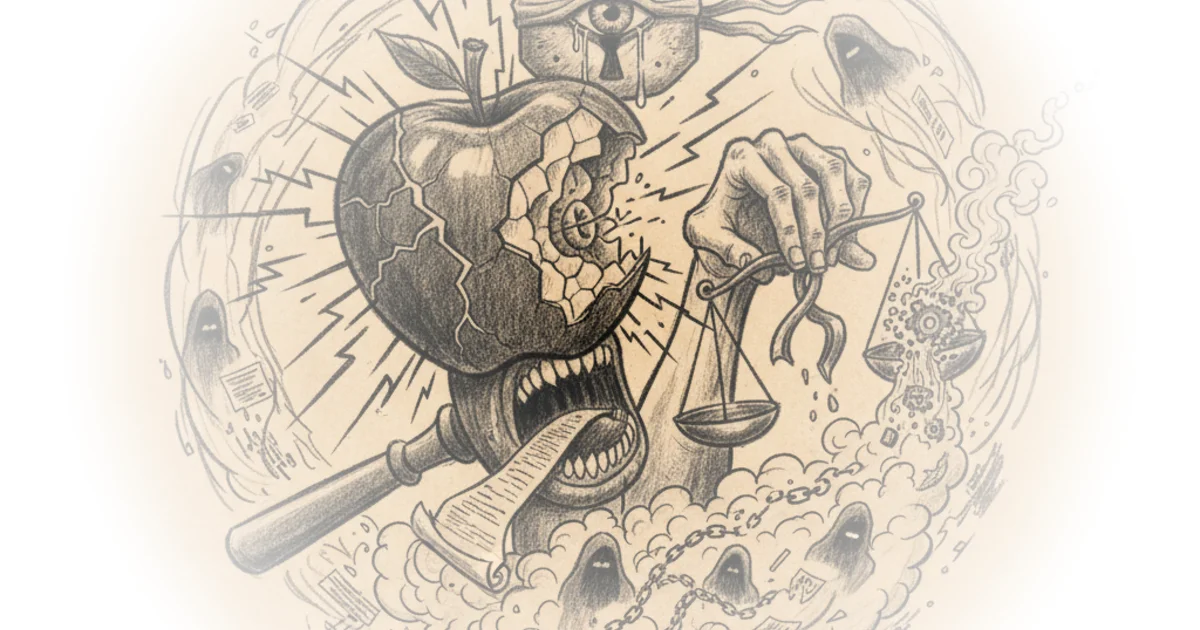
Critics might note that Apple's closed ecosystem is often defended as a necessary trade-off for security and user experience, a point the author dismisses as secondary to the financial harm inflicted on consumers. However, the author's point about the "lifetime cost of an ecosystem" is compelling. As The Hated One puts it, "Apple is raising your costs throughout your use of their products, and they prevent you from being able to attribute that cost to Apple in the first place." This reframing of the user experience as a hidden, cumulative tax rather than a one-time purchase price is a critical insight for understanding the antitrust violation.
Apple didn't just create a walled garden. They purposefully built an information blackbox around their system so that they could lock their users in and squeeze more money out of them.
The Alleged Cover-Up
The commentary takes a darker turn when addressing Apple's response to the court order. The author details how the company allegedly chose to comply with the letter of the law while violating its spirit, introducing new fees and restricting where developers could place links to external payment methods. The Hated One writes, "Apple internally analyze[d] where users are most likely to make a purchase and specifically instructed developers not to place their payment options there." This internal strategy suggests a calculated effort to maintain the status quo rather than a genuine attempt to comply with judicial mandates.
The most explosive claim involves the testimony of Apple's VP of Finance, Alex Roman. The author asserts that Roman "outright lied under oath to hide the truth about these executive decisions." If true, this moves the issue from civil non-compliance to criminal obstruction. The text notes that even Philip Schiller, a long-time Apple executive, advised against this strategy, yet the plan proceeded. As The Hated One puts it, "Tim Cook chose to ignore Schiller and let his chief financial officer look Main Street to go with the non-compliant plan." This detail is crucial; it suggests the decision-making was not a bureaucratic error but a deliberate executive choice to defy the court.
The author argues that the judge's decision to refer the matter to a U.S. attorney for a criminal contempt investigation is the smoking gun. "That's why the judge decided to pass the matter to a US attorney to investigate for criminal contempt," the text states. This procedural step is rare and signals that the judiciary views the company's actions as potentially criminal rather than merely negligent.
The Political Shield
The piece concludes by questioning the likelihood of a successful prosecution, attributing potential inaction to the deep personal ties between Apple's leadership and the political establishment. The Hated One writes, "Did you know that Tim Cook and Donald Trump have had a long-standing personal relationship?" While the editorial policy refrains from focusing on personality, the author uses this connection to illustrate a broader point about institutional protection. The argument is that the executive branch, influenced by these relationships, may be reluctant to pursue a criminal case against a company that has historically aligned with its interests.
The author suggests that this dynamic creates a two-tiered justice system. "If you did a fraction of what Apple and their executives did, you'd have the book thrown at you so hard you'd become [Music] Facebook," the text claims, highlighting the perceived disparity in how large corporations are treated versus smaller entities. This comparison serves to underscore the author's frustration with the lack of accountability for tech giants.
Apple is not your friend. It's an empire of evil.
Critics might argue that the author's characterization of Apple as an "empire of evil" is hyperbolic and distracts from the specific legal arguments regarding contempt of court. However, the emotional intensity of the piece serves to highlight the high stakes involved: the potential for criminal liability for the CEO and other top executives.
Bottom Line
The strongest element of this commentary is its detailed reconstruction of Apple's alleged internal strategy to circumvent a court order, moving the conversation from antitrust theory to potential criminal liability. The piece's biggest vulnerability lies in its reliance on a single, highly partisan source for the claim of a personal political shield, which may overshadow the more concrete legal evidence of contempt. Readers should watch closely for the outcome of the U.S. attorney's investigation, as a criminal indictment would mark a historic shift in how the legal system treats Big Tech.